
Light Requirements
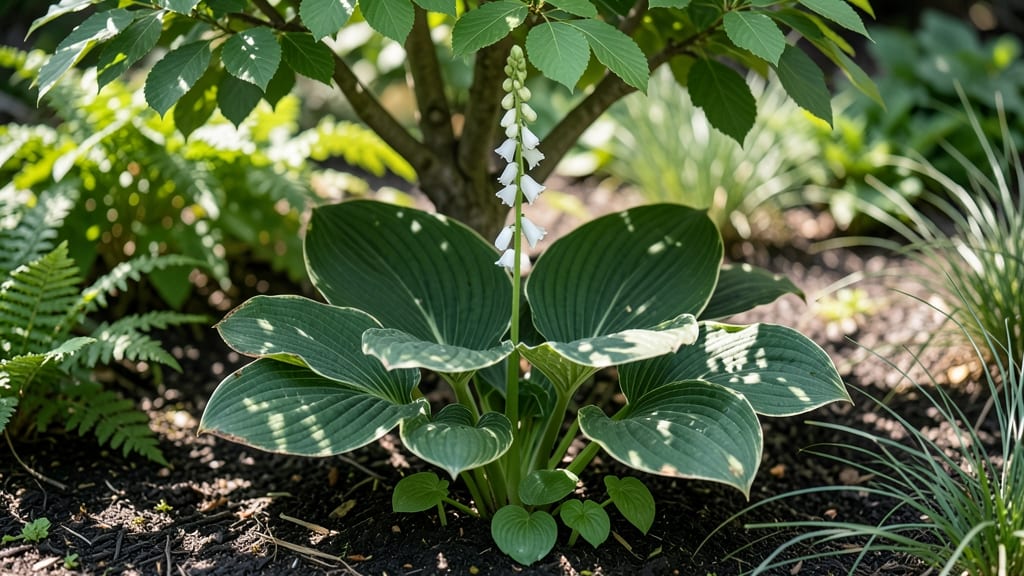
Mastering the seasons in the sun for hostas is key—these shade-loving plants need careful sun adjustments to stay vibrant, or summer’s glare will scorch their leaves.
I’ve learned the hard way that what works in spring won’t cut it by July, and that’s where precision pruning and shade management make all the difference.
The key is matching light exposure to your hosta’s natural rhythm: morning sun in summer, full sun in spring/fall, and minimal winter light when growth slows. In hot climates, even partial shade can mean the difference between thriving foliage and scorched edges.
Start with the right planting spot—most hostas do best with 3-6 hours of filtered light daily—and adjust as seasons shift.
With the right approach, your hostas will reward you with deep green foliage in summer, golden hues in fall, and even winter interest when dead leaves are removed strategically. The payoff? A garden that stays lush through every season, even in full-sun spots where other plants struggle.
Regional tweaks matter: Northern gardens can handle more sun, while Southern hostas need afternoon shade by June. The same pruning rules apply—just the timing shifts. Let’s break down how to keep your hostas happy through every 12 months of sunlight changes.
📚 In This Guide
- What you need
- Instructions
- Tips and common mistakes
- Wrapping up and next steps
What you need
- ● Seasons in the Sun Hosta plants – At least 3 mature plants (3+ years old) for optimal pruning results.
- ● Sharp bypass pruners – 2 pairs (one for clean cuts, one for thicker stems).
- ● Disinfectant solution – 1 part bleach to 9 parts water (for sterilizing tools).
- ● Garden gloves – 1 pair (nitrile-coated for grip and protection).
- ● Pruning shears or loppers – 1 set (for larger stems, if needed).
- ● Compost or mulch – 1-2 gallons (for replanting cuttings or amending soil).
- ● Watering can or hose – With a gentle spray nozzle.
- ● Labeling tags & marker – 5+ tags (to track pruned sections by season).
- ● Rooting hormone – Speeds up propagation of cuttings (gel or powder form).
- ● Clear plastic bags – 2-3 (for humidity tents if propagating indoors).
- ● Plant-based fertilizer – Low-nitrogen, high-potassium (e.g., 5-10-10 ratio).
- ● Pruning saw – For stubborn, thick stems (if your hostas are over 5 years old).
- ● Camera or sketchbook – To document pruning patterns before/after!
How to maintain year-round Hosta color through strategic pruning
Hostas thrive when you work with their natural rhythms—not against them. This approach keeps foliage vibrant through all seasons.
Assess Your Hostas in Early Spring
Wait until late March or early April when soil temperatures reach 50°F—that’s when hostas wake from dormancy. Look for new shoots poking through the soil as your signal to begin. Avoid pruning before this point, as cold snaps can still damage tender growth.
Remove any brown, mushy leaves from last season’s growth—these are prime spots for fungal diseases. Use clean, sharp pruners to cut just above the soil line. I like to wear gloves here; hosta leaves can be razor-sharp after winter.
Perform Mid-Season Maintenance in Summer
Once your hostas reach peak maturity (late June to July), focus on selective leaf removal to encourage new growth. Cut back 1/3 of the oldest, yellowing leaves at the base, leaving the freshest foliage intact. This prevents nutrient depletion and keeps plants looking lush.
Watch for flower stalks—unless you’re growing hostas for seed, snip these off at the base. They drain energy better spent on foliage. I always do this after 2-3 weeks of flowering to redirect resources back to the leaves.
Prepare for Fall with Strategic Trimming
By mid-September, hostas begin storing energy for winter. At this point, remove only the most damaged leaves—those with holes, brown edges, or signs of slug damage. Leave at least 50% of the foliage intact to continue photosynthesis until frost.
Never cut back to bare stems in fall. The remaining leaves act as insulation, protecting the crown from temperature swings. I mark my calendar to do this 2-3 weeks before first frost—just enough time for the plant to harden off.
Winterize for Next Season’s Growth
After the first hard frost (when leaves turn completely brown), remove all remaining foliage down to 1 inch above the soil line. This prevents disease buildup in dead leaves while leaving the crown protected. I use a sterilized pruner to avoid spreading pathogens.
Add a 2-inch layer of mulch (like shredded leaves or straw) around the base to insulate roots. This isn’t just for winter—it also suppresses weeds and retains moisture for spring’s first flush of growth.
Tips & tricks for perfect year-round Hosta care
Keeping hostas vibrant through every season takes more than just occasional trimming—it's about understanding their natural growth cycles. Here's how to elevate your pruning game and keep those lush leaves looking their best all year long.
Timing is Everything: That 50°F soil temperature threshold in late March or early April isn't arbitrary—it's when hostas' natural defenses against cold damage kick in. I've learned the hard way that pruning too early leaves them vulnerable to late frosts. Use a soil thermometer if you're unsure; your hostas will thank you with stronger growth. The same principle applies in fall: those 2-3 weeks before first frost give the plant just enough time to harden off without shock.
Tool Maintenance Matters: Your pruners are your most important tool, and they need proper care to prevent disease spread. After each use, wipe them clean with rubbing alcohol and store them in a dry place. I keep a small bottle of 70% isopropyl alcohol in my gardening toolbox—it's a quick way to sterilize between cuts. Sharp tools also make cleaner cuts that heal faster, so take a minute to hone your blades regularly. Dull pruners crush plant tissue, making them more susceptible to disease.
Seasonal Visual Cues: Hostas give you clear signals about when to prune. In spring, look for those first green shoots breaking through the soil—that's your cue to start. In summer, focus on removing leaves that are yellowing from the base outward. In fall, damaged leaves are obvious, but remember: leave at least half the foliage intact. The remaining leaves act as natural insulation, protecting the crown through winter's cold snaps. I always do a quick visual inspection before pruning to identify exactly what needs to go.
Mulch Strategy: That 2-inch layer of mulch isn't just winter protection—it's a year-round benefit. In summer, it helps retain moisture in the soil, reducing the need for frequent watering. In winter, it insulates roots from temperature fluctuations. I use shredded leaves because they break down slowly, adding organic matter to the soil as they decompose. Just be sure to keep mulch a few inches away from the crown to prevent rot.
Pro Tips for Seasons In The Sun Hosta
- Keeping hostas vibrant through every season takes more than just occasional trimming—it's about understanding their natural growth cycles.
- Timing is Everything: That 50°F soil temperature threshold in late March or early April isn't arbitrary—it's when hostas' natural defenses against cold damage kick in.
- Tool Maintenance Matters: Your pruners are your most important tool, and they need proper care to prevent disease spread.
Frequently asked questions
When is the best time to prune Hosta for year-round color?
The ideal time to prune Seasons in the Sun Hosta is late winter or early spring, just as new growth begins. This timing ensures you remove dead foliage while leaving healthy leaves to photosynthesize. Avoid pruning in fall—it can stress the plant before winter dormancy.
How do I know if I’m pruning too much or too little?
Prune no more than 1/3 of the plant at a time. If you’re left with sparse, leggy stems, you’ve cut too much. Conversely, if the center looks dense but the edges are bare, you may need to trim slightly more. Seasons in the Sun thrives with a balanced shape—think open and airy!
Can I prune Hosta in full sun? Will it affect the color?
Yes, but timing matters. Prune in morning shade or evening light to avoid stressing the plant. Full sun after pruning can scorch fresh cuts, especially in hot climates. Seasons in the Sun’s variegation is most vibrant with partial shade (3–6 hours of sun/day)—prune to encourage lush, colorful regrowth.
What should I do if my Hosta leaves turn brown or crispy after pruning?
Brown edges or crispy leaves usually mean over-pruning, sunburn, or underwatering. Trim back any damaged foliage, move the plant to shadier conditions, and water deeply at the base. If the issue persists, fertilize lightly with a balanced, slow-release formula to encourage recovery.
Are there alternatives to pruning for maintaining color?
Try these low-maintenance tricks:
- Deadhead spent blooms (if your Hosta flowers) to redirect energy to foliage.
- Divide overcrowded clumps every 3–4 years to rejuvenate growth.
- Mulch with compost to retain moisture and boost variegation.
Wrapping up and next steps
Transforming your Seasons in the Sun Hosta into a year-round masterpiece is all about precision, patience, and a little green thumb love. By mastering pruning techniques, you’ll unlock vibrant foliage, prevent pests, and keep your garden thriving—no matter the season! 🌿✨
Ready to elevate your garden game? Start small: pick one pruning task this week—whether it’s deadheading spent blooms or dividing overcrowded clumps—and watch your hostas flourish. Happy gardening! 🌱💚