
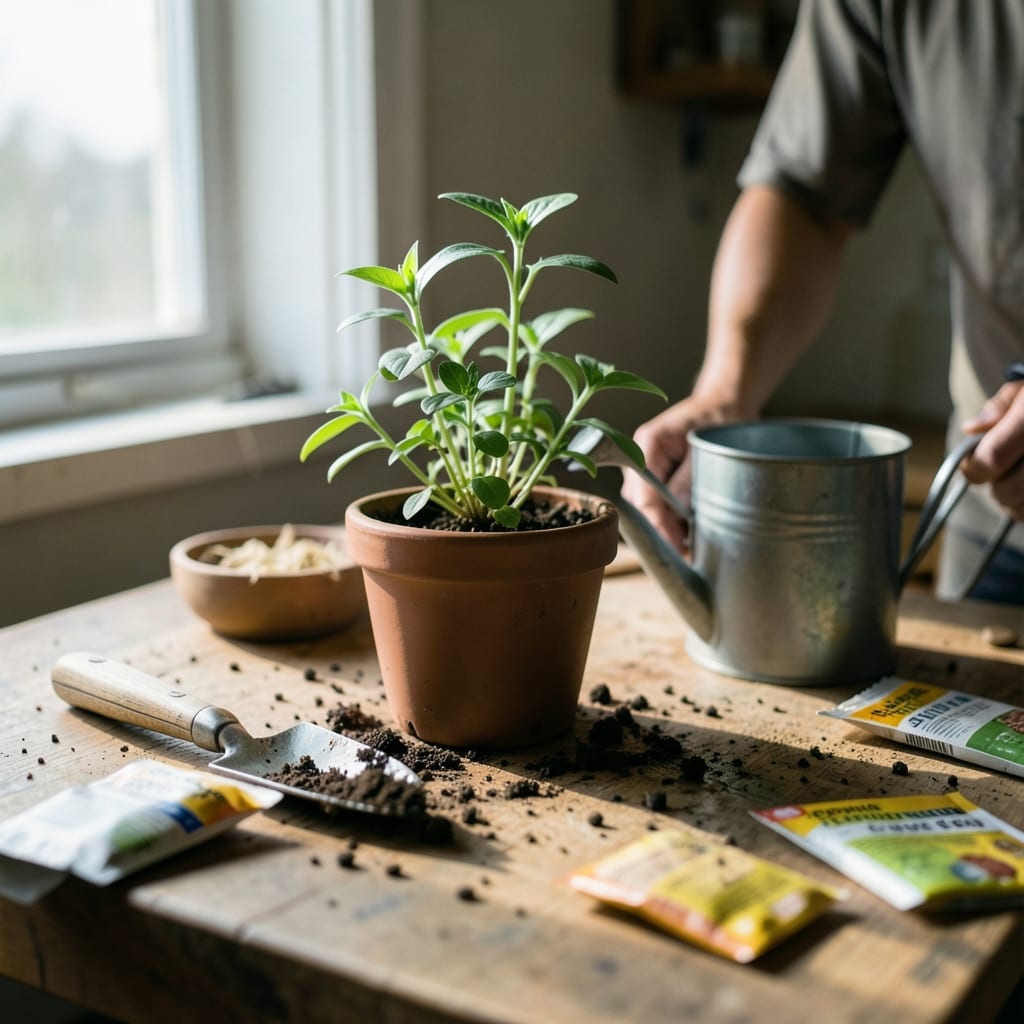
Why this site exists
You’re holding a seed packet or staring at a bare patch of soil, wondering if this year’s tomatoes will survive past the first frost—or if the basil will even make it to harvest.
The instructions on the back of the packet assume you already know what to do with the soil, the light, and the pests. This site doesn’t.
Here, every tip, every failure, and every hard-won lesson is written for the real conditions of a garden: the uneven sun, the soil that won’t drain, the year when the rabbits moved in. No grand promises, just the things that actually work—or don’t—and why.
Who writes this site

Dominic Montoya runs this site.
Do you test everything before writing about it?
Yes—but ‘tested’ means planting it, letting it fail, then trying again with the lesson learned. That basil that died? I grew it three times before I admitted it hates our shade.
What do you get wrong most often?
Timing. I’ll swear the soil is ready, then the seeds rot because it was still too cold. Or I’ll pull up a plant too soon because I *swear* it’s time, only to find the roots still tangled in the pot.
Why isn’t that thing I wanted here?
If I haven’t grown it myself—or at least talked to someone who has, in *this* climate—I won’t write about it. No guesswork. If you’re missing a guide on growing peppers in Zone 5, that’s why.
Dominic still keeps a notepad by the back door to scribble down what the soil smells like after rain, or which weeds show up first in spring. The garden’s worst enemy isn’t pests—it’s forgetting what worked last year.
How a guide is built
It starts with a question: *What actually grows here?* Not what *should* grow, or what works in a perfect greenhouse, but what survives in this light, this soil, this year’s weird weather. The first draft is always a mess—half guesswork, half wishful thinking.
The first planting
The soil gets tested for pH, drainage, and what’s already living in it. The seeds go in at the wrong depth, or the wrong time, or both. Some sprout too fast, some take their sweet time, and some never show up.
The notes from this stage are scribbled on the back of old seed packets.
The fixes
What doesn’t work gets thrown out or replanted. The survivors get adjusted—more shade, less water, a different fertilizer. If the tomatoes split, it’s because of too much rain. If the lettuce bolts, it’s because the days got too long. The second round is where the real lessons start.
What we will not do
This site won’t sell you on perfect gardens, or pretend that every plant thrives every year. The soil is never ‘just right’—it’s always a work in progress, and so are the guides here.
Things you will never find here
- Step-by-step instructions for a garden that doesn’t match yours.
- Photos of plants that look nothing like what you’ll actually grow.
- Advice that assumes you have a greenhouse or a climate-controlled space.
- Claims about ‘foolproof’ methods—because there are no such things.
Where to start
Begin with the *Seasonal Guides*—they’re organised by what grows when, not by what *should* grow. If you’re new, the *Troubleshooting* section is where most people land eventually. And if you can’t find what you need?
The *Ask a Question* form is the fastest way to get an answer tailored to your soil.
Say hello
The writers like hearing about gardens that surprised you—whether it was the zucchini that took over the yard or the flower that refused to die. Questions about your local pests, soil quirks, or what’s growing (or not) in your patch are always welcome. Start on the contact page.
The guides are grouped by category: Advice, Aphids, Blooming, Companion Plants, Container Gardens and Diseases.