
Orchid Care
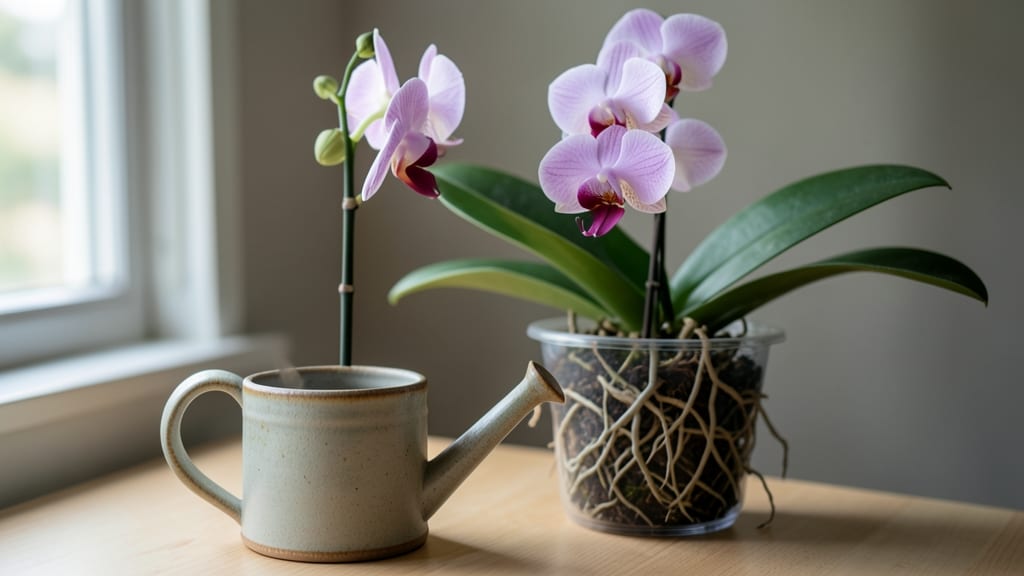
The growing season for indoor orchids runs from March to September, when longer daylight hours and warmer temperatures stimulate active root development and flowering. During this period, maintain daytime temperatures between 65–80°F and nighttime temperatures between 55–70°F, along with bright, indirect light.
Indoor orchids thrive during this 6-month window because their natural tropical origins evolved to respond to seasonal changes in daylight and temperature. 🌿 The key is mimicking these conditions indoors—think of it like giving your orchid a controlled vacation from dormancy.
For example, in April and May, when daylight stretches longer, you'll notice new growth spikes if you provide consistent humidity (around 50–70%) and avoid drafts. The magic happens when you balance warmth with adequate airflow, which prevents fungal issues while keeping roots active.
What many growers overlook is how temperature fluctuations between day and night actually signal blooming. A 10–15°F difference between daytime highs and nighttime lows can trigger flower spikes, especially in varieties like Phalaenopsis.
Pro tip: If your orchid starts dropping buds in late summer, it might be transitioning to dormancy too early—try extending its light exposure with a grow bulb until September.
💡 In This Article
- Orchid Growth Cycles Explained: Light and Temperature Science
- Month-by-Month Orchid Care Calendar for Indoor Growers
Orchid growth cycles explained: light and temperature science
Orchids follow a natural growth rhythm tied to photosynthesis efficiency and temperature cues. During spring and summer, longer daylight (12+ hours) exposes orchids to blue and red light wavelengths, which are critical for chlorophyll production and energy storage.
These wavelengths trigger cell division in the roots and shoots, leading to visible growth spikes. For example, Phalaenopsis orchids—one of the most common indoor types—respond dramatically to 14–16 hours of light per day during peak season, which is why they often bloom in late spring or early summer.
The temperature differential between day and night acts like a biological clock for orchids. A 10–15°F drop at night (e.g., from 75°F days to 60°F nights) signals the plant to enter a blooming cycle, thanks to a process called vernalization.
This temperature shift mimics the natural tropical climate where orchids experience cooler evenings after warm days. Without this contrast, orchids may produce fewer flowers or none at all. Humidity also plays a hidden role—maintaining 50–70% humidity reduces transpiration stress, allowing roots to absorb nutrients more efficiently during active growth.
Here's what happens under the surface: Orchid roots contain velamen, a spongy outer layer that stores water and air. When temperatures stay consistently warm (above 75°F), this layer becomes less effective, leading to root rot if overwatered.
The growing season's ideal conditions—65–80°F days and 55–70°F nights—keep the velamen active while preventing fungal growth. Think of it like a tropical rainforest microclimate: warm but not scorching, with enough airflow to keep roots healthy.
Light intensity matters just as much as duration. Orchids need 1,000–2,000 foot-candles of indirect light (about half the brightness of direct sunlight). Too little light leads to etiolation—long, weak stems with sparse leaves—while too much causes leaf burn.
A north-facing window typically provides 1,500 foot-candles, perfect for most indoor orchids, whereas a south-facing window can exceed 3,000 foot-candles, requiring sheer curtains to diffuse the light. 🌿
Seasonal transitions are where many growers stumble. As daylight shortens in September, orchids naturally prepare for dormancy by slowing root activity. If you don't adjust care—reducing fertilizer and increasing airflow—your orchid may drop buds prematurely.
The key is to gradually reduce watering while maintaining humidity, signaling the plant that winter is coming without shocking its system.
Consider this real-world example: A Phalaenopsis orchid in a 68°F room with 60% humidity and 14 hours of grow light will show new root growth within 4–6 weeks of entering its growing season. Without adequate light, those roots might grow weak and pale, unable to support blooming.
The science shows that orchids are light-hungry during their active phase—just like a sunflower turning toward the sun, but with far more precision in their needs.