
Companion Plants
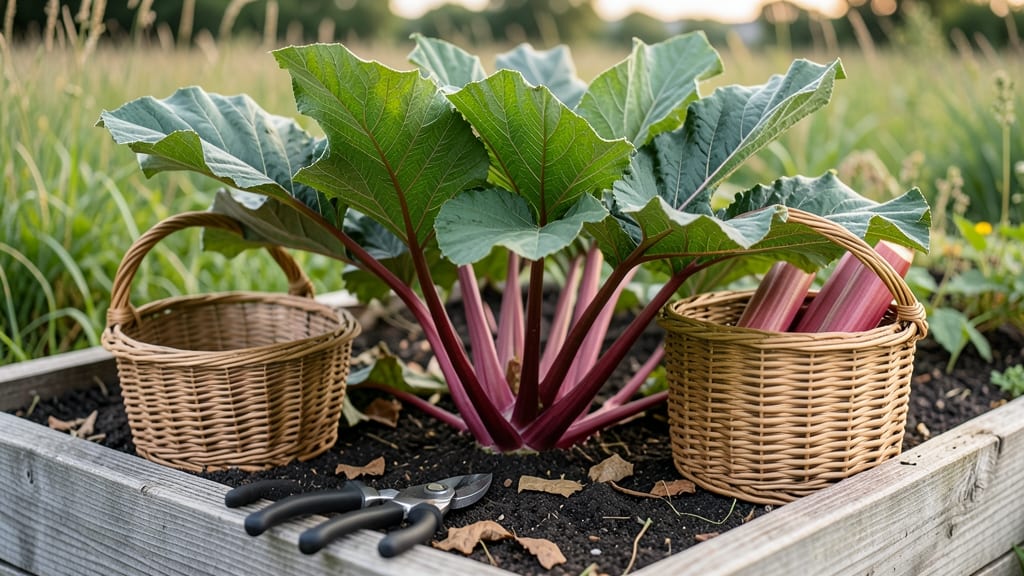
Rhubarb is in season from late spring through early summer, typically May to June in most USDA zones, with peak harvest timing varying by climate—cooler regions yield earlier, while warmer areas produce later in the season. Look for firm, crisp stalks with vibrant red or green hues for ideal ripeness.
Knowing when rhubarb reaches peak freshness helps you pick the best stalks for pies or sauces. 🌱 Cooler climates like USDA Zones 3-5 often see harvests start as early as April, while Zones 7-10 may not reach full ripeness until late June or even July.
The key difference? Frost-free days—rhubarb needs consistent warmth to develop its signature crispness and sweet-tart flavor. I always check local frost dates to time my garden harvests, since even a light frost can turn tender stalks mushy.
Beyond timing, stalk appearance reveals ripeness. Ideal rhubarb should feel firm to the touch with a slight snap when bent—think of a fresh asparagus spear. Vibrant red or green hues (never brown or slimy) indicate freshness, while thick stalks (about 1-2 inches wide) hold up better to cooking.
Pro tip: Harvest stalks when they're 8-12 inches long for the perfect balance of tenderness and flavor.
💡 In This Article
- Rhubarb Season by USDA Plant Hardiness Zones
- How to Identify Perfectly Ripe Rhubarb Stalks
Rhubarb season by USDA plant hardiness Zones
Rhubarb's harvest window shifts dramatically across USDA zones due to temperature sensitivity. In Zones 3-5, where winters are harsh, plants often break dormancy by late April, yielding tender stalks by early May.
The 10-14°F chill requirement for winter hardiness means these regions get a head start, while Zones 6-7 typically see harvests begin in mid-May, aligning with last frost dates.
The Pacific Northwest's cool maritime climate creates an exception—here, rhubarb thrives with consistent 50-60°F days, producing stalks as early as April but extending harvests into July due to mild summers. 🌿
Warmer zones like 8-10 face challenges: temperatures above 85°F stress plants, causing stalks to become woody or fibrous. In Florida or Southern California, harvests peak in June-July but require shade cloth to prevent heat damage.
Early varieties like 'Cherry Red' mature in 90-120 days, while late varieties such as 'Victoria' take 150+ days, explaining why Zone 10 gardens might not see full ripeness until August.
The vernalization process (cold requirement) also plays a role—plants in Zone 9 often need winter chilling to produce quality stalks.
Understanding these patterns helps gardeners time harvests for peak flavor. In Zones 3-5, focus on May-June when stalks reach 8-12 inches and have vibrant red or green hues. In Zones 7-10, prioritize late morning harvests to avoid heat stress, and consider mulching to maintain soil moisture.
The 3-4 week harvest window in cooler zones shrinks to 2 weeks in warmer areas, making timing critical for preserving freshness. 🌡️
Regional microclimates add complexity: mountain valleys in Zone 6 may harvest 2 weeks earlier than coastal areas due to cooler nights. The Pacific Northwest's extended season contrasts with Southern states' shorter windows, where humidity increases disease risk.
For home growers, tracking growing degree days (GDD)—a measure of heat accumulation—helps predict ripening. Rhubarb typically needs 1,200-1,500 GDD from sprouting to harvest, with cooler climates reaching this faster.
What most people overlook is how day length affects ripening. Longer daylight hours in summer accelerate growth, but excessive heat reduces quality. In Zone 8, for example, June harvests may yield 20% smaller stalks than May due to heat stress.
This is why commercial growers in warmer regions often use drip irrigation and shade netting to extend the harvest window by 3-4 weeks. The interplay between temperature, daylight, and soil moisture creates the perfect storm for optimal rhubarb production. 🌞
For those buying from markets, timing matters too. Early-season rhubarb in Zone 5 (May) will be softer and sweeter than late-season stalks in Zone 9 (July), which may taste more tart. The sugar-acid balance shifts with temperature—cooler nights enhance sweetness, while hot days increase tartness.
This explains why Pacific Northwest rhubarb often ranks as the sweetest, with 2-3% higher sugar content than Southern-grown varieties. Understanding these regional nuances ensures you select rhubarb at its peak for your recipes. 🍓