
Vegetables
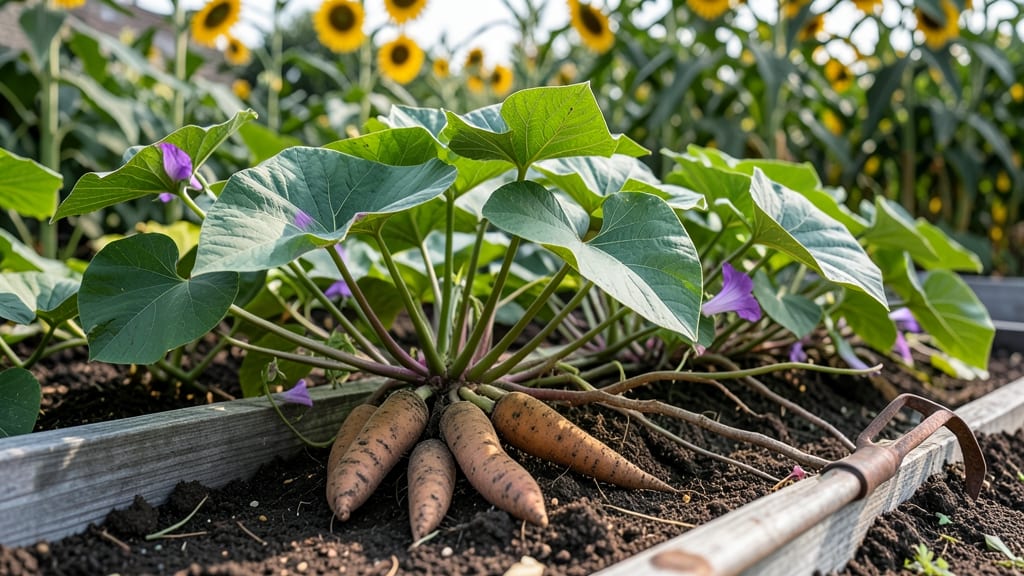
Sweet potatoes are seasonal crops with peak harvests varying by region—typically late summer to fall in warmer climates, while cooler areas may extend into early winter. Storage conditions determine availability year-round, but fresh harvests offer superior flavor and texture.
Sweet potatoes thrive best when grown in warm weather, which is why their harvest seasons shift dramatically depending on where you live.
In the South, you'll find peak harvests as early as late summer, while Northern states often see their best yields in fall or even early winter before the first frost.
The key difference comes down to frost-free growing periods—sweet potatoes need 90-150 days of warm soil to mature, so cooler climates simply have shorter windows. 🌱
What makes this seasonal nature interesting is how it affects flavor and storage. Freshly harvested sweet potatoes—especially those dug just before the first frost—develop deeper sweetness and smoother textures. Once stored properly in cool, dark conditions (55-60°F)**, they can last for months, but their quality gradually declines over time.
That's why many gardeners and farmers prioritize buying local during harvest season rather than relying on year-round grocery store options.
💡 In This Article
- Sweet Potato Harvest Seasons by U.S. Growing Regions
- How to Identify Perfectly Ripe Sweet Potatoes at Market
Sweet potato harvest seasons by U.s. growing regions
The U.S. can be divided into three distinct sweet potato growing zones based on frost-free periods and temperature patterns.
Southern states like Louisiana, North Carolina, and Georgia experience peak harvests between August and October, thanks to their long, hot growing seasons that provide ideal 90-120 days of warm soil temperatures above 68°F.
These regions account for nearly 90% of U.S. production, with North Carolina alone producing about half of the national supply during this window. 🌞
Midwestern and Northeastern states face shorter growing seasons, pushing their harvest windows later. In states like Ohio, Michigan, and New York, sweet potatoes typically reach maturity between late September and November, requiring careful planting schedules to fit within 120-150 frost-free days.
The challenge here is that cooler nighttime temperatures can slow growth, sometimes delaying harvest by 2-3 weeks compared to Southern regions. For example, Michigan's average first frost arrives around October 15, leaving farmers with a tight window to harvest before ground temperatures drop below 50°F.
Western states present unique conditions where elevation plays a critical role. California's Central Valley—home to 20% of U.S. production—harvests primarily from September through December, thanks to its Mediterranean climate with warm days and cool nights.
Meanwhile, higher-elevation areas like Colorado and Utah often see harvests delayed until late fall or early winter, with some farmers using row covers to extend the growing season by 2-4 weeks.
The key factor here is soil temperature: sweet potatoes won't sprout until soil reaches 60°F, which can take weeks longer at higher elevations. 🏔️
What most people don't realize is how latitude affects the sweetness development. Sweet potatoes grown in Southern regions develop their signature sweetness through higher natural sugar content when exposed to consistent 80°F+ temperatures during maturation.
Northern-grown sweet potatoes, while still delicious, often have slightly lower sugar content because cooler temperatures slow the conversion of starches to sugars. This is why Southern-grown varieties like 'Beauregard' (the most popular in the U.S.) are prized for their rich, caramel-like flavor compared to Northern varieties.
Climate change is also shifting these traditional harvest windows. Warmer winters in Northern states are allowing some farmers to experiment with year-round production using protected growing systems, while Southern states now face occasional early frosts that can damage late-season crops. The result?
A gradual blurring of traditional harvest boundaries where October-November is becoming the new "universal" harvest window across many regions. This shift explains why grocery stores increasingly offer sweet potatoes year-round—though with noticeably different flavor profiles compared to fresh harvests. 🌍
For home gardeners, understanding these regional patterns helps with planting decisions. If you live in USDA Zone 7 or warmer, you can plant sweet potato slips as early as April-May for a fall harvest.
But in Zone 5 or cooler, waiting until mid-to-late May gives you a better chance of harvesting before the first frost. The key is matching your planting schedule to your region's average 100-day frost-free period, which is why extension services provide localized planting charts. 📅