
Flowers
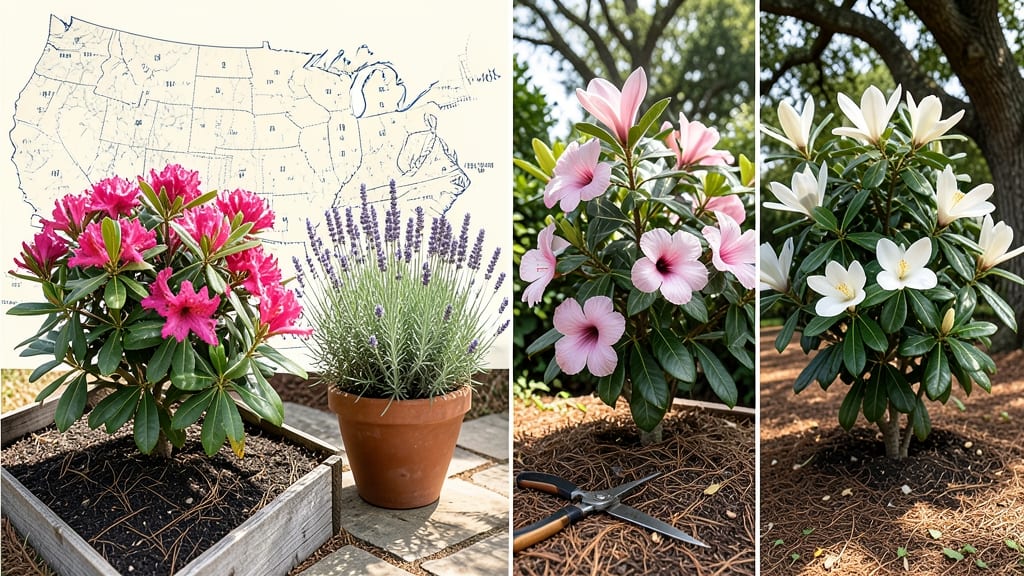
Understanding flower zones in the USA helps you choose plants that thrive in your region, using the USDA Plant Hardiness Zone Map to match flowers with local climate conditions. Most U.S. areas span Zones 3 through 11, directly impacting what blooms successfully each season.
The USDA Plant Hardiness Zone Map divides the country into 13 temperature-based zones, numbered from coldest (Zone 3) to warmest (Zone 11).
These zones reflect the average annual minimum winter temperatures, which determine which flowers can survive frost and thrive year-round. 🌸 For example, tropical flowers like hibiscus need Zone 10-11 climates, while hardy perennials like peonies flourish in Zones 3-8.
Knowing your zone helps you avoid costly mistakes like planting frost-sensitive blooms in colder regions.
Each state typically falls into 1-3 zones, creating distinct gardening regions. For instance, Florida's Zone 9-11 supports year-round blooms, while Minnesota's Zone 3-4 requires cold-resistant varieties. The map also accounts for microclimates—urban areas may be slightly warmer than rural zones, affecting plant success.
Always check your specific zone before purchasing flowers to ensure they'll grow happily in your garden.
💡 In This Article
- How USDA Plant Hardiness Zones Affect Flower Selection
- State-by-State Flower Zone Guide for U.S. Gardeners
How USDA plant hardiness zones affect flower selection
The USDA Plant Hardiness Zone Map isn't just about cold tolerance—it's a precise calculation of the average annual minimum temperature a region experiences. Each zone represents a 10°F range, with Zone 3 enduring down to -40°F while Zone 11 stays above 30°F.
This temperature threshold determines whether a flower's cellular structure can survive winter dormancy. For example, a tulip bulb (Zone 3-8) has protective layers that prevent frost damage, while a bougainvillea (Zone 9-11) would freeze solid in Zone 5 winters. 🌱
Beyond winter survival, zones influence frost-free days, which affect bloom timing. Southern zones (9-11) enjoy 300+ frost-free days, allowing tropical flowers like plumerias to bloom year-round. In contrast, northern zones (3-5) have only 90-150 frost-free days, limiting annuals to summer displays.
The map also accounts for heat zones—some flowers (like cacti) need Zone 10's 90°F+ summers, while others (like delphiniums) thrive in cooler Zone 5 summers. This dual-layered system explains why a rose bush might flourish in Zone 6 but struggle in Zone 8's oppressive humidity.
Understanding these mechanics helps you avoid zone mismatches. A dahlias (Zone 8-11) planted in Zone 4 will die back to the ground annually, while a coneflower (Zone 3-9) will naturalize effortlessly. The key is matching a flower's hardiness range to your zone's extremes.
For instance, succulents (Zone 9-11) need protection from below 30°F temperatures, which can cause irreversible cell damage. This precision is why gardeners in Zone 7 might grow daylilies (Zone 3-9) but avoid orchids (Zone 10-11).
Seasonal variations also play a role. In Zone 4, spring-blooming bleeding hearts emerge early to capitalize on the brief frost-free window, while Zone 10's jasmine blooms continuously.
The map's 10°F increments create clear boundaries—planting a Zone 5 flower in Zone 6 might result in stunted growth, as the 5°F warmer winters push the plant's limits. Even within a state, microclimates (like urban heat islands) can shift effective zones by 1-2 levels, making local observations crucial.
For practical application, always check a flower's hardiness zone range on its tag or database. A Zone 5-9 flower like black-eyed Susans will thrive in Zone 6 but may struggle in Zone 4's colder winters.
The USDA map's interactive tool lets you pinpoint your exact zone, accounting for elevation and urban heat effects. This level of detail transforms guesswork into successful gardening—whether you're planting cold-hardy peonies in Zone 3 or heat-loving bougainvilleas in Zone 10. 🌿
What most gardeners overlook is how soil temperature interacts with hardiness zones. Even in Zone 5, spring bulbs like tulips need soil temps above 50°F to break dormancy. Meanwhile, Zone 9's camellias require consistent moisture to handle summer heat.
These nuances explain why a flower labeled for your zone might still fail—it's not just about winter survival but year-round climate compatibility. Always verify both hardiness zone and microclimate needs for foolproof results.