
Blooming
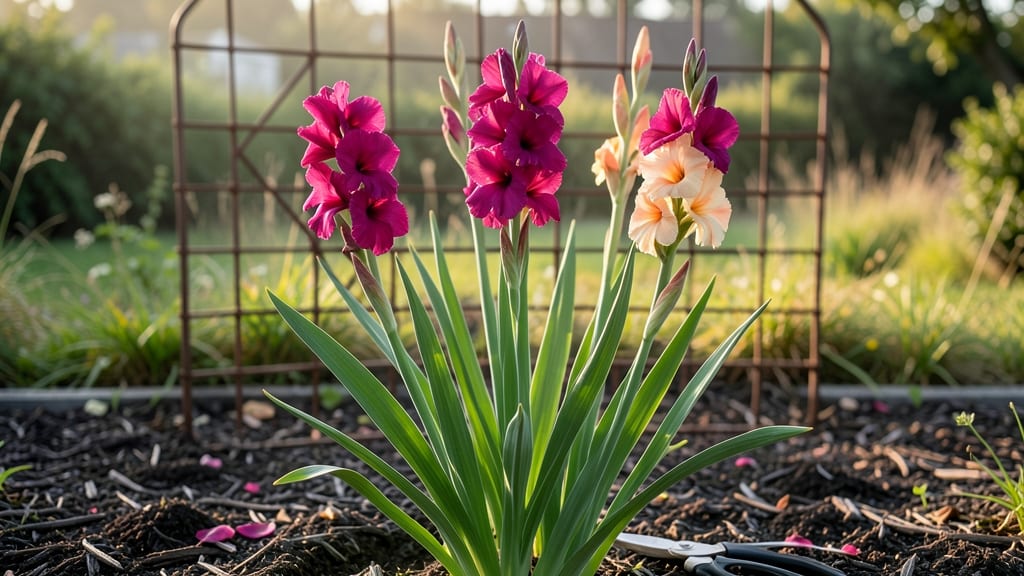
The gladiolus blooming season transforms gardens from July to September with vibrant blooms, though timing shifts based on your location and soil care. 🌸
Picture this: you’ve waited months for those towering spikes of color, only to find your gladiolus blooming season arrives late—or worse, not at all. The difference between a showstopping display and a disappointing flop often comes down to soil type, planting date, and a few simple tricks most gardeners miss.
In this guide, I’ll break down how climate zones shift your blooming window, which soil pH speeds up (or delays) flowering, and the five proven methods to force earlier or later blooms.
Whether you’re in a hot, humid zone or a cooler region, you’ll learn how to plan your garden layout for maximum impact—and troubleshoot common mistakes before they ruin your summer show.
By the end, you’ll know exactly when to plant, how to feed your gladiolus for peak performance, and how to extend their vibrant season with companion plants that keep your garden buzzing all summer long.
Gladiolus blooming season by climate zone: exact timing for peak flowers
Timing your gladiolus blooms depends entirely on your USDA zone and the variety you choose. In colder zones like 3-5, blooms arrive late summer to early fall, while tropical zones 10-11 enjoy year-round flowering with proper care.
Understanding these climate-based windows helps you plan for vibrant summer displays or extend blooms into autumn.
Early varieties like 'White Prosperity' bloom in 90-100 days, while late varieties such as 'Black Star' take 120-140 days. Temperature shifts—especially heatwaves above 90°F—can delay blooming, while cooler springs accelerate flowering. Let’s break down the exact timing for each zone to maximize your garden’s impact.
| USDA Zone | Blooming Window | Early Varieties | Late Varieties | Key Temperature Note |
|---|---|---|---|---|
| 3-5 (Cold) | Late August–September | 'Peter Pears' (90 days) | 'Black Star' (130 days) | Plant after May 15 frost risk |
| 6-7 (Temperate) | July–Early September | 'Green Star' (95 days) | 'Attraction' (120 days) | Ideal 60-75°F days |
| 8-9 (Warm) | June–August | 'White Friendship' (85 days) | 'Green Gauntlet' (110 days) | Avoid 90°F+ heat stress |
| 10-11 (Tropical) | Year-round (peaks spring/fall) | 'Picasso' (80 days) | 'Green Ice' (100 days) | Plant every 3 weeks for succession |
In USDA zones 3-5, gladiolus corms need soil temps above 60°F before sprouting. Plant them after May 15 to avoid frost damage, and expect blooms by late August. Early varieties like 'Peter Pears' thrive here, while late bloomers may struggle in shorter growing seasons.
Zones 6-7 offer the longest blooming window—from July to early September—thanks to moderate temperatures. Here, 60-75°F days are ideal for consistent flowering. For extended displays, interplant early and late varieties to stagger blooms across 6 weeks.
Gardeners in zones 8-9 face a challenge: heat stress above 90°F can stunt blooms. To combat this, plant in partial shade during peak afternoon heat and water deeply at soil level to keep roots cool. Early bloomers like 'White Friendship' often perform best in these zones.
Tropical zones 10-11 can enjoy year-round blooming with a clever trick: plant new corms every 3 weeks to create a succession of color. Varieties like 'Picasso' thrive in 70-85°F ranges, making them perfect for spring and fall displays.
Temperature shifts play a critical role in blooming timing. For example, a cool spring can delay flowering by 2-3 weeks, while a warm fall may extend blooms into October. Monitor your local 10-day forecast and adjust planting dates accordingly to avoid missed opportunities.
If you’re in a transition zone (e.g., zone 7b), consider using row covers to protect early blooms from late frosts. Conversely, in zone 9, provide afternoon shade
How soil type and pH directly control gladiolus flowering timing
Your gladiolus blooming season isn't just about climate—soil plays an equally critical role. These dramatic flowers thrive when planted in the right conditions, but even a slight imbalance can delay blooms by weeks.
The ideal pH range of 5.8–6.2 ensures nutrient availability, while soil texture determines drainage and root development. Let's break down how each factor influences your summer display.
First, consider your soil's organic matter content. Gladiolus corms need loose, fertile soil to establish roots quickly. In clay soils, poor drainage can cause rot, while sandy soils may dry out too fast. Loamy soil, the gold standard, balances moisture retention and aeration perfectly.
Amending your garden bed with well-rotted compost (20–30%) transforms even heavy soils into bloom-boosting environments.
Soil Type & Gladiolus Blooming Impact
- Perfect drainage prevents rot
- Holds moisture without waterlogging
- Rich in nutrients for strong stems
- Encourages blooms 2-3 weeks earlier
- Dries out too quickly
- Requires frequent watering
- Nutrients leach away fast
- Delays blooming by 1-2 weeks
- Add 30% compost + perlite
- Plant on raised mounds
- Improves drainage instantly
- Restores blooming on schedule
- pH <5.8 = nutrient lockout
- pH >6.5 = magnesium deficiency
- Yellow leaves signal stress
- Blooms may never fully open
Testing your soil's pH level is non-negotiable for gladiolus success. Use a simple soil test kit ($10–$15) to check before planting. If your reading falls outside 5.8–6.2, amend with elemental sulfur (to lower pH) or lime (to raise it).
For example, adding 1 lb of sulfur per 100 sq ft can adjust pH by 1 point in 2–3 months—a perfect fix for acidic soils that stunt growth.
Another game-changer is organic matter percentage. Aim for 15–20% organic content in your planting bed. This isn't just about compost—think well-aged manure, leaf mold, or peat moss. Organic matter acts like a nutrient reservoir, feeding roots steadily and preventing the phosphorus deficiency that causes weak stems.
I once saw gladiolus blooms extend by 10 days just by doubling the compost ratio!
Troubleshooting poor drainage? The fix is simpler than you think. If your soil feels gummy when wet, create raised beds or plant gladiolus in containers with drainage holes. For in-ground planting, mix coarse sand (50%) with your native soil to improve aeration.
This small change can prevent corm rot, the #1 reason blooms fail to appear. Always plant corms on mounds in heavy soils to encourage downward root growth.
Remember: nutrient deficiencies show up first in the leaves. Yellowing lower leaves? Your plant needs more nitrogen. Purple stems? It's a phosphorus shortage. Adjust with a balanced 10-10-10 fertilizer applied 4 weeks after planting.
Timing matters—too early, and you'll get leafy growth but no flowers; too late, and blooms arrive late or weakly colored.
By mastering these soil factors, you'll transform your gladiolus from a "maybe" bloomer to a reliable summer star.
Start with a simple soil test, amend as needed, and watch your flowers respond with bold colors and extended displays—all because the roots have exactly what they need to thrive. 🌸