
Planting
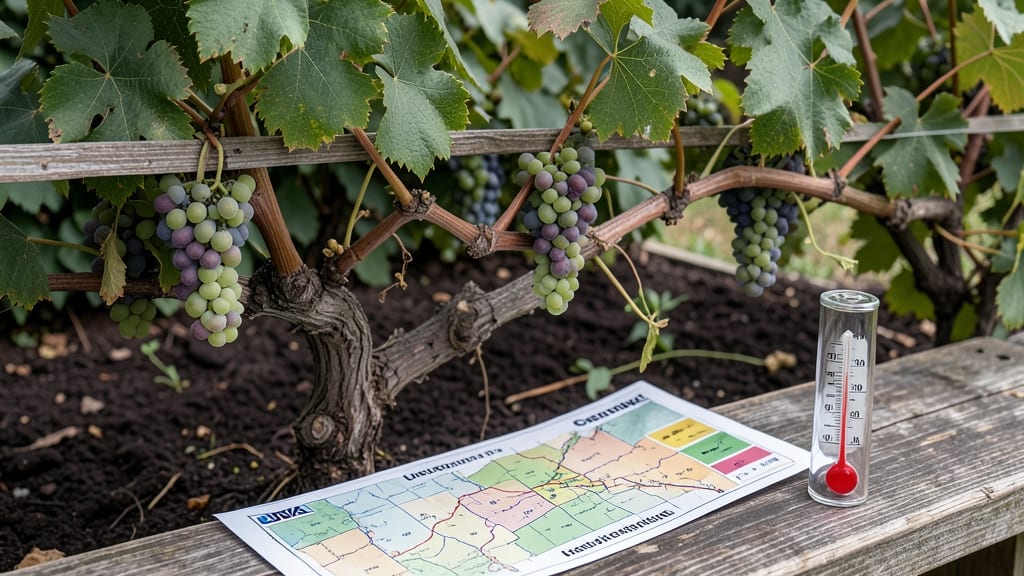
Understanding grape hardiness zones helps you select frost-resistant varieties for your climate, as most cold-tolerant grapes thrive in USDA Zones 5-9. Opt for hardy cultivars like Concord in colder regions or Cabernet Sauvignon in warmer areas, and use protective measures like mulch or winter wraps for vines in transitional zones.
Grape hardiness isn't just about temperature—it's about how vines enter winter dormancy and withstand freezing. Vitis labrusca varieties like Concord can handle -20°F or lower, while Vitis vinifera grapes (like Cabernet) typically need Zone 7 or warmer.
The key difference lies in their bud hardiness: some varieties survive extreme cold but may lose productivity, while others struggle even in mild winters. 🌱 For example, hybrid grapes like Marquette bridge the gap between cold tolerance and wine quality, making them ideal for Zones 3-6.
Your local climate matters just as much as the zone designation. Factors like winter wind exposure, soil moisture retention, and snow cover can push vines into survival mode.
In marginal zones (like Zone 4), I recommend planting grapes near south-facing walls or using row covers during early spring freezes. The goal is to mimic the natural protection grapes evolved with—whether that's deep snow insulation or the buffering effect of surrounding vegetation.
💡 In This Article
- How Cold Tolerance Varies Among Grape Varieties
- Selecting the Right Grapes for Your Zone: A Grower’s Guide
How cold tolerance varies among grape varieties
The science behind grape hardiness begins with understanding two critical components: bud hardiness and cane hardiness. Buds are the most vulnerable part of the vine, containing the genetic blueprint for next year's growth.
When temperatures drop below -10°F, most Vitis vinifera varieties (like Merlot or Pinot Noir) begin suffering irreversible damage to their buds.
In contrast, Vitis labrusca grapes (such as Concord) can withstand -20°F to -25°F thanks to their native resilience from North American forests. 🌡️ The difference lies in their cellular structure—American grapes produce antifreeze proteins that prevent ice crystal formation in their tissues.
Winter dormancy is another key factor. Grapes enter a deep sleep when temperatures consistently drop below 40°F, a process triggered by shorter daylight hours. During dormancy, vines reduce metabolic activity to conserve energy, but they still need to withstand freezing soil temperatures.
European varieties like Cabernet Sauvignon often struggle below Zone 7 because their dormant buds lack the protective sugars and antifreeze compounds found in native American grapes. Interestingly, hybrid varieties like Frontenac combine the best of both worlds, offering Zone 4 hardiness while maintaining wine-quality characteristics.
What most people overlook is the distinction between cane hardiness and bud hardiness. While buds determine next year's growth potential, canes (the woody stems) can often survive colder temperatures.
For example, a Vitis vinifera vine might lose its buds at -10°F but keep its canes intact down to -15°F. This is why some growers in marginal zones use techniques like cane pruning to preserve the woody structure while sacrificing current year's fruit production.
The trade-off is worth it when you're pushing the limits of grape cultivation.
Temperature extremes below 0°F trigger another critical mechanism: dehydration tolerance. As water in grape tissues freezes, the remaining unfrozen water becomes increasingly concentrated, creating a hyperosmotic environment that protects cellular membranes.
American grapes excel at this process, while European varieties often suffer from cytoplasmic ice formation—where ice crystals form inside cells, rupturing their structure. This is why you'll see Vitis vinifera grapes thriving in Zone 9 but struggling in Zone 5, even though both areas experience similar summer conditions.
Here's what this means for your garden: If you're in Zone 4 or colder, focus on Vitis labrusca or hybrid varieties that can regenerate from their rootstock even after severe bud damage.
In Zones 5-7, you can successfully grow European varieties with proper winter protection, while Zones 8-10 open up possibilities for heat-tolerant grapes like Tempranillo or Grenache. The key is matching your grape's cold tolerance to your lowest expected winter temperature, not just your average zone designation.
Consider this real-world example: In Zone 5 Minnesota, growers often plant Marquette grapes because they can handle -25°F winters while producing wine-quality fruit. Meanwhile, in Zone 7 Virginia, Cabernet Franc thrives with minimal winter protection because it rarely sees temperatures below -10°F.
The same variety planted in Zone 4 Wisconsin would likely lose its buds every winter without careful management. 🍇