
Planting
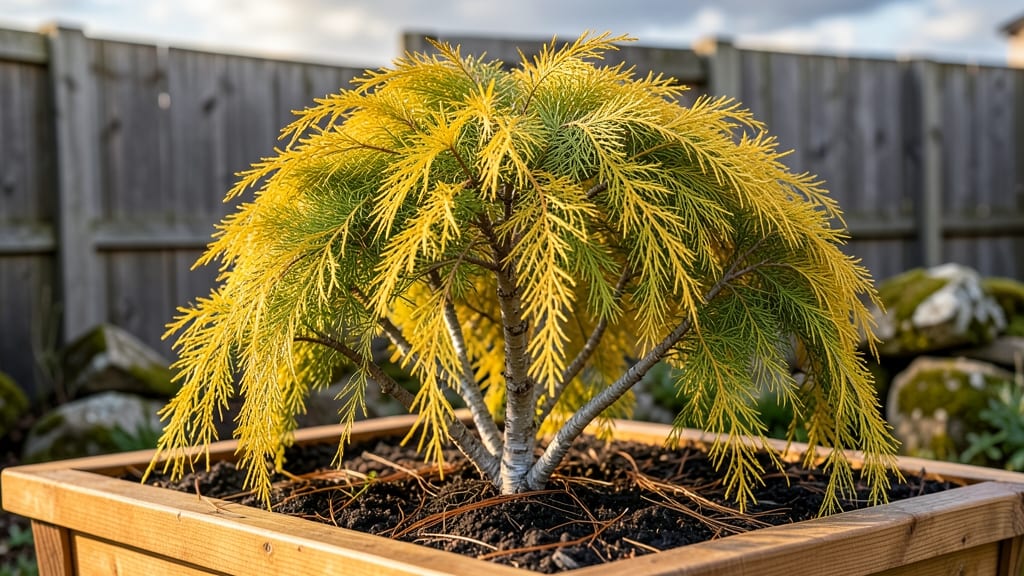
The lemon cypress zone spans USDA Hardiness Zones 7 through 10, where it thrives with well-drained soil and partial shade in warmer regions. Its natural drought resistance and salt tolerance make it perfect for coastal or Mediterranean gardens.
Lemon cypress isn't just about the zone number—it's about the climate's overall conditions. 🌿 In Zones 7-10, this aromatic evergreen handles heat and humidity better than most, but it still needs protection from intense afternoon sun in areas like Southern California or Florida.
The key is mimicking its native Mediterranean environment: loose, sandy soil that drains fast and a spot where it gets morning sun and afternoon shade.
I've seen it struggle in heavy clay soils, even in Zone 9, so amending the soil with compost or gravel is often necessary for long-term success.
For gardeners in marginal zones (like Zone 6 with microclimates), container growing with winter protection works well. The plant's ability to tolerate salt spray also makes it a star in seaside landscapes, where few other shrubs survive.
Just remember: while it loves the coast, it hates soggy roots—always plant on a slight slope or in raised beds.
💡 In This Article
- Understanding Lemon Cypress Climate Requirements
- Optimal Planting Locations for Lemon Cypress
Understanding lemon cypress climate requirements
The lemon cypress's hardiness in Zones 7-10 comes from its Mediterranean heritage, where it evolved to survive hot, dry summers and mild winters. This evergreen thrives in temperatures ranging from 10°F to 100°F, but its growth rate slows below 40°F.
The real secret lies in its waxy, needle-like foliage, which reduces water loss through transpiration by up to 30% compared to broader-leaved plants. This adaptation lets it handle drought and salt spray without wilting.
Humidity plays a critical role too. In coastal Zones 9-10, the plant's salt tolerance—up to 1,500 ppm in soil—comes from specialized glandular hairs that excrete excess salt. However, inland areas with high summer humidity (like Zone 8's Deep South) require more airflow to prevent fungal issues.
The plant's roots also grow shallowly but widely, spreading 2-3 feet horizontally to access moisture while avoiding waterlogged soil. 🌡️
Soil drainage is non-negotiable. Lemon cypress roots suffocate in clay or compacted soil, which is why it struggles in Zones with heavy, poorly drained earth. The ideal soil mix mimics its native Mediterranean environment: 60% sandy loam, 30% organic matter, and 10% perlite or gravel.
In containers, this ratio prevents root rot while allowing excess water to escape. Even in Zones 7-8, where winters dip below freezing, the plant's ability to enter dormancy protects it from cold damage.
Microclimates create exceptions. Coastal Zone 9 gardens benefit from ocean breezes that moderate temperatures, while inland Zones 7-8 may need afternoon shade to prevent leaf scorch.
The plant's flexibility means it can adapt to 30-80% sunlight, but full sun in arid Zones 9-10 requires weekly deep watering during the first growing season. Over time, its drought resistance kicks in, reducing water needs by 50% once established.
What most gardeners overlook is how wind affects lemon cypress. Coastal plantings in Zones 9-10 need staking during the first year, as salt-laden winds can desiccate young foliage. Inland Zones 7-8, however, benefit from wind exposure, which improves air circulation and reduces humidity-related stress.
The plant's natural growth habit—compact and rounded—also makes it ideal for windbreaks in exposed areas. 🌬️
For those pushing the limits in Zone 6, container growing with winter protection (like burlap wraps) works well. The plant's ability to tolerate brief freezes (-5°F for short periods) makes it more adaptable than its cousin, the Italian cypress.
However, prolonged cold snaps below 15°F will cause leaf burn, so mulching with 3-4 inches of wood chips insulates roots and extends hardiness by 2-3 zones.