
Planting
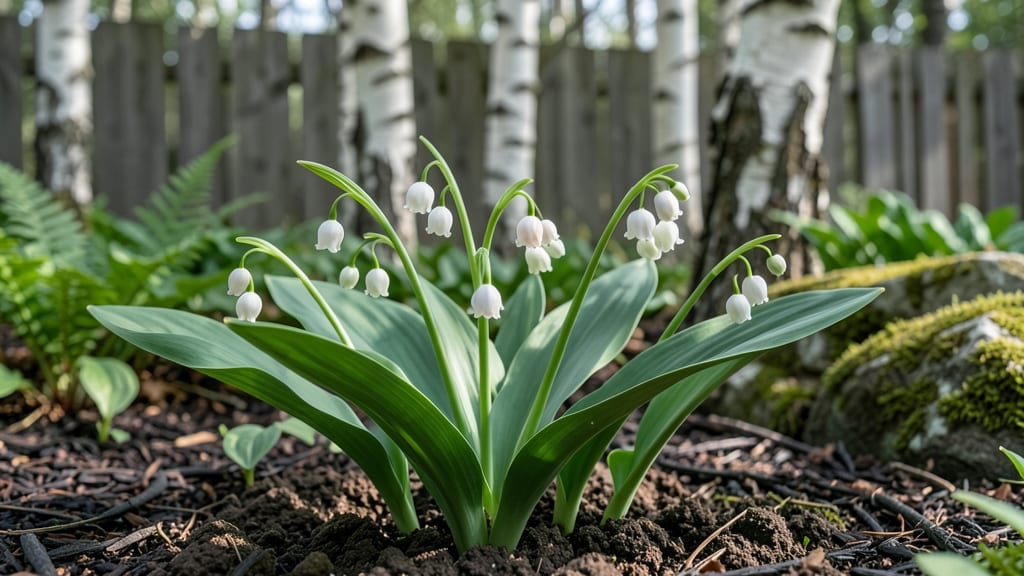
Lily of the valley thrives in Zones 3-8 when planted with rhizomes buried 2-3 inches deep and spaced 6-12 inches apart, in partial shade with rich, moist soil that drains well.
This hardy perennial loves the cooler climates of Zones 3-8, where it can handle winter chills and summer humidity without stress. 🌿 The key is mimicking its natural woodland habitat—partial shade protects the delicate blooms while allowing enough light for strong root development.
I've found that adding a 2-inch layer of organic mulch helps maintain soil moisture and temperature, which is especially important during the hotter months in Zone 8. The rhizomes need consistent moisture but will rot if waterlogged, so well-draining soil is non-negotiable.
What sets lily of the valley apart is its adaptability to different soil types, though it prefers slightly acidic conditions. If your soil is heavy clay, amending with compost before planting makes a noticeable difference in how quickly the plants establish.
And here's a pro tip: plant in early fall for a head start on root growth, or in spring after the last frost date—both timings work well in these zones.
💡 In This Article
- Ideal Growing Conditions for Lily of the Valley by Zone
- Step-by-Step Planting Guide for Hardy Lily of the Valley
Ideal growing conditions for lily of the valley by Zone
Lily of the valley's success in Zones 3-8 comes down to three critical factors: temperature tolerance, light exposure, and soil chemistry.
This perennial thrives in the cooler climates of these zones because its rhizomes can survive winter temperatures down to -30°F, thanks to their natural antifreeze proteins that prevent ice crystal formation in cells.
In Zone 8's warmer winters, the plants may go dormant but still recover beautifully with proper care. The real challenge comes in summer—too much direct sun (especially in Zone 8) causes the foliage to scorch, while too little light weakens flowering.
The partial shade requirement isn't just about avoiding sunburn—it's about maintaining the delicate balance of photosynthesis and moisture retention.
In Zone 3, where summers are shorter, lily of the valley can handle 3-4 hours of morning sun, while Zone 8 gardens should limit exposure to 2 hours of dappled light.
The key is mimicking the dappled light conditions of its native woodland habitat, where sunlight filters through tree canopies. I've noticed that planting under deciduous trees (like maple or birch) gives the perfect light pattern—bright but indirect—especially during the critical blooming period in late spring.
Soil pH plays a surprisingly large role in how vigorously these plants grow. Lily of the valley prefers slightly acidic conditions (pH 6.0-7.0), where nutrient availability—particularly iron and manganese—is optimal for chlorophyll production.
In alkaline soils (common in Zones 5-8), the plants may still grow but often produce fewer blooms because iron becomes less available. A simple soil test before planting can reveal whether you need to amend with elemental sulfur or peat moss.
The rhizomes also need consistent moisture, but their roots are shallow—this is why well-draining soil is essential to prevent rot during wet springs.
Let's talk about moisture management, which varies dramatically across these zones. In Zone 3, where winters are dry and springs often wet, mulching with 2-3 inches of shredded bark helps retain moisture while preventing soil compaction. Zone 8 gardens face the opposite challenge—summer droughts can stress the plants.
Here, a 3-inch layer of organic mulch combined with regular deep watering (1 inch per week) makes all the difference. The rhizomes store water during the growing season, which is why consistent moisture is more important than frequent light watering.
What most gardeners don't realize is how temperature fluctuations affect flowering. In Zone 4-5, a cold winter followed by a gradual spring thaw triggers robust blooming, while Zone 8's milder winters sometimes result in weaker displays. The solution?
Plant in areas with afternoon shade to prevent heat stress, and consider dividing mature clumps every 3-4 years to rejuvenate growth. This perennial's adaptability is one of its charms—with the right conditions, it can naturalize beautifully, creating fragrant ground covers that spread 12-18 inches per year under ideal circumstances.
For those in Zone 7 and warmer, container growing is an excellent option. Use pots with drainage holes and a mix of 50% peat moss, 30% perlite, and 20% compost**, which mimics the moisture-retentive yet well-draining conditions these plants love.
The containers can be moved to shaded areas during peak summer heat, giving you control over light exposure that's often impossible in ground plantings. 🌿