
Pruning
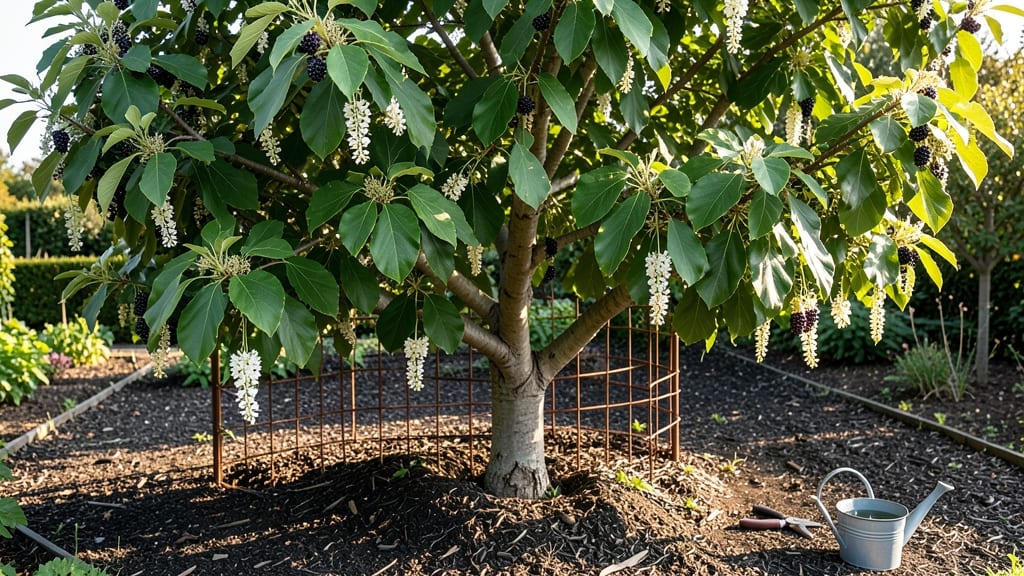
Mulberry trees grow best in USDA hardiness zones 5 through 9, where they adapt to moderate climates with proper soil drainage and full sunlight. Hardier white mulberry varieties can survive in zone 4 with winter protection, while tropical species thrive in zones 8-11.
Understanding your mulberry tree's climate needs starts with matching the right variety to your region. 🌳 For instance, the white mulberry (Morus alba) handles colder winters better than its black mulberry cousin (Morus nigra), which prefers milder zones.
Even within the same zone, microclimates matter—trees near coastlines often fare better due to moderated temperatures, while urban areas might experience heat stress. I've seen black mulberries struggle in zone 7 without extra shade during summer heatwaves, so always consider your specific location's extremes.
Beyond zones, soil quality and sunlight become critical factors. Mulberries prefer well-draining soil with a slightly acidic to neutral pH (6.0-7.0), and they need at least 6-8 hours of direct sunlight daily.
In drier zones (7-9), I recommend mulching heavily to retain moisture, while wetter climates need raised beds or sand amendments. The key is creating conditions that mimic their native habitats—whether that's the temperate forests of Asia or the subtropical regions where they naturally thrive.
💡 In This Article
- USDA Hardiness Zones for Mulberry Trees: Climate and Variety Matching
- Planting Mulberry Trees by Region: Soil, Sun, and Site Prep Tips
USDA hardiness zones for mulberry trees: climate and variety matching
Mulberry trees display remarkable adaptability across USDA zones, but their success hinges on matching the right variety to your climate's extremes.
The white mulberry (Morus alba), for example, can endure -20°F to -30°F temperatures with proper winter protection, making it ideal for zones 4-5 where black mulberries (Morus nigra) would perish. 🌡️ The key difference lies in their native origins—white mulberries evolved in colder Asian regions, while black mulberries hail from the Mediterranean's milder winters.
Even within zone 6, a black mulberry might suffer dieback during -10°F snaps, whereas a white mulberry would shrug off the same freeze.
Frost sensitivity varies dramatically between species. Red mulberries (Morus rubra) typically thrive in zones 5-9, but their flowers and young leaves are particularly vulnerable to late spring frosts (28°F or below), which can reduce fruit yields by up to 70%.
This is why gardeners in zone 6 often plant red mulberries against south-facing walls—the extra 10-15°F of heat from the structure can protect blossoms.
Tropical varieties like Morus notabilis (from Southeast Asia) demand zones 8-11, where they can handle brief dips to 25°F but will suffer permanent damage below that threshold.
Microclimates create another layer of complexity. Urban areas with concrete and asphalt can experience heat islands that push summer temperatures 5-10°F higher than rural zones, stressing mulberries in zone 7.
Conversely, coastal regions in zone 8 might see winter temperatures moderated by 3-5°F due to ocean breezes, allowing black mulberries to thrive where inland plantings would fail. I've seen this firsthand in California's coastal zones—black mulberries produce fruit reliably where inland counterparts struggle with summer drought.
Winter protection becomes critical in marginal zones. For white mulberries in zone 4, wrapping the trunk with burlap and applying 3-4 inches of mulch can prevent frost cracks. In zone 5, a simple tree wrap creates an insulating air pocket that maintains 5°F warmer temperatures at the bark.
The science here involves heat retention—organic mulch acts like a thermal blanket, while wraps prevent temperature fluctuations that cause bark splitting. Even in zone 6, young trees benefit from these measures during their first 3-5 years of establishment.
Spring and fall present their own challenges. Mulberries break dormancy early, making them susceptible to 28-32°F late frosts that can kill emerging leaves. The solution? Plant varieties with staggered bloom times, like 'Illinois Everbearing' white mulberry, which produces fruit in two cycles—early and late—reducing frost risk.
In zones 8-9, summer heat becomes the limiting factor, with temperatures above 95°F causing leaf scorch. Drip irrigation systems that run early morning can maintain leaf moisture and prevent heat stress during critical growth periods.
What most gardeners overlook is how mulberry trees respond to humidity fluctuations. In arid zone 7 climates, the trees enter a semi-dormant state during summer, dropping leaves to conserve moisture—a survival mechanism that's often mistaken for poor health.
Meanwhile, in humid zone 8, fungal diseases like powdery mildew become more prevalent, requiring proper airflow (achieved through 15-20 feet of spacing between trees) to prevent outbreaks. Understanding these regional nuances is what separates successful mulberry cultivation from frustrating failures.