
Flowers
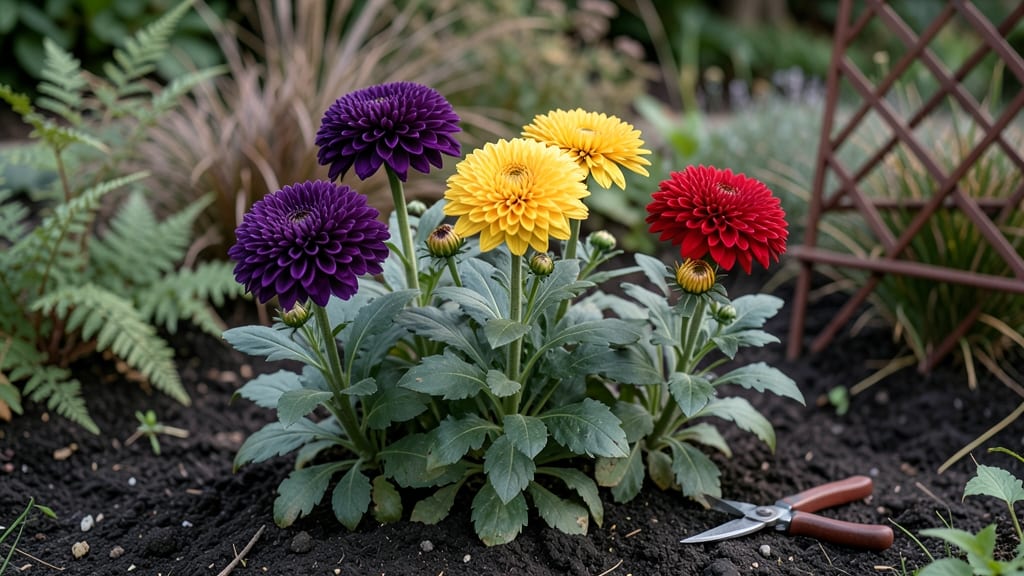
Mums flowers bloom during their peak season in late summer to early fall, typically from August through October, when cooler temperatures trigger their vibrant displays. With consistent care—like removing spent blooms and fertilizing regularly—you can keep them looking fresh well into autumn.
The mums flowers season aligns perfectly with nature's cooling shift, as these hardy plants rely on shorter daylight hours and temperatures between 50-65°F to initiate blooming. 🌸 Unlike spring-blooming flowers, mums store energy during summer dormancy, then burst into color when conditions align.
This timing explains why they're a staple in fall gardens—whether planted in beds or containers, they thrive when other flowers begin to fade.
To maximize their display, focus on three key practices: regular deadheading (removing faded blooms), balanced fertilization with phosphorus-rich formulas, and light pruning after their first flush. Container-grown mums also benefit from weekly watering—just enough to keep soil moist without waterlogging.
With these steps, you can often coax a second bloom cycle in late summer, creating a cascading effect of color.
💡 In This Article
- Understanding Chrysanthemum Bloom Cycles
- Pro Tips to Prolong Mum Flower Displays
Understanding chrysanthemum bloom cycles
Chrysanthemums (mums) follow a precise biological clock tied to photoperiodism—the plant's response to daylight length. As summer wanes, the decreasing daylight hours (below 12-14 hours) trigger a hormonal shift that signals the plant to stop vegetative growth and focus on flowering.
This process, called vernalization, requires 6-8 weeks of cooler temperatures (50-65°F) to fully activate. 🌿 The plant's internal clock also relies on temperature cues: nighttime temps below 60°F accelerate bud formation, while daytime heat above 80°F can delay blooming until autumn arrives.
Regional variations create noticeable differences in bloom timing. In Zone 5-6 (northern climates), mums typically bloom in late August to September, while Zone 8-9 (southern regions) may see flowers as early as July or stretch blooms into November.
This occurs because southern areas experience milder winters and longer growing seasons. Early-blooming varieties like 'Bright Golden Anne' often push flowers by mid-August, while late varieties such as 'Mammoth' may wait until October.
The key difference lies in their genetic response to daylight: early types need only 12-13 hours of daylight to trigger blooming, while late types require 11 hours or less.
The plant's dormancy cycle plays a crucial role too. During summer's heat, mums enter a semi-dormant state, storing energy in their roots. This stored energy fuels their explosive bloom when conditions align.
Think of it like a battery: the plant charges during summer dormancy, then discharges its vibrant display when temperatures drop and daylight shortens. 🌞 This explains why mums planted in spring often bloom later—they haven't had time to fully recharge their energy reserves.
For consistent blooming, gardeners in colder climates often purchase fall-planted mums from nurseries, as these have already undergone the necessary vernalization process.
Identifying bloom cycles becomes easier with simple observations. Early bloomers tend to have smaller, more numerous flowers on compact plants, while late bloomers often feature larger, showier blooms on taller stems.
The color spectrum also varies: early varieties frequently display bright yellows and oranges, while late bloomers often feature deep purples and reds.
Pay attention to leaf development too—healthy mums will show dark green, waxy leaves before blooming, while stressed plants may develop yellowing or spotted foliage, indicating potential bloom delays.
Understanding these cycles helps gardeners make strategic choices. For example, planting early bloomers in partial shade can extend their display by 2-3 weeks, while late varieties thrive in full sun for maximum color intensity.
The science behind these cycles also explains why mums make excellent cut flowers—their natural dormancy means they can be harvested at peak bloom and will last 10-14 days in a vase, maintaining their fresh appearance through the fall season.