
Plants
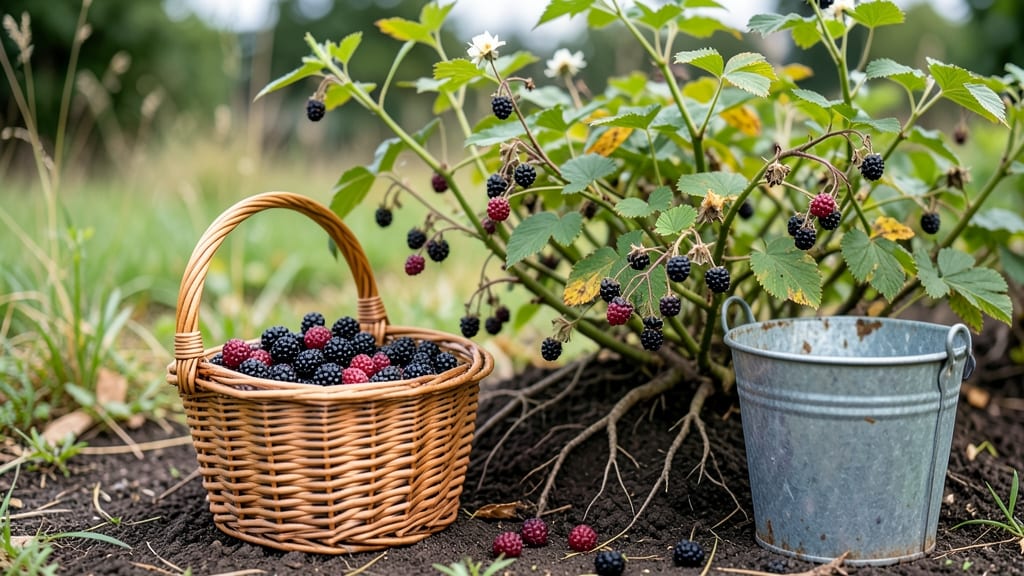
Blackberry season starts in late spring to early summer, typically May through July, with exact timing depending on USDA zone and variety—earlier in warmer Southern regions (Zone 7+) and later in cooler Northern zones (Zone 5-6). Thornless varieties often ripen slightly later than traditional types.
Blackberries begin their harvest journey when temperatures rise consistently above 50°F, signaling the plants to shift from vegetative growth to fruiting. 🌱 The timing varies dramatically—gardeners in Florida's Zone 9 might see ripe berries as early as March, while those in Minnesota's Zone 4 should expect their first harvests in mid-July.
Varieties like Natchez or Darrow tend to ripen first, often 1-2 weeks ahead of thornless types such as Cheyenne or Arapaho.
What many don't realize is how chilling hours during winter influence this schedule. Most blackberry varieties require 300-1,000 hours below 45°F to break dormancy properly—too few hours can delay ripening by weeks.
This is why Southern growers often get two harvest windows: an early spring flush followed by a late summer crop, while Northern gardeners typically get just one concentrated harvest period. Understanding your specific variety's needs can help you plan for the best possible yield.
💡 In This Article
- Blackberry Ripening Factors by USDA Zone and Variety
- Extending Blackberry Season: Pruning, Variety Selection, and Cold Frames
Blackberry ripening factors by USDA Zone and variety
Blackberry ripening hinges on three critical factors: chilling hours, temperature thresholds, and variety genetics. Most blackberries need 300-1,000 hours below 45°F during winter to trigger spring growth.
In USDA Zone 9 (e.g., Florida, Southern California), where winters rarely drop below 45°F, varieties like Natchez or Prime-Ark Freedom may ripen as early as March, while Zone 4 gardeners (e.g., Minnesota, Maine) might not see ripe berries until mid-July.
This chilling requirement explains why Northern growers often experience a single concentrated harvest, while Southern climates can produce two flushes—one in spring and another in late summer.
The transition from flower to fruit begins when daytime temperatures consistently exceed 50°F for at least 7-10 days.
At this point, the plant shifts from vegetative growth to fruiting, a process regulated by plant hormones like ethylene and auxin. 🌡️ Varieties like Darrow (a classic thorny type) typically ripen 1-2 weeks earlier than thornless varieties such as Cheyenne or Arapaho, due to differences in their genetic makeup.
For example, Natchez berries (a popular thornless variety) often reach peak ripeness in late May to early June in Zone 7, while Ouachita (a late-season variety) may not be ready until August in the same zone.
Late frosts can devastate early harvests, especially in transitional zones like Zone 6 (e.g., Chicago, Denver). A sudden drop to 28°F or below can kill flowers and young fruit, delaying the season by 2-4 weeks.
This is why gardeners in these areas often plant primocane-bearing varieties (like Apache or Chester) that produce fruit on new growth, giving them a second chance if spring frosts strike.
In contrast, floricane-bearing varieties (like Darrow) rely on fruit formed the previous year, making them more vulnerable to frost damage.
Soil temperature also plays a subtle but important role. Blackberry roots prefer soil temps between 60-70°F for optimal nutrient uptake and fruit development. If the ground stays too cold (50°F or below), root activity slows, which can delay ripening.
This is why raised beds or black plastic mulch are popular in cooler climates—they warm the soil faster in spring, helping berries ripen 1-2 weeks earlier than in unamended ground.
What most gardeners overlook is how day length affects ripening. Shorter days in Northern latitudes (e.g., Zone 5) can delay fruit maturation by 10-14 days compared to Southern regions with longer daylight hours.
This photoperiod sensitivity is why Zone 9 varieties often perform poorly in Zone 4 without careful selection. For instance, Prime-Ark Freedom thrives in the Deep South but may produce sparse fruit in New England due to insufficient heat accumulation.
To predict your local blackberry season, check your last frost date and count backward 60-75 days—this gives you a rough estimate for when flowers will appear.
For example, if your last frost is April 15, you can expect fruit to ripen around June 15-July 1, depending on variety and growing conditions. 🌿