
Picking
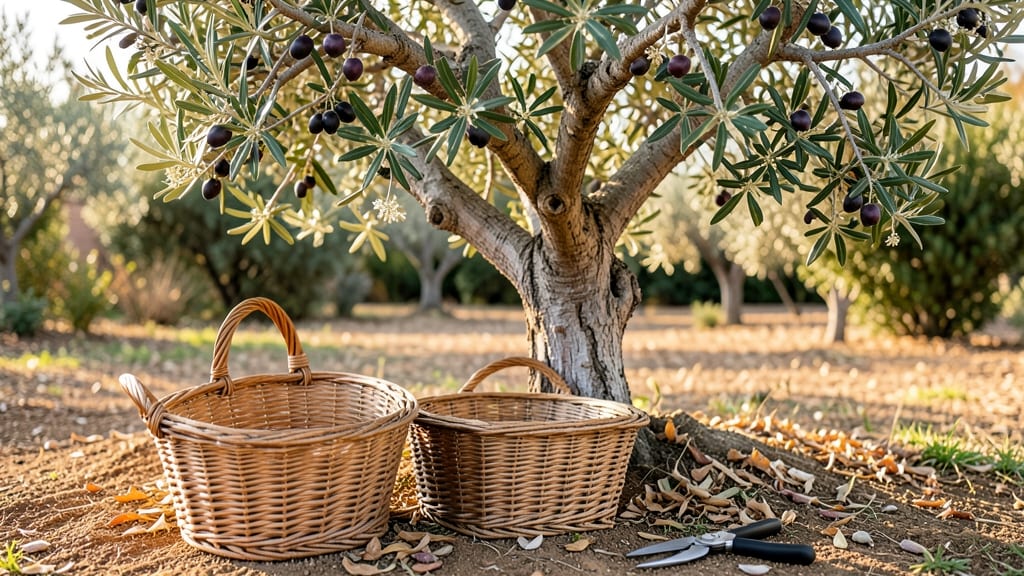
Harvesting olives at the right time during the olive harvest season determines whether you end up with bitter, unripe fruit or the rich, flavorful oil you love.
Timing your harvest perfectly can mean the difference between a disappointing yield and a bounty of sweet, golden oil or perfectly brined table olives.
In the Mediterranean, where olive trees thrive in zones 8-10, the season typically runs from October to January, but the exact timing shifts depending on variety, weather, and location.
For small-scale gardeners, knowing when to pick is just as critical as choosing the right tree. Skip the harvest window, and you risk olives falling to the ground or attracting pests like fruit flies.
Get it right, though, and you’ll enjoy a smooth, efficient process with olives at peak ripeness—black or purple, soft but firm, and ready to transform into oil or preserves.
Below, I break down the exact months for Mediterranean regions, California’s unique climate, and other key areas, plus the key signs to watch for on your own trees so you never miss the window again.

Olive harvest season timeline by major growing regions
Timing your olive harvest correctly depends entirely on where you grow them. Climate plays a huge role—Mediterranean regions enjoy mild winters, while California’s coastal areas have cooler summers. Understanding these regional differences ensures you pick olives at peak ripeness for oil or table use.
Even a few weeks off can turn your harvest from premium to unusable. Let’s break down the exact months for each major growing region.
In the Mediterranean basin, harvest typically begins in October and stretches through January. This aligns with the region’s mild winters and dry summers, where olives ripen gradually. Southern Spain and Greece often start earlier, around late September, while northern Italy may wait until December.
The key factor here is the first frost-free period, which signals the end of harvest season.
California’s coastal regions, like Santa Barbara and San Luis Obispo, mirror Mediterranean timing but with slight variations.
Harvest usually kicks off in November and continues through February. Inland areas, such as Central Valley, may start as early as October due to warmer microclimates. Foggy coastal zones often delay ripening by 2-3 weeks compared to inland orchards.
Australia’s olive-growing hotspots, primarily in Victoria and South Australia, have a Southern Hemisphere harvest from March to May.
This aligns with their cool, wet winters and warm summers. Warmer inland regions, like Riverland, may begin harvesting as early as February, while cooler coastal areas like Tasmania might extend into June.
Now, let’s compare these regions side by side to help you pinpoint the best time for your olives. Understanding these month-by-month differences will help you avoid common mistakes like harvesting too early (bitter olives) or too late (overripe, prone to pests).
| Region | Primary Harvest Months | Key Climate Factors | Ripeness Indicators |
|---|---|---|---|
| Mediterranean (Spain, Greece, Italy) | October - January | Mild winters, dry summers | Black/purple color, firm but yielding |
| California (Coastal) | November - February | Cooler summers, foggy winters | Dark purple, slight softening |
| California (Inland) | October - January | Warmer microclimates | Black color, easy detachment |
| Australia (Victoria/South Australia) | March - May | Cool winters, warm summers | Deep purple-black, firm texture |
| Tasmania (Australia) | April - June | Cooler coastal climate | Dark purple, slower ripening |
For small-scale gardeners, knowing your local microclimate is crucial. Even within a region, elevation and proximity to water can shift harvest windows by weeks. For example, higher elevations in California may delay ripening until December or January, while lowland orchards could be ready by November.
Always monitor your olives’ color and firmness—these are the most reliable indicators of ripeness.
Another critical factor is weather patterns during harvest. Prolonged rain can lead to overripe olives and increase the risk of fruit flies, while unseasonably hot spells may cause olives to ripen too quickly.
In Mediterranean climates, harvest often wraps up by January to avoid winter rains, which can split olives and reduce oil quality. Plan your harvest around dry, cool weather for the best results.
If you’re growing olives in less traditional regions, such as USDA Zones 7-9, your harvest may align more closely with California’s inland schedule. However, young trees or dwarf varieties might ripen slightly earlier.
Always test a few olives for oil content or taste—this is the surest way to confirm ripeness. Bitter olives are underripe, while soft, mushy ones are past their prime.
Finally, remember that variety matters. Arbequina olives, for example, ripen earlier than Kalamata or Manzanillo varieties. If you’re unsure, consult local olive growers or extension services for region-specific advice. With the right timing, you’ll enjoy a bountiful harvest of olives perfect for oil, curing, or eating fresh.
🫒
How to determine the perfect olive harvest time for your trees
Nailing the olive harvest season is an art that blends science and observation. While regional timelines provide a starting point, your trees will whisper clues about perfect ripeness if you know what to listen for.
The difference between bitter, unripe olives and those bursting with flavor often comes down to these key indicators—and avoiding common pitfalls like fruit fly infestations or weather-related spoilage.
Start by monitoring color changes, the most obvious signal. Most olive varieties transition from bright green to deep purple-black when ready. However, some heirloom types like Manzanillo stay greenish-yellow.
Pair this with a gentle squeeze—ripe olives should yield slightly but not squish like overripe fruit. Ignoring these cues can lead to overripe olives that fall prematurely or attract pests.
- 1 Color Test: Purple-black olives (or variety-specific hues) signal peak ripeness. Green olives are unripe and bitter.
- 2 Oil Content: Squeeze an olive—oily residue on your fingers means it’s ready. Use a refractometer (for precision) to check brix levels (ideal: 20-25%).
- 3 Fruit Fly Risk: Harvest before October in warm climates to avoid olive fruit flies. Check for tiny white eggs on olives—remove infested branches immediately.
- 4 Weather Watch: Avoid harvesting before rainfall or during humidity spikes—olives absorb moisture and spoil faster. Clear skies and 50-70°F temps are ideal.
- 5 Detachment Test: Gently shake branches—ripe olives detach easily. If they stay firmly attached, wait 1-2 weeks for full ripeness.
Don’t overlook the oil content test, a game-changer for home growers. Crush a few olives between your fingers—if they leave a noticeable oily film, they’re ready. For precision, invest in a refractometer to measure brix levels (sugar/oil content).
Values between 20-25% indicate peak ripeness for oil production. Skipping this step often leads to low-yield harvests or olives that lack the rich flavor you’re after.
Timing also hinges on avoiding fruit fly infestations, a nightmare for olive growers. In regions like California or Australia, harvest before October to outpace these pests. Inspect branches for tiny white eggs or larvae—remove infested olives immediately and dispose of them in sealed bags.
Pro tip: Hang yellow sticky traps near your trees in late summer to monitor fly activity early.
Weather plays a sneaky role too. Harvest during dry, cool periods—ideally 50-70°F—to prevent olives from absorbing moisture and spoiling. Avoid picking before rainfall or during humidity spikes, which can dilute oil quality and invite mold.
If you’re in a Mediterranean climate, aim for November-December harvests, while California growers often wait until January-February for milder conditions.
Pro move: Harvest in two passes—first for table olives (pick when firm and greenish), then again 4-6 weeks later for oil production. This dual approach maximizes yield and quality. Store freshly picked olives in shaded, well-ventilated containers until processing to preserve their freshness and flavor.