
Pruning
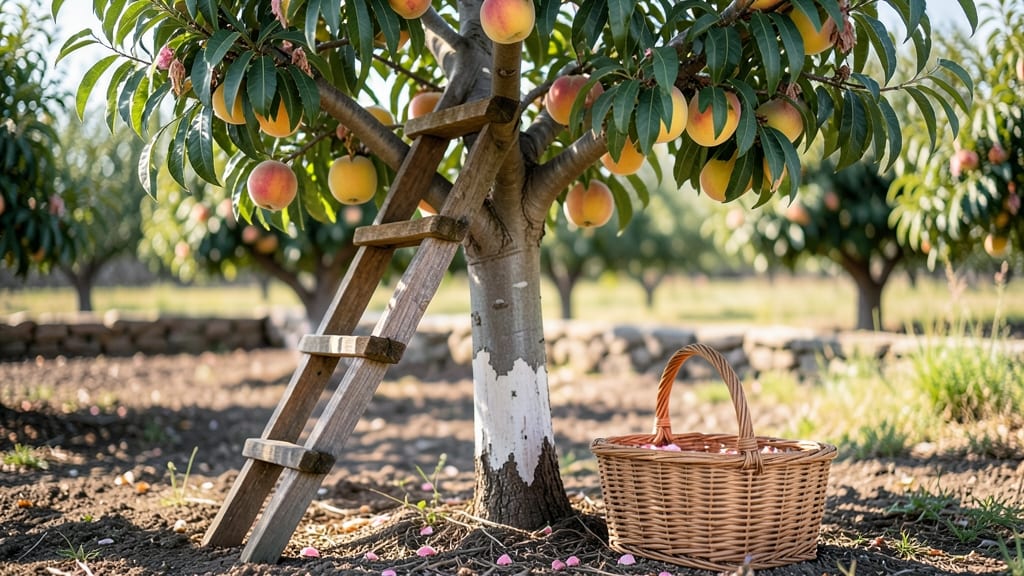
Peach tree season is all about timing—when you plant, prune, and harvest can make or break your harvest, especially in USDA Zone 6a where frost is a constant threat.
Picture this: You’ve spent months nurturing your 🍑 tree, only to wake up to a surprise frost in April, wiping out your blossoms before they even open. Or worse, you prune at the wrong time and invite pests or disease into the open wounds.
The good news? With the right schedule, you can avoid these pitfalls and set your tree up for a bountiful harvest every year.
This guide breaks down the exact pruning timeline for your zone, from late winter dormancy cuts to summer thinning—plus when to fertilize, water, and watch for pests.
We’ll cover the critical deadlines you can’t miss, like when to stop pruning before the buds swell or how to tell if your tree is overloaded with fruit.
By the end, you’ll know not just when to do everything, but why—so you can grow peaches that are bigger, sweeter, and ready to pick at their peak in July through September.
Peach tree pruning timeline by USDA hardiness zones (Zone 5-10)
Peach trees thrive when pruned at the right time, but your USDA hardiness zone dictates the perfect window. In colder zones like Zone 5, you’ll prune later to avoid frost damage, while warmer Zone 10 trees can handle summer pruning.
One wrong move—like cutting too late—can invite disease or weaken your tree’s fruit production for years. Let’s break down the exact months for each zone so you never miss a deadline.
Timing matters because peach trees are sensitive to bud swelling and frost risk. Prune too early in Zone 6-7, and you’ll encourage new growth that frost will kill. Prune too late in Zone 8-10, and you risk stressing the tree before harvest.
The key is aligning your cuts with dormant season (winter) or summer thinning—but never during active growth.
Here’s your zone-by-zone pruning calendar, including critical deadlines for winter cleanup and summer adjustments to maximize peach yield and tree health.
In Zone 5-7, prioritize dormant pruning (winter) to remove dead wood and shape your tree before buds swell. For example, in Zone 6, finish by March 15 to avoid damaging flower buds that form in spring.
In warmer zones like Zone 8-10, you can prune year-round, but summer thinning (June–August) helps balance fruit load and improve air circulation.
Summer pruning isn’t just about cutting—it’s about thinning fruit clusters to prevent overbearing. In Zone 7, for instance, prune in June–July to leave 6-inch spacing between peaches.
This ensures larger, sweeter fruit instead of a heavy load that stresses the tree. Always use sterilized pruners to prevent bacterial infections like peach leaf curl.
Never prune when your tree is under stress, such as during drought or extreme heat. In Zone 9-10, avoid heavy pruning in September because new growth won’t harden off before winter.
Instead, focus on light shaping in late fall or early spring. Pro tip: Mark your calendar with your last frost date—this is your cutoff for late-season pruning in colder zones.
For young peach trees (1-3 years old), limit pruning to 25% of the canopy to encourage strong structural growth. Older trees can handle up to 30-40% removal during dormant season.
Always cut back to a bud or branch collar to promote faster healing. If you’re unsure about a cut, wait until the next dormant season—better safe than sorry!
Watch for visual cues like bud swelling (a sign to stop pruning) or leaf color changes (indicating stress). In Zone 5, for example, if buds start swelling by March 1, pause pruning immediately.
Use a sharp bypass pruner for clean cuts, and seal larger wounds with pruning sealant to prevent disease entry points.
Remember: Peach trees reward precision. A well-timed
5 Critical pruning mistakes that kill peach trees (and how to avoid them)
Peach trees are delicate when it comes to pruning—one wrong cut can invite disease, weaken growth, or even kill your tree. I’ve seen peach trees thrive after years of neglect, only to wither from a single pruning mistake made at the wrong time.
The key is understanding visual cues like bud swelling and leaf color, which signal when to act.
Many gardeners assume pruning is as simple as trimming back dead branches, but peach trees demand precision. For example, cutting too late in the peach tree season forces new growth that won’t harden before winter, leaving your tree vulnerable to frost damage.
Even over-thinning can reduce fruit production by removing too many fruit-bearing branches.
⚠️ callout warning ⚠️
✅ Fix: Wait until dormant season (late winter/early spring) when buds are still closed but leaves have fallen. Look for swollen buds—this is your peach tree season signal to prune!
First on the list of deadly mistakes is pruning at the wrong time. I’ve caught peach trees in full bloom after a late-winter pruning, which removes potential fruit buds. Always prune 3-4 weeks before blooms open—check for bud swelling but no color change in petals. This window ensures your tree retains its fruit-bearing potential.
Another common error is over-pruning, where gardeners remove too much canopy at once. Peach trees need 60-70% of their branches to photosynthesize properly. If you’re tempted to thin aggressively, stop when you’ve removed no more than 25% of the tree’s foliage in a single session.
Thin gradually over 2-3 years to avoid shock.
Late-season pruning is equally dangerous. Cutting after August 1st in most zones encourages tender new growth that won’t mature before frost. I’ve seen peach trees in Zone 7 with frozen branches after a September trim—always finish pruning by early summer to allow wounds to callus before winter.
Finally, ignoring disease-resistant cuts turns pruning into a liability. Use clean, sharp tools and make cuts at a 45-degree angle, ¼” above a bud or branch collar.
Disinfect blades between cuts to prevent bacterial canker, a silent killer of peach trees. With these fixes, your tree will reward you with juicy peaches for decades.