
Picking
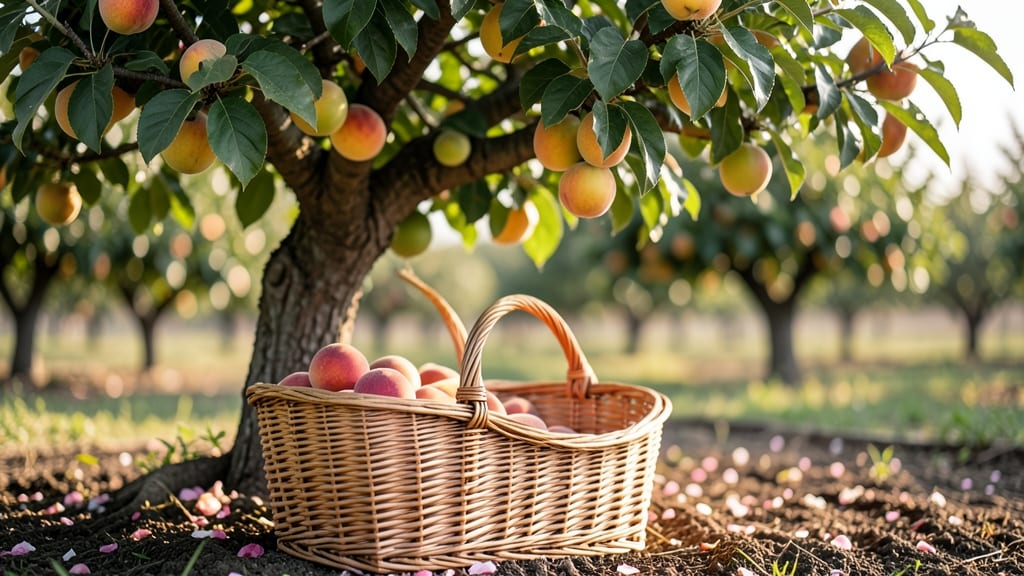
When peaches are in season now, look for deep blush coloring and a fragrant aroma—gently squeeze them to feel slight give at the stem, as this signals peak ripeness. Summer harvests run June through August in most regions, with orchards offering the freshest picks.
Peach season transforms grocery store shelves into treasure troves of summer flavor, but not all fruit ripens equally. 🔥 The ethylene gas released as peaches mature triggers both color changes and that signature sweetness, so timing your pick matters—morning harvests often yield juicier fruit.
For home gardeners, I recommend checking trees every other day in late July, since peaches ripen unevenly even on the same branch. Commercial orchards typically stagger harvests by variety, so ask staff which types are at their peak when you visit.
What sets apart a perfect peach from one that needs more time?
Beyond the classic color test, pay attention to the stem—it should separate easily when gently twisted, indicating the fruit is ready to eat. 💫 Another pro tip: lift a peach and feel its weight; ripe ones are heavier for their size due to concentrated sugars.
Store them at room temperature until fully ripe, then refrigerate to slow further ripening and preserve that summer sweetness for days.
💡 In This Article
- How to Test Peach Ripeness Beyond Color
- Best Times to Pick Peaches for Optimal Flavor
How to test peach ripeness beyond color
The science behind peach ripening starts with ethylene gas—a natural plant hormone that triggers the breakdown of cell walls, turning starches into sugars and deepening that signature blush.
As peaches mature, their ethylene production peaks, which is why you'll notice that sweet, floral aroma 1-2 days before they reach perfect ripeness.
This gas also softens the fruit's flesh, making it yield slightly when pressed—think of it like testing a ripe avocado, but with 20% less firmness to avoid mushiness.
Visual cues often miss the mark because peaches don't ripen uniformly. The classic "blush" color can vary wildly by variety—some like 'Elberta' develop a deep red, while others like 'Jubilee' stay more yellow with just a hint of pink.
Instead, focus on the stem: a ripe peach's stem should twist off easily with a gentle quarter-turn. 🔥 The weight test is equally telling—ripe peaches feel heavier for their size because their sugar content increases by 30-40% during ripening, while underripe ones feel light and hollow-sounding when tapped.
Temperature plays a crucial role in ripening speed. Peaches ripen fastest at 70-75°F, which is why summer harvests (June-August) align perfectly with their natural cycle. Cooler mornings slow ethylene production, so fruit picked early often tastes more complex.
Store peaches at room temperature until fully ripe—their sugars continue converting even after harvest, but refrigeration halts this process. Once ripe, they'll keep for 3-5 days in the fridge, though flavor peaks within 24 hours of picking.
For home gardeners, ripeness testing becomes even more critical. Peaches on the same tree can vary by 3-5 days in maturity, so check daily in late July. Commercial orchards use a tool called a "pressure tester" to measure firmness objectively, but at home, your fingers work just as well.
Press gently near the stem—if it leaves a slight half-inch dent that springs back, you've got a winner. Overripe peaches bruise easily and develop mealy texture, so timing is everything.
Don't overlook the aroma test, which is your most reliable indicator. A truly ripe peach releases a sweet, almost perfumed scent when you lift it to your nose.
This fragrance comes from volatile compounds like linalool and beta-damascenone, which are 100 times more concentrated in ripe fruit than in unripe specimens. 💫 Compare it to the smell of a peach pie fresh from the oven—if it doesn't make your mouth water, it's not ready yet.
Regional variations matter too. Southern peaches (like Georgia's 'Cresthaven') often ripen earlier due to longer growing seasons, while Northern varieties (like Michigan's 'Redhaven') peak in August. Always ask orchard staff which varieties are at peak—some trees may still have green fruit while others are ready to eat.
The best peaches balance firmness with that signature "give," so trust your senses over the calendar.