
Planting
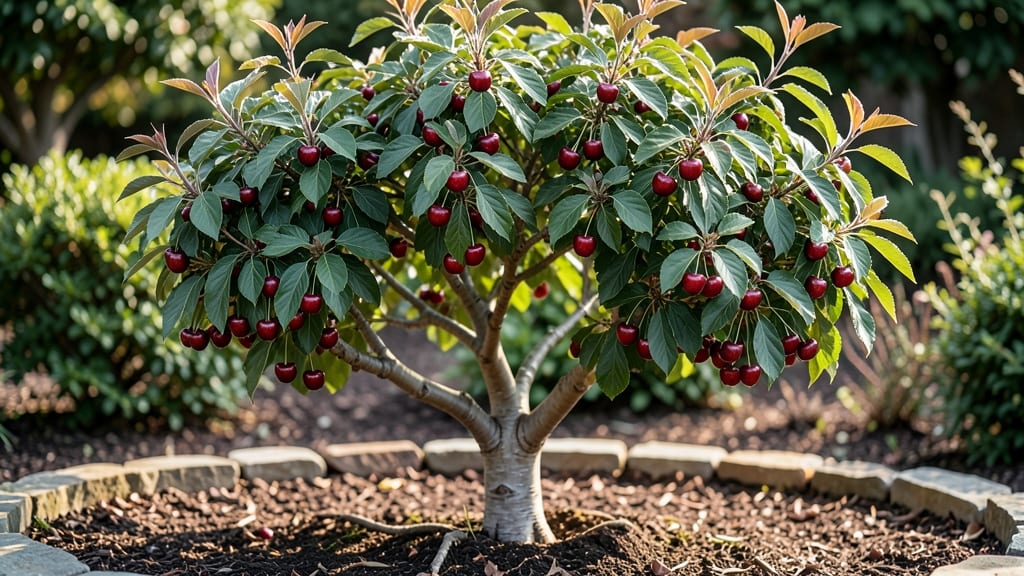
Rainier cherries thrive best in USDA hardiness zones 5 through 8, requiring winter temperatures between -20°F and 15°F (-29°C to -9°C) to avoid cold damage while avoiding extreme summer heat beyond 90°F (32°C).
These cherries are particularly sensitive to both cold snaps and scorching heat, which is why their ideal growing range balances winter dormancy needs with summer resilience. 🌱 In zones 4 or 9, you can still grow them successfully with careful site selection—think south-facing slopes, well-draining soil, and protective mulching.
The key is mimicking their natural Mediterranean climate preferences by avoiding waterlogged roots and providing afternoon shade during peak summer months.
What sets Rainier cherries apart is their delicate balance between cold tolerance and heat sensitivity. Unlike tart cherries that handle harsher winters, Rainiers need that precise temperature window to set fruit properly.
I’ve seen gardeners in zone 4 achieve great results by planting near a south-facing wall or using frost blankets during critical bloom periods.
💡 In This Article
- Understanding Rainier Cherry Cold Tolerance and Climate Needs
- Planting and Protecting Rainier Cherries in Marginal Zones
Understanding Rainier cherry cold tolerance and climate needs
The hardiness of Rainier cherries stems from their biological need for winter dormancy—a period when metabolic activity slows dramatically to survive freezing temperatures. Unlike tart cherries, which can endure -30°F (-34°C) or lower, Rainiers typically tolerate only -20°F (-29°C) in their dormant state.
This is because their delicate fruit set and bloom cycles require precise temperature cues, similar to how peach trees need 500-1,000 chill hours below 45°F (7°C) to trigger flowering.
What makes Rainiers unique is their sensitivity to late spring frosts, which can destroy blossoms before fruit sets. The tree’s cold hardiness varies by cultivar, but most commercial varieties struggle below zone 5 without protection.
For example, the 'Stella' cultivar handles -25°F (-32°C) better than others, while standard Rainiers may suffer bark splitting at -15°F (-26°C) if not properly mulched. Summer heat above 90°F (32°C) becomes problematic too, as it accelerates water loss and stresses the tree’s root system.
Comparing Rainiers to other cherries reveals key differences: sweet cherries like Bing are slightly more cold-hardy (zone 5-7), while tart cherries like Montmorency thrive in zones 3-6. Rainiers’ delicate nature means they need consistent moisture—drought stress during fruit development can reduce yields by 40-50%.
The tree’s shallow root system also makes it vulnerable to soil compaction, which is why well-draining, slightly acidic soil (pH 6.0-6.5) is critical for their survival.
Here’s what’s actually happening during dormancy: The tree’s cells produce antifreeze proteins that prevent ice crystal formation in vascular tissues. However, rapid temperature swings—like a -10°F (-23°C) night followed by a 60°F (15°C) day—can disrupt this process, leading to bark cracking.
This is why gardeners in zone 4 often plant Rainiers near south-facing walls or use 3-4 inches of organic mulch to insulate roots.
Summer heat stress manifests differently: prolonged exposure above 95°F (35°C) can cause sunburn on fruit, turning cherries yellowish-brown. The tree’s leaves may also curl inward to reduce water loss, a survival mechanism that temporarily halts growth.
To mitigate this, afternoon shade cloth (30-40% blockage) can reduce fruit temperatures by 5-10°F (3-6°C) during peak heat.
For gardeners pushing the limits in zone 9, the challenge shifts to heat tolerance. Rainiers prefer cooler summers, so areas like Southern California or Florida require afternoon shade and consistent irrigation to prevent root zone temperatures from exceeding 85°F (29°C).
The key is mimicking their native Mediterranean climate, where hot, dry summers are offset by mild winters—something zone 9 gardeners can achieve with careful site selection and microclimate management.
What most people don’t realize is how critical the transition from winter dormancy to spring growth is. Rainiers need 200-400 chill hours below 45°F (7°C) to break dormancy properly. Without enough chill, buds may fail to open, resulting in poor fruit set.
This is why zone 8 gardeners in warmer microclimates (like coastal areas) often struggle—even if winter lows are safe, the lack of chill hours can be just as damaging as cold damage.