
Companion Plants
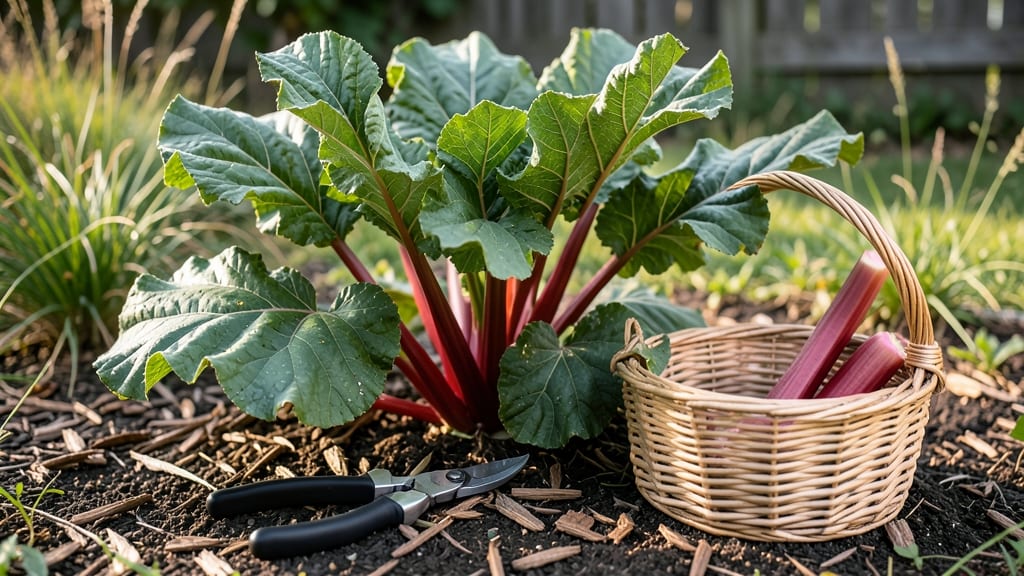
Rhubarb season in the USA spans from late April through June in most areas, with California harvesting as early as March and northern states like Maine seeing harvests extend into July. You'll know rhubarb is ready when stalks reach 10-12 inches long and snap cleanly at the base, delivering peak tartness perfect for pies, compotes, or fresh eating.
Understanding rhubarb's growth cycle helps explain why timing varies so dramatically across regions. 🌱 Warmer southern climates like California and Texas enjoy earlier harvests because their longer frost-free seasons allow plants to mature faster, while northern states wait for soil temperatures to stabilize above 50°F before growth accelerates.
This regional variation means gardeners in Zone 5 might harvest two weeks later than those in Zone 8, with frost dates serving as the ultimate deadline for optimal flavor development.
What many home gardeners overlook is that rhubarb's first-year stalks are often smaller and less flavorful. The real harvest bounty comes in years 2-5, when plants establish deeper roots and produce thicker, more tender stalks.
I've found that organic matter-rich soil and consistent moisture accelerate this process, giving you a head start on that coveted April-June window where rhubarb shines brightest in both gardens and markets.
💡 In This Article
- How Climate Affects Rhubarb Harvest Timing Across US Regions
- Best Practices for Picking and Storing Fresh Rhubarb
How climate affects rhubarb harvest timing across US regions
Rhubarb's growth cycle is tightly linked to temperature, with plants requiring consistent soil warmth above 50°F to break dormancy. In the US, this translates to a 10-12 week growing window from first harvest to frost sensitivity.
Warmer climates like California (USDA Zone 9-10) kick off harvests as early as March because their mild winters prevent winter dieback, while northern states like Maine (Zone 4-5) wait until late May when frost risk drops below 10%.
The key factor is the last spring frost date—rhubarb's large leaves make it frost-sensitive, so gardeners in colder zones must wait until after May 15 to avoid leaf damage.
What makes this fascinating is how day length also influences ripening. Rhubarb is a short-day plant, meaning it responds to decreasing daylight in late spring by accelerating stalk production.
This explains why June harvests often yield the largest, most tender stalks—longer daylight in May focuses energy on leaf growth, while shorter June days trigger the shift to stalk development.
In Zone 6-7 (Midwest and Northeast), this transition happens around mid-May, while in Zone 8-9 (Southeast), it occurs as early as late April. 🌱
Spring weather plays a critical role too. A cool, wet April can delay harvest by 2-3 weeks because cold soils slow root activity, while a dry May may reduce stalk size.
I've noticed that California's early harvests often produce slightly more acidic stalks due to their Mediterranean climate, while Pacific Northwest rhubarb tends to be milder because of consistent rainfall. The pH of the soil also matters—ideal 6.0-6.8 levels maximize tartness, while alkaline soils can mute flavor.
Regional variations extend to harvest duration. In Zone 5-6, the window closes by early July due to summer heat stress, while Zone 7-8 can extend harvests into August if plants receive adequate water.
The first-year stalks are typically 30-50% smaller than mature plants, which is why commercial growers often skip first-year harvests entirely to avoid stunting future yields. This patience pays off—3-5 year old plants can produce 5-10 lbs of stalks per harvest.
For home gardeners, understanding these patterns means planting rhubarb in early spring (as soon as soil is workable) to maximize the growing season. In Zone 4, I recommend using black plastic mulch to warm soil by 5-10°F, effectively extending the harvest window by 1-2 weeks.
The root crown must stay firm and white—any browning indicates winter damage that will reduce next year's yield. 💫
What most people don't realize is that rhubarb's tartness increases with temperature exposure. Stalks grown in hotter climates (Zone 9+) develop higher oxalic acid levels, making them ideal for sweetened desserts, while cooler-climate rhubarb (Zone 5-6) has a brighter, more complex tartness that works better in savory dishes.
This regional flavor profile is why Pacific Northwest rhubarb commands premium prices at farmers' markets—its balanced acidity and tender texture make it a gardener's prize.