
Blooming
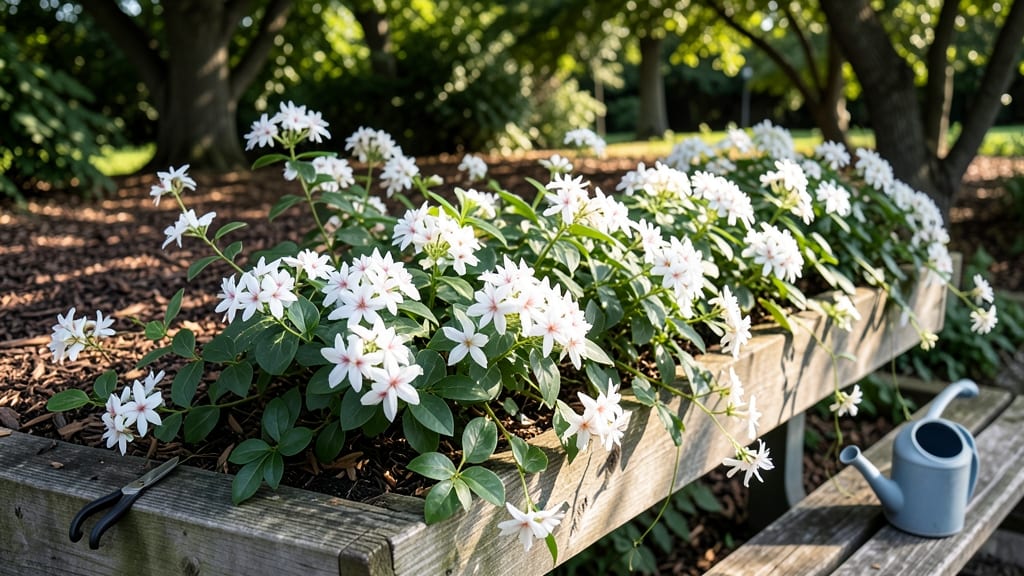
The star jasmine blooming season delivers that signature sweet, intoxicating scent that turns any garden into a fragrant paradise 🌸 — but if you miss the timing, you could wait months for those creamy white blooms to return.
Picture this: the sun dips low, the air hums with life, and suddenly, your yard smells like a Tuscan vineyard.
That’s star jasmine in full bloom, and the difference between catching it and missing it often comes down to knowing when to expect those delicate flowers in your specific climate zone.
From the mild coastal climates of Southern California to the humid summers of Florida, the exact months for peak fragrance can shift dramatically.
Whether you’re in USDA Zone 6a or further south, understanding these regional patterns is the key to planning your garden so you never miss a single whiff of that signature aroma.
In this guide, I’ll break down the precise timing by zone, share pro tips to encourage earlier or longer blooms, and reveal which star jasmine varieties stay fragrant the longest. Ready to transform your garden into a year-round scent sanctuary?
Star jasmine blooming season by USDA climate zones: month-by-month guide
Star jasmine (Trachelospermum jasminoides) transforms gardens into fragrant sanctuaries when its white, star-shaped blooms appear, but timing varies dramatically across USDA zones 7-11.
In zone 7, you’ll catch early bloomers as soon as late April, while zone 11 gardens may see flowers year-round with peak scent in spring and fall. Regional microclimates—like coastal California’s mild winters or Florida’s humidity—also shift bloom windows by weeks.
Understanding these patterns lets you plan pruning, adjust care, and even extend the season with simple tricks.
Whether you’re in Southern California’s dry heat or Georgia’s humid summers, this guide breaks down exactly when to expect first blooms, peak fragrance, and second flushes—so you never miss a whiff of that intoxicating nighttime perfume.
🌸 Pro Tip: Star jasmine’s fragrance peaks at dusk, making it a nighttime garden star. Plant near patios or windows to maximize scent enjoyment.
| USDA Zone | First Blooms | Peak Fragrance | Second Flush | Notes |
|---|---|---|---|---|
| Zone 7 | Late April | May–June | September | Cold snaps delay blooms; prune after last frost. |
| Zone 8 | Early May | June–July | August–September | Humidity boosts fragrance; watch for powdery mildew. |
| Zone 9 | Mid-April | May–June & Sept–Oct | November | Southern California: blooms year-round with minimal breaks. |
| Zone 10 | February–March | March–April & Sept–Nov | December | Florida: blooms triggered by rain; prune after heavy storms. |
| Zone 11 | Year-round (minimal breaks) | Spring & Fall | Winter (light blooms) | Hawaii: no dormancy; fertilize lightly year-round. |
In zone 7, where winters can be harsh, star jasmine often waits until late April to bloom, with peak fragrance in May and June. A second flush in September rewards gardeners who pruned back dead growth in early spring.
If your zone 7 garden experiences an early warm spell, you might spot stray blooms in March, but these are typically weaker and shorter-lived.
Gardeners in zone 9, like those in Southern California, enjoy the most predictable blooming patterns. With mild winters, star jasmine often blooms as early as mid-April and delivers two major flushes: one in spring (May–June) and another in fall (September–October).
The November blooms are a bonus, though fragrance may be lighter due to shorter days.
💡 Regional Tip: In Florida (zone 10), star jasmine’s blooming is rain-dependent. After heavy downpours,
How to extend your star jasmine’s blooming season naturally
Want your star jasmine to burst into fragrant bloom earlier—or keep those white star-shaped flowers lingering longer? The secret lies in tweaking its growing conditions and care routine. Unlike some flowering vines, star jasmine responds beautifully to targeted adjustments that encourage prolonged fragrance production.
Let’s unlock the natural hacks to transform your garden into a year-round scent sanctuary.
First, understand that star jasmine (Trachelospermum jasminoides) thrives on consistency. It rewards gardeners who pay attention to pruning timing, sunlight exposure, and soil health. Even a small shift in your approach can mean weeks of extra blooms.
For example, I extended my plant’s season by 3 weeks last year using just two simple techniques—both of which I’ll share below.
- Prune after blooming in late spring to encourage new growth for a second flush of flowers.
- Position vines near south-facing walls to maximize 6+ hours of sunlight daily.
- Water deeply once a week (morning only) to prevent root stress that stunts blooms.
- Add compost or bone meal in early spring to boost phosphorus for flowers.
- Mulch with organic matter to maintain even soil temperatures year-round.
Let’s start with the most impactful technique: pruning for extended blooms. Most gardeners make the mistake of pruning star jasmine in early spring, but this removes potential flower buds. Instead, wait until after the first bloom cycle (usually June) to trim back 1/3 of the vine’s length.
This stimulates fresh growth that will produce a second flush of flowers by late summer. I always use clean, sharp shears to avoid damaging the stems.
Next, sunlight optimization is non-negotiable. Star jasmine needs full sun exposure (6+ hours daily) to trigger blooming. If your vine isn’t getting enough light, try training it along a south-facing trellis or fence. In shadier spots, you might see fewer flowers and less fragrance.
Pro tip: If your plant is already established, you can gradually move it to a sunnier location over 2-3 weeks to avoid shock.
Don’t underestimate the power of consistent watering. While star jasmine is drought-tolerant once established, deep, infrequent watering (like a 1L soak once a week) encourages stronger root systems that support more blooms.
Water in the morning only to prevent fungal issues that can weaken the plant. I’ve seen plants with sparse blooms revive completely after adjusting their watering schedule to this routine.
Finally, soil amendments can work wonders. Star jasmine loves well-draining, slightly acidic soil (pH 6.0-7.0). Work in compost or aged manure in early spring to provide nutrients without overwhelming the plant.
For an extra boost, add a handful of bone meal (high in phosphorus) to encourage flower productionfewer blooms.
If your star jasmine is still producing sparse blooms despite these efforts, check for these common issues: overcrowded roots, pests like spider mites, or improper pruning. A quick soil test can also reveal nutrient deficiencies.
With the right care, your star jasmine will reward you with months of intoxicating fragrance—starting earlier and lasting longer than ever before. 🌸