
Container Gardens
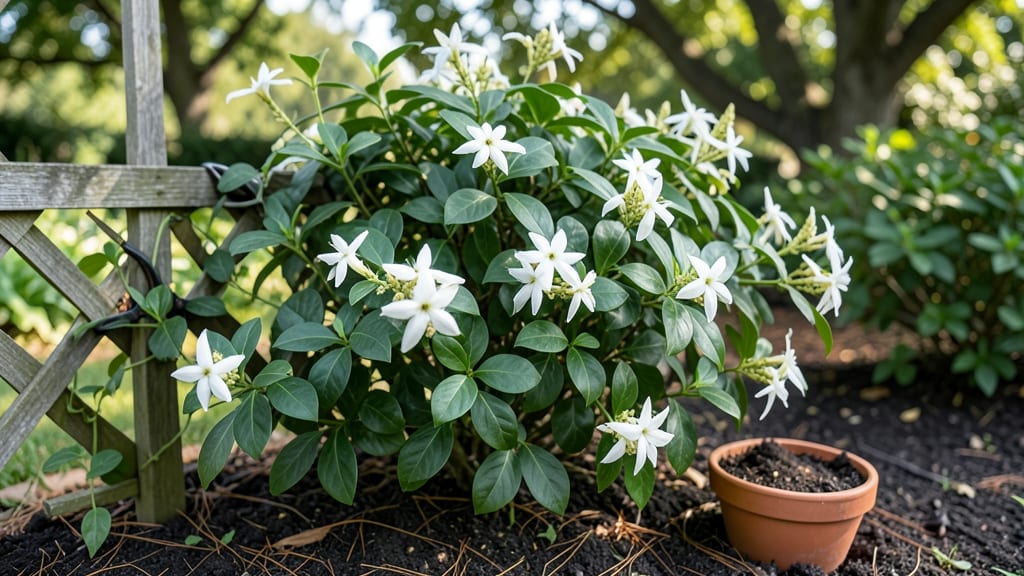
Star jasmine grows best in USDA Hardiness Zones 7 through 10, where its love for warmth and humidity thrives. These zones provide the perfect balance of mild winters and long growing seasons that support its lush, fragrant foliage and abundant blooms.
Star jasmine's preference for these zones comes from its tropical origins, where it naturally flourishes in warm temperatures between 70°F and 90°F during the day and never dips below 40°F at night. 🌿 The plant's evergreen leaves and delicate white flowers are highly sensitive to frost, which can cause permanent damage or even kill the plant.
In areas outside its ideal range, gardeners often use containers to move plants indoors during winter or provide heavy mulching and protective coverings to shield roots from freezing temperatures.
What sets star jasmine apart is its ability to adapt to microclimates—small areas with slightly different conditions than the surrounding region. For example, planting near a south-facing wall or in a sheltered courtyard can create a warmer microenvironment that extends the growing season.
This adaptability makes it possible to grow star jasmine successfully in Zone 6 with proper care, though it may require more winter protection than in its native range.
💡 In This Article
- Understanding Star Jasmine’s Climate Requirements
- Creating Optimal Microclimates for Star Jasmine
Understanding star jasmine’s climate requirements
Star jasmine's ideal climate stems from its native tropical and subtropical habitats in Southeast Asia, where it experiences consistent warmth and high humidity. The plant's optimal daytime temperatures range between 75°F and 90°F, with nighttime lows never dropping below 50°F.
This warmth triggers its metabolic processes, particularly photosynthesis and flower bud formation, which require temperatures above 65°F to function properly.
The plant's evergreen leaves contain a waxy cuticle that helps retain moisture, but they're still highly sensitive to temperatures below 40°F, where frost can cause irreversible cellular damage within hours.
Humidity plays a crucial role in star jasmine's health, with ideal levels between 60% and 80%. In dry climates, the plant may develop brown leaf tips or curled foliage as it struggles to maintain moisture through its stomata.
This is why coastal regions within Zones 7-10 provide perfect conditions—the combination of warm temperatures and natural humidity from ocean breezes creates an ideal environment. Sunlight requirements are moderate, with 4-6 hours of morning sun being optimal, while afternoon shade prevents leaf scorch in hotter zones.
Proper airflow is equally important to prevent fungal diseases like powdery mildew, which thrives in stagnant, humid conditions.
The plant's frost sensitivity makes understanding microclimates essential. Even within Zone 7, frost pockets can create conditions too harsh for star jasmine, while sheltered areas may extend its growing range. For example, planting near a south-facing brick wall can create a 5-10°F warmer microenvironment by absorbing and radiating heat.
This microclimate effect explains why star jasmine can sometimes survive winters in Zone 6b with proper protection, while exposed garden beds in Zone 8 may struggle during cold snaps.
The plant's shallow root system makes it particularly vulnerable to temperature fluctuations at soil level, which is why mulching with 3-4 inches of organic matter helps insulate roots during winter.
What's fascinating about star jasmine's climate needs is how its growth patterns adapt to seasonal changes. In its native range, it flowers primarily in late spring to early summer when temperatures are consistently warm.
However, in cooler zones, gardeners often see delayed blooming until late summer when soil temperatures reach 68°F at 4-inch depth. This delayed flowering is a survival mechanism that prevents energy expenditure during marginal growing conditions.
The plant's ability to go semi-dormant during cooler periods explains why it can survive brief temperature dips below its optimal range—though this comes at the cost of reduced flowering and slower growth.
For gardeners pushing the boundaries of star jasmine's range, understanding these climate interactions becomes crucial. In Zone 6, for instance, the plant may enter a prolonged semi-dormancy during winter, requiring careful springtime monitoring for new growth.
The key temperature threshold is 55°F—when soil temperatures consistently stay above this point for at least two weeks, it signals the plant to resume active growth.
This biological response explains why container-grown star jasmine often outperforms in-ground plants in cooler zones, as containers can be moved to protected locations during cold snaps and benefit from faster soil warming in spring.
One often-overlooked factor is how star jasmine's humidity needs interact with its sunlight requirements. In high-humidity zones like Zone 9 or 10, the plant can tolerate more afternoon sun, while in drier Zone 7 areas, afternoon shade becomes essential to prevent moisture loss through transpiration.
This explains why star jasmine often performs better near water features or in partially shaded garden beds in hotter climates—it maintains better moisture balance while still receiving adequate light for photosynthesis.
The plant's ability to adjust its stomatal openings in response to humidity levels demonstrates its remarkable adaptability within its preferred climate range.