
Planting
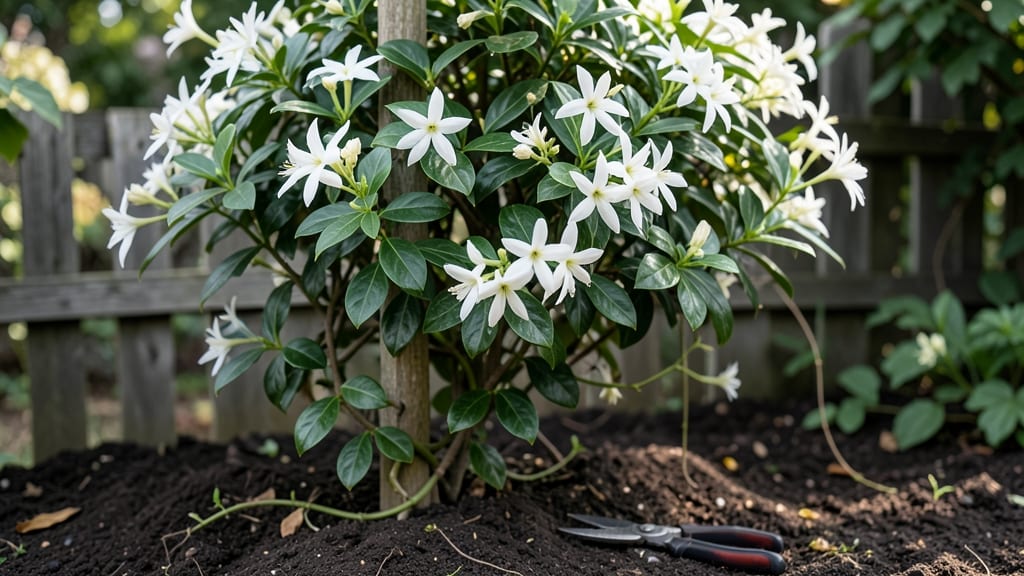
Star jasmine grows best in USDA hardiness zones 7-11, thriving in warm coastal areas, southern states, and California gardens. Its tropical nature means frost will damage leaves, so winter protection is essential in cooler regions.
This tropical vine's ideal range reflects its origins in Asia and Australia, where warm winters and high humidity create perfect growing conditions. 🌿 In zones 6 or below, gardeners often grow it in containers that can be moved indoors during cold snaps or use heavy mulch to insulate roots.
The key is protecting the plant from temperatures below 25°F, which can cause permanent damage to the foliage and reduce flowering in spring.
What's interesting is how microclimates can extend its growing range—south-facing walls, urban heat islands, or even greenhouse structures can create pockets where star jasmine survives winters that would otherwise be too harsh.
Many gardeners in zone 6 report success by planting near heat-retaining surfaces or using frost cloths during sudden cold snaps.
💡 In This Article
- Understanding Star Jasmine’s Climate Requirements
- Planting Star Jasmine in Marginal Zones: Tips and Tricks
Understanding star jasmine’s climate requirements
Star jasmine's love for warmth stems from its tropical origins in Southeast Asia and Australia, where temperatures rarely dip below 50°F. This vine evolved in humid, subtropical environments where consistent warmth and high moisture levels support its rapid growth and abundant flowering.
The plant's leaves contain delicate cells that rupture when exposed to freezing temperatures, which is why even a light frost (32°F) can cause brown, crispy foliage and stunt new growth. 🌿
The real magic happens between 60-90°F—this is star jasmine's ideal temperature range for photosynthesis and flower production. During summer months, it thrives in full sun, but in hotter zones (like Southern California), afternoon shade helps prevent leaf scorch.
What's fascinating is how its roots develop a shallow but extensive network just below the soil surface, allowing it to absorb maximum moisture and heat from the ground. This adaptation explains why it performs so well in sandy, well-draining soils common to coastal regions.
Humidity plays a crucial role too—star jasmine prefers 50-70% relative humidity, which is why it excels in coastal areas where ocean breezes provide natural moisture. In drier inland zones (like Arizona's Sonoran Desert), regular misting or drip irrigation becomes essential to mimic its native conditions.
The plant's waxy leaf surface helps conserve moisture, but it can't compensate for prolonged dry spells, which is why consistent watering is non-negotiable during establishment.
Microclimates become game-changers for gardeners in marginal zones. A south-facing wall can create a 5-10°F warmer microclimate than the surrounding area, potentially pushing zone 6 gardens into star jasmine's comfort range. Urban heat islands—where pavement and buildings trap heat—can elevate temperatures by 5-15°F compared to rural areas.
This is why many successful zone 6 growers plant near driveways or dark-colored fences that radiate heat. Even a simple 3-foot-tall trellis against a brick wall can create a protected niche where star jasmine survives winters that would otherwise kill it.
The plant's flowering mechanism is equally temperature-sensitive. Buds form best when daytime temperatures stay above 70°F for at least 6 weeks before the first frost. This explains why star jasmine often blooms later in cooler zones—sometimes not until June or July—compared to April-May in optimal zones.
The flowers themselves are highly sensitive to temperature fluctuations; sudden cold snaps can cause buds to drop before opening, which is why winter protection isn't just about survival—it's about next year's perfume-filled blooms.
What most gardeners don't realize is how star jasmine's growth rate slows dramatically below 55°F. While it can tolerate brief cold snaps, prolonged exposure to 40°F or lower triggers dormancy-like states where new shoots fail to emerge in spring.
This is why container cultivation works so well—potted plants can be moved to sheltered locations or even brought indoors during winter, breaking this temperature barrier entirely. The key measurement to watch is your local average annual minimum temperature—if it's below 20°F, star jasmine will struggle without significant protection.