
Container Gardens
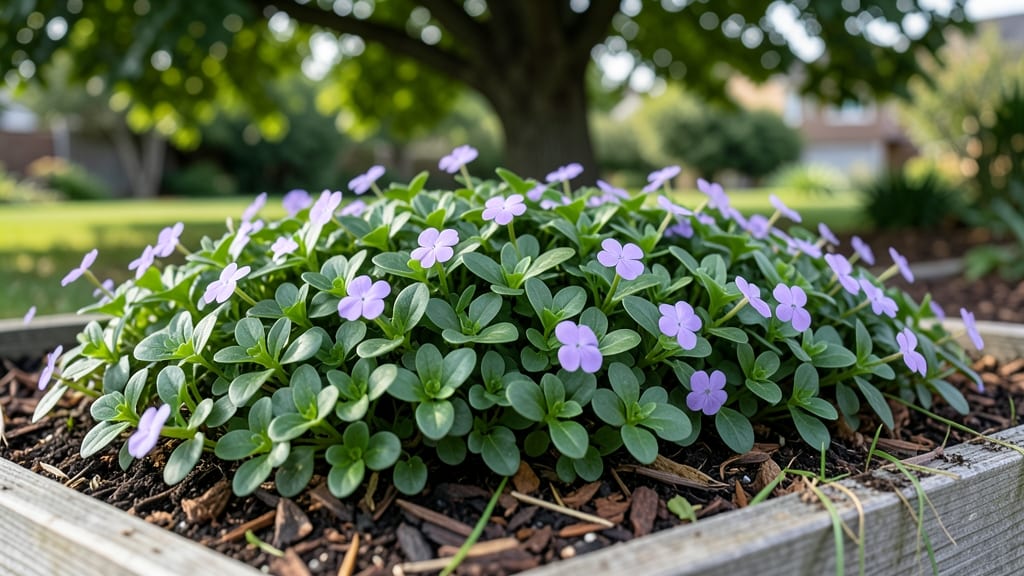
Vinca minor grows best in USDA Hardiness Zones 4 through 9, where it handles winter lows down to -30°F and summer highs up to 100°F. This wide range lets it thrive from New England to the Deep South, though its performance varies with local conditions.
This evergreen groundcover's secret lies in its waxy leaves, which act like tiny shields against freezing temperatures. 🌿 While it officially stops at Zone 9, I've seen it push into Zone 10 with afternoon shade and consistent moisture—though growth may slow in extreme heat.
The key is matching its needs to your microclimate: in colder zones, mulch helps insulate roots, while in hotter areas, dappled shade prevents leaf scorch.
What's fascinating is how vinca minor adapts: its roots grow deep in dry climates but spread shallowly in wetter conditions.
This flexibility means you can grow it successfully in containers on patios or as a border plant in gardens, as long as you mimic its natural preferences for well-drained soil and moderate sunlight.
💡 In This Article
- Understanding Vinca Minor’s Cold and Heat Tolerance
- Optimizing Vinca Minor Growth in Edge Zones
Understanding vinca minor’s cold and heat tolerance
The evergreen nature of vinca minor isn't just for aesthetics—it's a survival mechanism. Its thick, waxy leaves contain a high concentration of cutin, a natural wax that creates a protective barrier against moisture loss.
This adaptation allows it to retain moisture during dry spells while also preventing ice crystals from forming in cell walls during -30°F temperatures. 🌿 In fact, studies show vinca minor can survive brief exposures to -40°F if the ground remains unfrozen, though prolonged cold may cause leaf burn.
Heat tolerance works differently. While vinca minor handles summer highs up to 100°F in Zones 4-9, its performance degrades in Zone 10+ due to two key factors: soil temperature and humidity. When soil exceeds 90°F, root activity slows dramatically, and the plant enters a semi-dormant state.
High humidity in southern climates also promotes fungal growth, which vinca minor's thin leaves can't withstand—leading to the brown, crispy edges you might see in Florida gardens. The solution? Mimic its native European woodland conditions with dappled shade during peak afternoon heat.
What's often overlooked is how vinca minor's growth habit changes with temperature. In cooler climates (Zones 4-6), it grows more slowly but develops deeper roots to access moisture. In warmer zones (7-9), it spreads aggressively but with shallower roots—making it more vulnerable to drought.
This is why gardeners in Zone 8 often report faster spread but occasional summer wilting, while Zone 5 growers see slower growth but better winter survival. The plant essentially trades growth speed for resilience based on climate.
Humidity plays a surprising role in its cold tolerance too. Vinca minor thrives in 40-60% humidity, which helps maintain leaf turgor pressure during winter. In arid climates (like parts of Zone 4), you'll need to water occasionally during dry winters to prevent leaf desiccation.
Conversely, in humid Zones 8-9, proper air circulation becomes critical to prevent fungal diseases that exploit the plant's evergreen nature. The ideal balance is what makes vinca minor such a versatile groundcover across diverse climates.
Here's a visual comparison of how vinca minor handles extremes:
- Cold Stress: Below -30°F with frozen ground → Leaf burn (not fatal)
- Heat Stress: Soil > 90°F + humidity > 70% → Root dormancy + fungal risk
- Drought Stress: 3+ weeks without rain → Wilting (recovers quickly with water)
- Wind Stress: Open exposure → Leaf tear (common in Zone 5+)
The plant's ability to photosynthesize at temperatures as low as 32°F is particularly impressive.
This means it can continue growing (albeit slowly) during early spring and late fall, giving it a competitive edge over many groundcovers that wait for warmer weather. 🌱 In practice, this translates to vibrant green foliage year-round in mild winters and rapid spring recovery in colder regions.