
Blooming
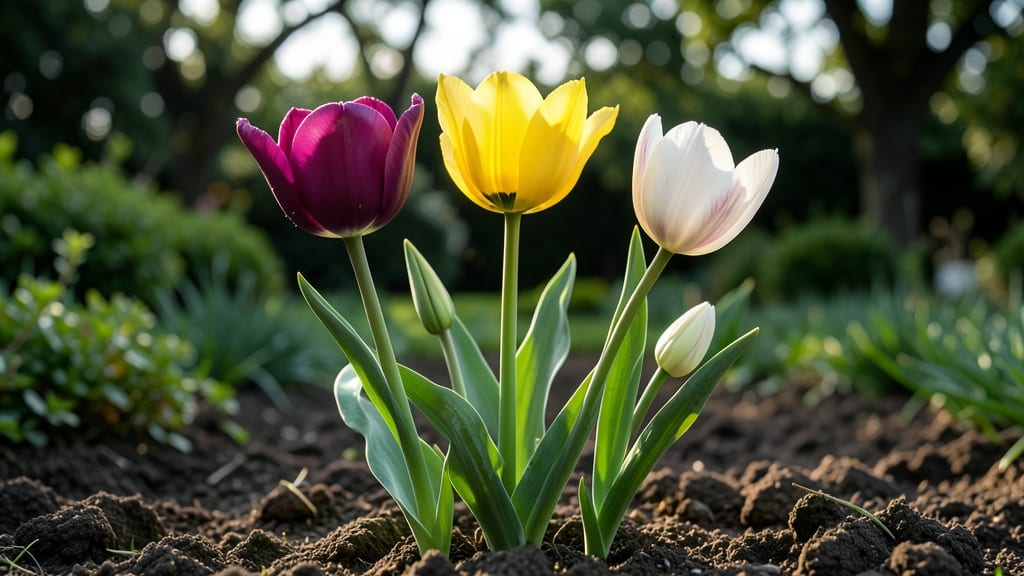
The season for tulips spans late winter through early spring, with their peak bloom arriving between March and May in most temperate climates—though exact timing shifts based on location and variety.
The timing of tulip blooms depends heavily on where you live.
In colder northern regions like the Pacific Northwest or New England, tulips often burst into color as early as February, while southern states may not see their first blooms until late March or April. 🌸 Varieties like 'Darwin Hybrid' tulips tend to bloom later in the season, extending the display well into May, while early bloomers like 'Parrot' tulips might appear in February.
This regional variation means gardeners in warmer climates can sometimes enjoy a second bloom cycle in fall if conditions are right.
For those eager to push the season further, strategic planting—like choosing varieties with staggered bloom times or using forcing techniques indoors—can create a continuous display from February through June. The key is understanding your local frost dates and selecting tulips that match your climate zone.
💡 In This Article
- Factors Influencing Tulip Bloom Seasons
- Best Practices for Extending Tulip Season in Gardens
Factors influencing tulip bloom seasons
Tulip bloom timing is primarily dictated by USDA hardiness zones, which categorize regions based on average minimum winter temperatures. In Zone 3-5 (northern U.S. and Canada), tulips often emerge as early as February, while Zone 7-9 (southern U.S.) sees blooms in late March to April.
This is because tulip bulbs require vernalization—a period of cold dormancy (typically 12-16 weeks below 40°F) to trigger flowering. Without sufficient chill hours, bulbs may fail to bloom or produce weak stems.
The variety you choose plays a huge role too. Early bloomers like 'Early Harbingers' or 'Queen of Night' tulips typically open in February, while late-season 'Darwin Hybrid' or 'Fosteriana' varieties peak in May. Even within the same region, a 10-14 day difference can separate early and late bloomers.
For example, in Seattle (Zone 8), 'Parrot' tulips might bloom in late February, while 'Apeldoorn' tulips appear in mid-April. This staggered timing is why gardeners often plant multiple varieties to extend the display.
Planting timing also affects bloom schedules. Tulip bulbs should be planted in fall (October-November) to establish roots before winter. If planted in spring, they may not bloom that year at all, as they need 6-8 weeks of root development before dormancy.
Additionally, soil temperature matters—bulbs planted in cool, well-drained soil (ideal at 50-60°F) will bloom more reliably than those in heavy clay or waterlogged ground, which can delay or prevent flowering.
Hemispheric differences add another layer. In the Southern Hemisphere, tulip seasons mirror the North but are 6 months later. For instance, Australia (Zone 9-10) sees tulips bloom from August to October, while South Africa (Zone 9-10) enjoys them from June to August.
This inversion occurs because tulips are northern-hemisphere natives and rely on seasonal cues like day length (photoperiod) and temperature shifts. In warmer climates, gardeners often use shade or mulch to mimic winter conditions and encourage blooming.
Even within a single garden, microclimates can shift bloom times. A south-facing slope may warm up faster, causing tulips to bloom 1-2 weeks earlier than those in a north-facing bed.
Similarly, urban heat islands (where cities are warmer than surrounding areas) can advance bloom times by up to 3 weeks compared to rural gardens. This is why precise record-keeping—like noting when your first tulip opens—helps predict future bloom schedules.
One fascinating exception is fall-blooming tulips, like 'Autumn Glory' or 'Red Emperor', which can produce a second flush of flowers in September-October if given consistent moisture and partial shade after their spring bloom.
This occurs because these varieties store energy in their bulbs, allowing for a secondary flowering cycle under the right conditions. 🌿