
Pests and Diseases
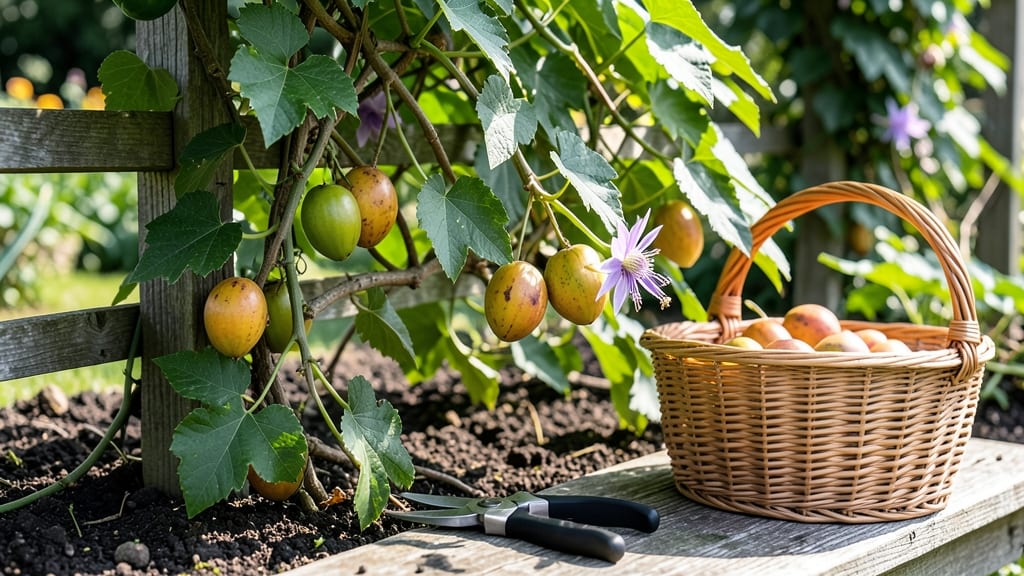
Knowing when is the passionfruit season in your region is key—it ripens from late summer to early autumn, but timing can turn a sweet, tangy burst into a mealy letdown.
Here’s the catch: In Florida, you’re picking passionfruit from June through October, while California growers wait until August or September for their vines to deliver. Meanwhile, in tropical regions like Hawaii, the season stretches nearly year-round, but even there, altitude and rainfall shift the timing.
If you’ve ever plucked a passionfruit only to find it bland, you’re not alone — and I’ll show you how to nail the window every time.
Beyond the calendar, temperature and sunlight play a huge role. Passionfruit vines need warmth to set fruit, and without it, they’ll just keep growing leaves instead of producing. That’s why Florida’s long, hot summers give a longer harvest, while cooler climates like Southern California see a shorter, later season.
I’ll break down the exact months for your region, plus how to tell when fruit is truly ripe (hint: it’s not just about color).
Ready to go from guessing to knowing? You’ll learn the precise harvest windows for U.S. regions, how to extend your season with simple tricks, and the one mistake that ruins fruit faster than anything else. Let’s get started.
Passionfruit season by U.s. region: exact months for peak harvest
Timing your passionfruit harvest is like catching a tropical wave—miss it, and you’re left with bland, underripe fruit. In the U.S., passionfruit thrive in USDA Zones 10-12, but even within those zones, peak harvest windows shift dramatically based on microclimates.
For example, California’s coastal regions produce fruit 3 months earlier than inland desert areas due to cooler ocean breezes. Understanding these variations ensures you pick fruit at its sweetest, most flavorful peak.
Passionfruit vines are perennial in frost-free zones, meaning they produce fruit year-round with proper care. However, commercial and home harvests peak during specific months when temperatures and daylight align perfectly.
In Florida, for instance, the primary harvest window spans July through October, while Arizona growers enjoy a longer, staggered season from May to November. These differences aren’t just about timing—they’re about flavor intensity and yield.
Key factors like altitude, humidity, and even soil type can shift your harvest by 2-4 weeks. For example, passionfruit grown at 2,000 feet elevation in Texas will ripen later than those at sea level in Southern California. To maximize your harvest, pay attention to local frost dates and heat spikes, which can stress vines and delay ripening.
In Florida’s tropical climate, passionfruit vines produce fruit almost year-round, but the sweetest, most abundant harvest occurs in August and September. This aligns with the state’s monsoon season, which provides ideal humidity levels for fruit development.
If you’re growing in South Florida (Zones 10b-11), expect your first flush of fruit to ripen by late June, with a second peak in October.
California’s Mediterranean climate creates a shorter but more predictable harvest window. In San Diego and Riverside, passionfruit typically ripen between May and September, with June and July being the peak months. Coastal areas like Santa Barbara may see fruit ripen 2-3 weeks later due to cooler ocean temperatures.
For home gardeners, this means planning your harvest schedule around late spring to avoid missing the window.
Texas growers enjoy a longer harvest season thanks to its subtropical climate. In Houston and Brownsville, passionfruit ripen from June through November, with three distinct peaks in July, August, and September.
However, inland areas like Austin may experience delayed ripening due to higher daytime temperatures and lower nighttime humidity. To combat this, provide afternoon shade during peak summer heat.
For Arizona’s desert climate, passionfruit thrive in the high heat and low humidity, leading to a rapid ripening cycle. In Tucson and Phoenix, expect fruit to ripen from May through November, with peaks in June, July, and October.
The key here is consistent watering—desert soils dry out quickly, and underwatering can cause fruit to split or become bitter. Mulching heavily around vines helps retain moisture and extends the harvest window.
If you’re selling at farmers' markets, time your harvest to align with regional demand. For example, Florida’s August-September peak coincides with back-to-school season, when demand for fresh, tropical fruit spikes.
Meanwhile, California’s June-July harvest aligns with summer produce cravings. Plan ahead by pruning vines in late winter to encourage uniform ripening and maximize yield during peak months.
Pro tip: Track your vine’s growth by marking the first flower clusters. Count 90-120 days from flowering to estimate ripening time. This method works best in consistent climates like Florida and Arizona, where temperature fluctuations are minimal
How to tell when passionfruit is truly ripe (not just color)
Passionfruit ripeness isn’t just about color—it’s a multi-sensory experience. A deep purple or golden skin might look perfect, but if you pick too early or too late, you’ll miss that burst of tropical flavor.
I’ve learned the hard way that overripe passionfruit turns mealy, while underripe ones taste bland and seedy. Let’s break down the real signs of ripeness beyond the obvious.
First, focus on fruit size and shape. Ripe passionfruit are plump but not oversized—think about the size of a golf ball or slightly larger. If they’re small and shriveled, they’re past their prime.
Also, check for slight wrinkling around the skin, which indicates natural ripening. This wrinkling is subtle but key—don’t confuse it with sun damage or dehydration.
Next, give the fruit a gentle squeeze. A ripe passionfruit should yield slightly under light pressure, almost like a ripe avocado. If it’s rock-hard, it’s unripe; if it’s mushy or squishy, it’s overripe.
Pro tip: Hold the fruit in your palm and press with your thumb—this gives you a better feel for firmness without bruising it.
🌱
⚠️ Common Mistake: Relying Only on Color
Yellow passionfruit turn golden when ripe, but purple varieties stay deep purple—even when fully ripe. Many gardeners pick based on color alone and end up with underripe or overripe fruit. Always combine color with touch and smell for accuracy.
Don’t overlook the stem end—it’s a hidden clue. A ripe passionfruit’s stem end will dry out and shrink slightly, almost like it’s pulling away from the fruit. If the stem is still green and moist, the fruit needs more time.
This is especially true for purple passionfruit, which can fool you with their dark skin even when unripe.
Finally, trust your nose. A ripe passionfruit emits a sweet, floral aroma—almost like a mix of citrus and tropical blossoms. If you’re not smelling anything, or it smells fermented or sour, the fruit is past its peak.
Sniff near the stem end, where the scent is strongest. This is my go-to trick for confirming ripeness, especially when I’m unsure about the fruit’s firmness.
If you’re still unsure, try the "twist test". Gently twist the fruit at its stem—if it detaches easily with a slight tug, it’s ready. If it resists, it’s not ripe yet.
This method works best in the morning when fruits are cooler and firmer. Remember, passionfruit don’t ripen further after picking, so timing is everything!
🌿