
Container Gardens
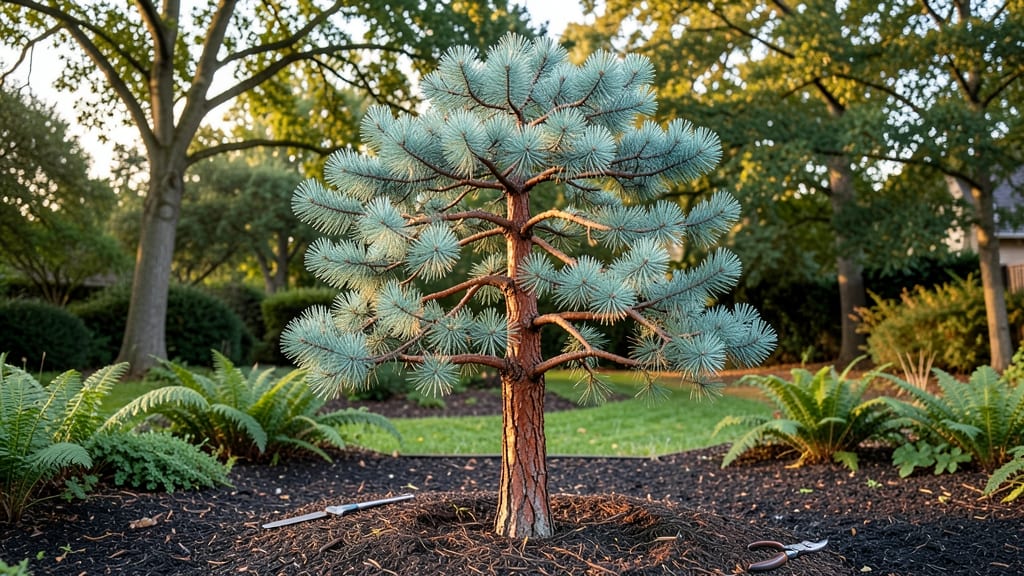
The Wollemi pine grows best in USDA Hardiness Zones 7 through 9, where cooler temperatures, high humidity, and well-draining soil replicate its native Australian conditions. Outside these zones, it requires extra protection from extreme heat or cold.
This ancient tree thrives in temperate climates with 60-80% humidity, making coastal areas and mountainous regions ideal. 🌲 Unlike many conifers, it struggles with both drought stress and sub-freezing temperatures, so gardeners in Zones 6 or 10 must use containers for mobility or provide microclimate adjustments.
The key is mimicking its natural understory habitat—partial shade and consistent moisture keep it healthy even outside its preferred range.
In colder zones, I’ve seen success with thick mulch layers and windbreaks, while hotter climates benefit from afternoon shade. The trick is balancing its need for moderate temperatures with the local environment—think of it as creating a mini-Australian ecosystem in your yard.
💡 In This Article
- Wollemi Pine’s Native Climate vs US Growing Conditions
- Microclimate Adjustments for Wollemi Pine Survival Outside Ideal Zones
Wollemi pine’s native climate vs US growing conditions
The Wollemi pine evolved in Australia’s ancient rainforests, where temperatures rarely dip below 32°F or exceed 90°F for prolonged periods. Its native habitat—moist, shaded understories with 60-80% humidity—creates the perfect balance: cool nights and warm days without extremes.
In the US, Zones 7-9 replicate this by offering average winter lows of 0-20°F and summer highs around 85-95°F, with consistent rainfall patterns that prevent drought stress.
What makes Zones 7-9 ideal is their moderate temperature swings—similar to Australia’s coastal ranges. For example, San Francisco (Zone 9) averages 55°F winters and 70°F summers, closely mirroring the Wollemi’s natural climate.
Meanwhile, Zone 6’s -10°F winters or Zone 10’s 95°F+ summers push the tree’s limits, risking frost damage or heat shock. The key difference? US zones lack Australia’s natural humidity buffers, forcing gardeners to supplement with irrigation or shade.
In its native habitat, Wollemi pines grow alongside ferns and eucalyptus, thriving in well-drained but moisture-retentive soil. The US equivalent would be a mix of 50% peat moss, 30% pine bark, and 20% perlite to mimic this balance.
Without it, roots suffocate in heavy clay or dry out in sandy soil—both common pitfalls in US gardens. Even in ideal zones, afternoon shade is critical to prevent leaf scorch, a problem I’ve seen in full-sun exposures.
Here’s the science: Wollemi pines have thin, papery bark that insulates against mild temperature fluctuations but fails under prolonged cold or heat. Their needles, while tough, transpire heavily in dry air—explaining why daily misting or drip irrigation helps in low-humidity zones like Zone 8’s inland areas.
The tree’s slow growth rate (just 6-12 inches per year) reflects its adaptation to stable, undisturbed conditions—another clue that US gardeners must prioritize consistency over speed.
To visualize the contrast: Imagine a Wollemi pine in Zone 7’s Portland, Oregon, versus Zone 9’s Miami. The Portland tree enjoys cool, foggy summers and mild winters, while the Miami tree battles intense humidity and hurricane-force winds.
Both require adjustments—Portland needs windbreaks, Miami needs shade cloth—but the core challenge is replicating that 60-80% humidity year-round, which is harder in arid climates like Zone 8’s Arizona.
What most gardeners overlook is the Wollemi’s root sensitivity to temperature swings. In USDA Zone 7, roots can tolerate 20°F briefly but suffer long-term damage at 15°F or below. This is why deep mulching (4-6 inches) with cedar chips is non-negotiable—it mimics the forest floor’s insulation.
In contrast, Zone 10’s consistent warmth risks root rot if drainage isn’t perfect, proving that both cold and heat extremes demand solutions.