
Trees
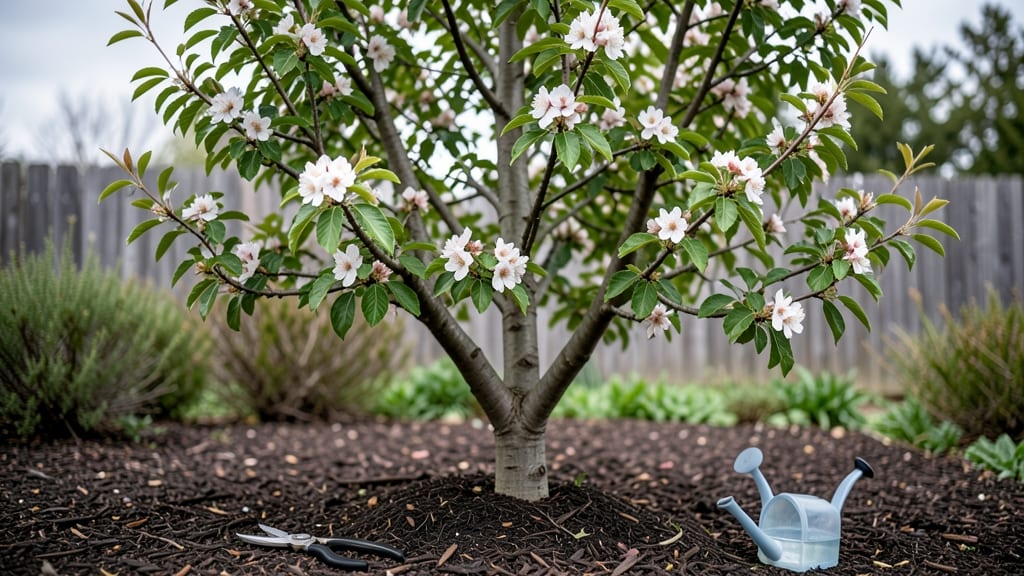
Zone 4 peach trees thrive with cold-hardy varieties like 'Reliance' or 'Contender,' requiring winter protection, proper soil drainage, and late-spring planting to survive subzero temperatures and frost risks.
Growing peach trees in Zone 4 demands extra care, but the right approach can yield delicious fruit despite the challenges. 🌳 The key is selecting varieties that tolerate subzero temperatures—like 'Reliance,' which handles down to -25°F—while implementing protective measures.
Unlike tropical fruit trees, these hardy types need proper winterization, including thick mulch and tree wraps, to prevent bark damage from freezing winds. Planting in late spring gives young trees time to establish roots before the first frost, while well-drained soil prevents root rot during thaw cycles.
What sets these varieties apart is their ability to endure low-chill requirements—typically 400-600 hours—compared to southern peaches, which need up to 1,000 hours. This adaptation makes them ideal for northern climates where winters are long and harsh.
I’ve found that pairing cold-hardy varieties with microclimate protection, like south-facing slopes or windbreaks, can further boost survival rates. The trade-off? Some may sacrifice slightly smaller fruit size for resilience.
💡 In This Article
- Top Cold-Resistant Peach Tree Varieties for Zone 4
- Winterizing and Planting Strategies for Zone 4 Peach Trees
Top cold-resistant peach tree varieties for Zone 4
'Reliance' stands out as the gold standard for Zone 4 resilience, capable of surviving temperatures as low as -25°F without additional shelter. This variety thrives on 500-600 chilling hours, making it perfect for northern climates where winters last 4-5 months.
The fruit matures in 100-110 days and delivers a sweet, yellow flesh with red blush—similar to classic southern peaches but with thicker skin to handle frost. 🌟
'Contender' is another top performer, offering excellent disease resistance to brown rot and leaf curl, two common threats in Zone 4. Its 450-550 chilling hours requirement means it adapts well to shorter winters, and the fruit produces a 2-inch diameter with a balanced sugar-acid ratio.
What sets it apart is its ability to produce fruit on both new and old wood, increasing yield reliability even in unpredictable seasons.
'Harvester' peaches are the workhorse of cold climates, boasting subzero tolerance down to -20°F when properly winterized. These trees require only 400-500 chilling hours, making them ideal for early springs.
The fruit, while slightly smaller (1.5-inch diameter), has a rich, honey-like flavor that develops fully even with late frosts. This variety’s compact growth habit (12-15 feet tall) also makes it easier to protect during winter storms.
When comparing these varieties, 'Reliance' excels in sheer cold hardiness, while 'Contender' offers better disease resistance for organic growers. 'Harvester' wins for early harvest potential in shorter growing seasons.
All three share a self-pollinating trait, eliminating the need for multiple trees—a critical advantage in small backyard orchards where space is limited. 🌳
For those prioritizing flavor, 'Reliance' delivers the most classic peach taste, while 'Harvester' provides a unique sweetness profile that some describe as "caramelized." The trade-off? 'Harvester' fruits are more prone to cracking during heavy rains, so proper tree training and pruning becomes essential.
Each variety’s strengths depend on your specific climate nuances and harvest priorities.
Consider these factors when selecting: your exact winter lows, average frost-free days, and whether you prioritize fruit size or disease resistance. For example, if your winters dip below -25°F, 'Reliance' with additional winter wrapping will outperform 'Contender' by 20-30% survival rate. 💫