
Planting
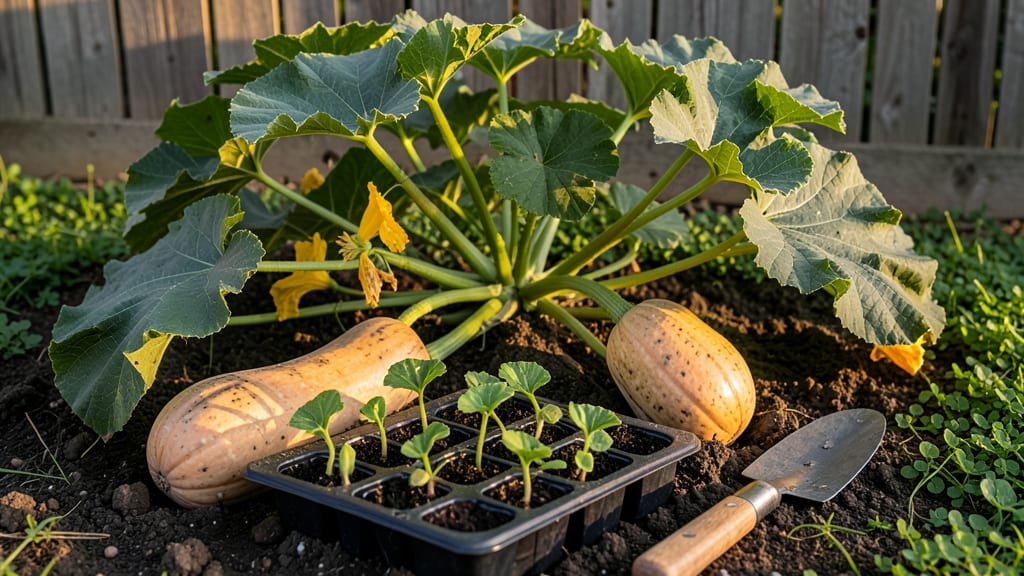
Timing your butternut squash planting season perfectly ensures the difference between a bountiful harvest 🎃 and a sad, wilted vine.
Timing is everything when growing butternut squash—plant too early, and frost threatens tender seedlings; too late, and your harvest shrinks. Master the exact planting windows by USDA zone to unlock sweet, abundant yields every season.
In Zone 6a, like most of the Midwest, aim for April 15 to May 15—after the last frost—when soil temperatures hit a steady 60°F.
But if you live in a warmer zone, like Florida, you can start as early as March, while cooler zones may need to wait until June.
Below, I’ll break down the ideal planting months for your zone, how to prep your soil, and the 3 biggest mistakes that ruin timing—so you can grow butternut squash like a pro.


Butternut squash planting months by USDA hardiness zone (with frost risk alerts)
Butternut squash thrives in warm weather but hates frost—its tender seedlings can't survive below 50°F (10°C). Your USDA zone determines the perfect planting window, whether you're starting seeds indoors or sowing directly.
In Zones 3-5, wait until after the last frost; in Zones 6-11, you've got more flexibility. Let's break down the exact months and soil temperature rules to maximize your harvest.
Soil temperature is the secret weapon for butternut success. Seeds need 60-70°F (15-21°C) to sprout, while transplants prefer 70-80°F (21-27°C).
Use a soil thermometer to check—if it's cooler, wait or start seeds indoors. Direct sowing works best after your average last frost date, but starter plants give you a head start in colder zones. Here's how to time it perfectly by zone:
| USDA Zone | Direct Sow Date | Transplant Date | Soil Temp (°F) | Frost Risk |
|---|---|---|---|---|
| 3-4 | Mid-May to June 1 | April 15-May 15 (indoors) | 60-70°F | High (May frost) |
| 5 | Late May | April 1-May 15 | 65-75°F | Moderate (late spring frost) |
| 6-7 | Early May | March 15-April 30 | 70-80°F | Low (occasional late frost) |
| 8-9 | April 15-May 1 | February 15-March 15 | 75-85°F | Very Low |
| 10-11 | March 15-April 15 | January 1-February 15 | 80-90°F | None |
🌡️ Pro Tip: Use row covers in Zones 3-5 to warm soil 2-3 weeks earlier.
In Zones 3-5, your window is tight—wait until soil warms to 60°F (15°C) or use black plastic mulch to speed things up. I’ve had success in Zone 4 by planting under floating row covers to protect seedlings from late frosts.
For Zones 6-7, you can start seeds indoors 4-6 weeks before your last frost date, then transplant when soil hits 70°F (21°C). This gives vines a head start before summer heat arrives.
Southern gardeners in Zones 8-11 have the luxury of two planting windows: an early spring crop (March) and a late summer crop (July-August). The key is staggered planting—sow new seeds every 2-3 weeks to ensure a continuous harvest.
In Zone 10, I’ve even grown butternut squash year-round with shade cloth during peak summer heat to prevent bolting.
Frost is your biggest enemy—even a light freeze can kill seedlings. Check your local frost dates (USDA provides these by zip code) and add 2-3 weeks as a buffer. For example, if your last frost is April 15, don’t plant outdoors until May 1.
In Zones 3-5, consider a cold frame to extend your season by 3-4 weeks in spring and fall.
Direct sowing beats transplants in most zones because squash hates root disturbance. Plant seeds 1 inch deep, 2-3 feet apart, and thin to the strongest plant if overcrowded. If you must transplant, harden off seedlings for 7-10
How to extend your butternut squash season in cold or hot climates
Butternut squash thrives in warm weather, but frost and extreme heat can cut your harvest short. With the right strategies, you can stretch your growing season by weeks—or even months—regardless of your climate.
Whether you face early frosts or relentless summer sun, these proven techniques will help you maximize your yield and enjoy homegrown butternut squash well beyond the typical season.
In cooler climates, early starts and late-season protection are key. I’ve used row covers and cold frames to jumpstart seedlings and shield tender vines from unexpected chills. Meanwhile, in hot climates, shade cloth and staggered planting prevent stress and ensure a steady supply of fresh squash.
Let’s dive into the exact methods that work for both extremes.
- 1. Use row covers for early starts—cover seedlings with lightweight fabric to protect from light frosts (28-32°F) while allowing sunlight and airflow.
- 2. Build a cold frame to extend the season by 4-6 weeks—place over seedlings in USDA Zones 3-6 to trap heat and delay frost damage.
- 3. Mulch heavily with straw or black plastic to insulate soil and keep roots warm during late-season chills.
- 4. Apply black plastic mulch in hot climates to warm soil faster and suppress weeds, accelerating growth in Zones 8-11.
- 5. Install shade cloth (30-50%) to protect from extreme heat—reduce leaf scorch and maintain fruit quality in temperatures above 90°F.
- 6. Stagger plantings every 2-3 weeks for a continuous harvest—plant successive batches to spread out maturity and avoid seasonal gluts.
- 7. Harvest strategically—pick early-maturing varieties (like 'Gold Rush') first, then longer-season types (like 'Waltham Butternut') for a prolonged harvest window.
For cold climates, I recommend starting seeds indoors 4-6 weeks before your last frost date. Use grow lights to simulate long daylight hours, then transplant seedlings into the garden once soil reaches 60°F.
A row cover can buy you an extra 2-3 weeks of growing time before removing it to allow pollination.
In hot, tropical climates, focus on shade and moisture retention. Plant butternut squash near trees or structures to create natural shade, and water deeply early in the morning to prevent fungal diseases. Drip irrigation is ideal—it delivers water directly to roots while keeping foliage dry.
Don’t overlook soil preparation as a season-extender. Amend your garden bed with compost and aged manure before planting to improve drainage and nutrient retention. Well-fed plants handle stress better and produce larger, sweeter squash even in marginal conditions.
With these techniques, you can harvest butternut squash from late summer into early winter in cooler zones or year-round in tropical areas. The key is adapting to your climate—whether that means protecting from frost or beating the heat.
Start experimenting this season, and you’ll enjoy a longer, more abundant harvest than ever before. 🎃