
Vegetables
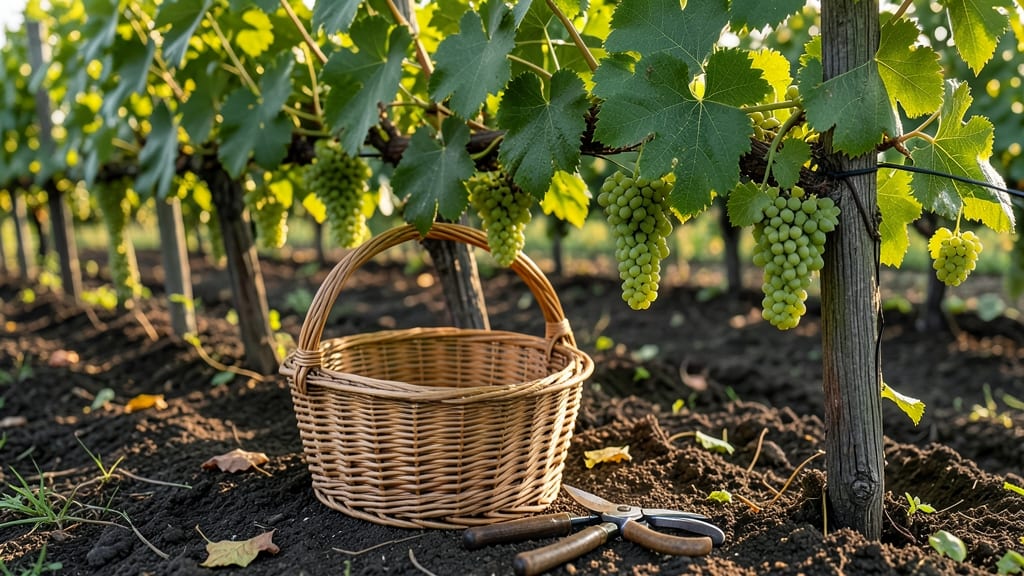
Champagne grapes season determines when Pinot Noir, Chardonnay, and Pinot Meunier reach peak ripeness for harvest, typically spanning late August through early October, though warmer climates may extend into November.
Timing matters because these grapes need precise balance between sugar levels, acidity, and phenolic ripeness to create that signature crisp, elegant flavor Champagne lovers adore. 🌱 Cooler regions like Champagne's own vineyards often harvest Pinot Noir in early September, while Chardonnay may wait until mid-October.
In warmer areas, growers might delay until late October to avoid over-ripening, which can make wines taste too sweet or lose their bright acidity.
For home growers, the key is testing grapes regularly—checking sugar content with a refractometer and tasting for that perfect balance of tartness and fruitiness. I always recommend harvesting in the coolest part of the day to preserve freshness, then processing within 24 hours to lock in those delicate flavors.
💡 In This Article
- How Climate and Variety Affect Champagne Grape Harvest Timing
- Best Practices for Home Growers to Time Champagne Grape Harvests
How climate and variety affect Champagne grape harvest timing
Champagne grapes reach harvest readiness when three key factors align: sugar accumulation, acidity balance, and phenolic ripeness. Pinot Noir grapes, for example, typically need 22-24° Brix (a measure of sugar content), while Chardonnay often peaks at 19-21° Brix.
The cooler climate of Champagne's traditional vineyards (average summer temps of 68-72°F) slows sugar development, while warmer regions like California's Central Coast can push harvests 2-3 weeks later due to faster ripening. 🌡️
Sunlight exposure plays a critical role too. Grapes need 1,500-1,800 hours of sunlight annually for proper ripening, but too much direct sun can increase phenol levels (bitterness) in Pinot Noir. That's why vineyards use canopy management techniques—like leaf plucking—to balance sunlight while maintaining acidity.
Chardonnay, being more forgiving, handles slightly warmer conditions better, which is why it often ripens 7-10 days later than Pinot Noir in the same vineyard.
The acidity window matters just as much as sugar levels. Champagne grapes need 6.5-7.5 g/L of malic acid to retain that signature crispness.
Cooler years preserve higher acidity naturally, while warm years may require careful canopy management or even slight green harvesting (removing some fruit early) to prevent acidity from dropping below 6.0 g/L.
This is why some vintners in warm climates harvest Chardonnay in late October—waiting for that perfect acid-sugar balance before the grapes lose their freshness. 🍇
Phenolic ripeness—particularly important for Pinot Noir—adds structure and mouthfeel. Underripe Pinot Noir can taste green or herbaceous, while overripe grapes develop jammy flavors. The ideal harvest window is when the grapes have 12-15% potential alcohol and the skins show deep color without being overly tannic.
This often means Pinot Noir is harvested 1-2 weeks before Chardonnay in the same vineyard, as it ripens faster.
Microclimates create even more variation. A vineyard just 50 feet higher in elevation might harvest 3-5 days later due to cooler nighttime temperatures. That's why Champagne's Montagne de Reims region often harvests Pinot Noir 5-7 days earlier than the Vallée de la Marne.
For home growers, this means testing grapes from different parts of the vineyard—sunny slopes ripen faster than shaded areas. 🌿
One often-overlooked factor is soil composition. Limestone-rich soils (like Champagne's famous chalk) reflect heat during the day but release it slowly at night, creating a moderating effect. Sandy soils, common in warmer regions, drain heat faster, accelerating ripening.
This is why the same grape variety can ripen 10-14 days earlier in a sandy soil climate compared to chalky terroirs.
For those curious about the science, think of grape ripening like a chemical balancing act. Sugar builds through photosynthesis, acidity decreases as malic acid converts to sugars, and phenols develop as the grapes mature.
The perfect harvest moment is when these three elements create harmony—like a symphony where every instrument plays its part at the right time. 🎻