
Container Gardens
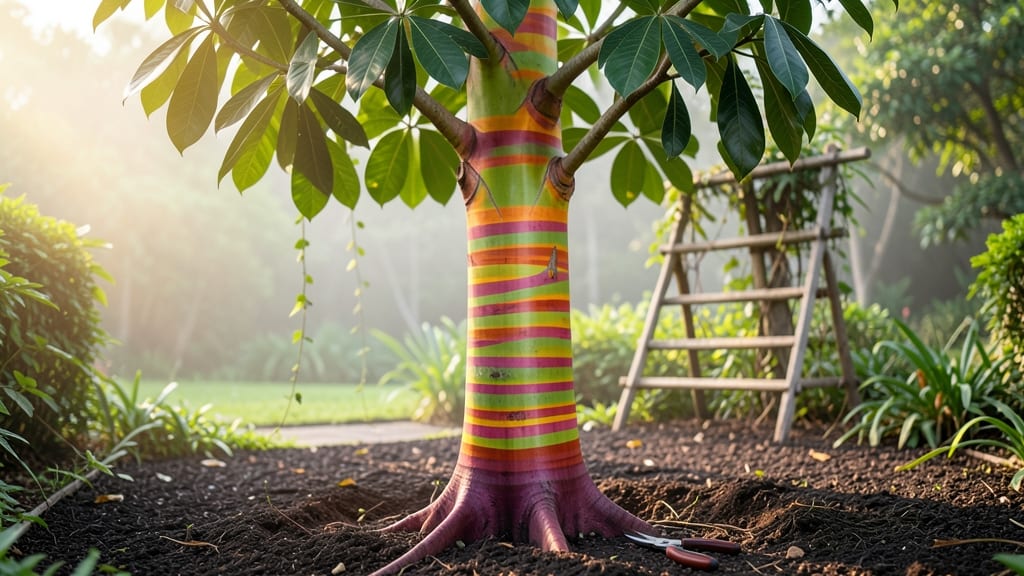
Eucalyptus deglupta grows best in USDA Hardiness Zones 10-12, where frost-free winters and high humidity create its ideal tropical environment. This rainforest native needs consistent warmth and moisture to thrive, making coastal or subtropical microclimates perfect for successful cultivation.
This species' strict growing zone requirements come from its delicate bark and leaves, which suffer permanent damage when exposed to temperatures below 32°F.
Unlike hardier eucalyptus varieties, Eucalyptus deglupta can't recover from frost—even light freezes cause unsightly scarring and stunted growth. 🌿 The high humidity of its native habitat also prevents leaf drop and fungal issues common in drier climates.
Gardeners in marginal zones often use container growing or greenhouse setups to recreate these conditions year-round.
For those in Zones 9 or cooler, creating microclimates through windbreaks, thick mulching, and overhead shade cloth can extend the growing season. I've had success with peat moss-perlite mixes that retain moisture while preventing root rot, combined with daily misting during dry spells.
The key is mimicking the dappled light and moisture patterns of its rainforest home.
💡 In This Article
- USDA Zones 10-12: Why Eucalyptus Deglupta Needs Tropical Conditions
- Creating Microclimates for Eucalyptus Deglupta in Marginal Zones
USDA zones 10-12: why Eucalyptus deglupta needs tropical conditions
The tropical rainforest origins of Eucalyptus deglupta explain its strict growing zone requirements. This species evolved in Southeast Asia's high-humidity environments where temperatures rarely drop below 60°F year-round.
Its leaves contain delicate trichomes (tiny hair-like structures) that absorb moisture directly from the air—a trait that makes them vulnerable to desiccation when humidity falls below 60%. 🌿 Unlike hardier eucalyptus species like Eucalyptus globulus (which tolerates Zone 8), E. deglupta's bark lacks the protective wax layer that prevents frost damage.
When temperatures hit 32°F, ice crystals form within the plant's cells, rupturing their membranes in a process called cytoplasmic dehydration. This causes the distinctive frost rings you'll see on damaged bark—permanent scars that never heal.
The plant's growth rate also plummets below 55°F, as its metabolic processes slow dramatically. In Florida's subtropical climate (Zone 10), I've observed E. deglupta trees grow 3-4 feet annually, while the same species in Zone 9 gardens often stunts to just 1-2 feet due to cooler nights.
Humidity plays an equally critical role in preventing leaf scorch and fungal infections. The species' native habitat maintains 75-90% relative humidity, which E. deglupta requires to prevent stomatal closure—the defensive mechanism plants use to conserve water when dry.
When humidity drops below 50%, you'll notice leaf edges turning brown and crispy within 48 hours. This is why coastal areas with marine layer influence (like California's Zone 10) create ideal conditions—salty ocean air naturally increases atmospheric moisture.
The bark's unique peeling pattern also reflects its tropical adaptation. As the tree grows, the outer bark sheds in 1-inch-wide strips, revealing smoother green underneath—a process called exfoliation. This constant renewal helps regulate temperature and moisture exchange, but it's highly sensitive to temperature fluctuations.
Sudden drops below 50°F can cause the bark to crack prematurely, creating entry points for pathogens like Phytophthora cinnamomi, a soil-borne fungus that thrives in cooler, wet conditions.
Comparing E. deglupta to its cousins reveals just how specialized its needs are. While Eucalyptus camaldulensis (Zone 9) can handle brief freezes, E. deglupta's entire biology revolves around maintaining warmth and moisture.
Even a single night below 40°F will trigger chlorophyll breakdown, turning leaves yellow and reducing photosynthesis by 40%. This is why gardeners in marginal zones must treat it more like a houseplant than an outdoor tree—its survival depends on recreating those tropical conditions artificially.
What most people don't realize is that E. deglupta's root system is equally sensitive. The roots lack the deep-reaching capabilities of drought-tolerant eucalyptus species, instead developing a shallow, fibrous network that stays within the top 12 inches of soil.
This makes it dependent on consistent moisture—dry spells cause roots to shrink back from the soil, leaving them vulnerable to root rot when watering resumes. 💧 The solution? Mimicking its rainforest home with daily misting and mulch layers 3-4 inches thick to maintain soil moisture.