
Planting
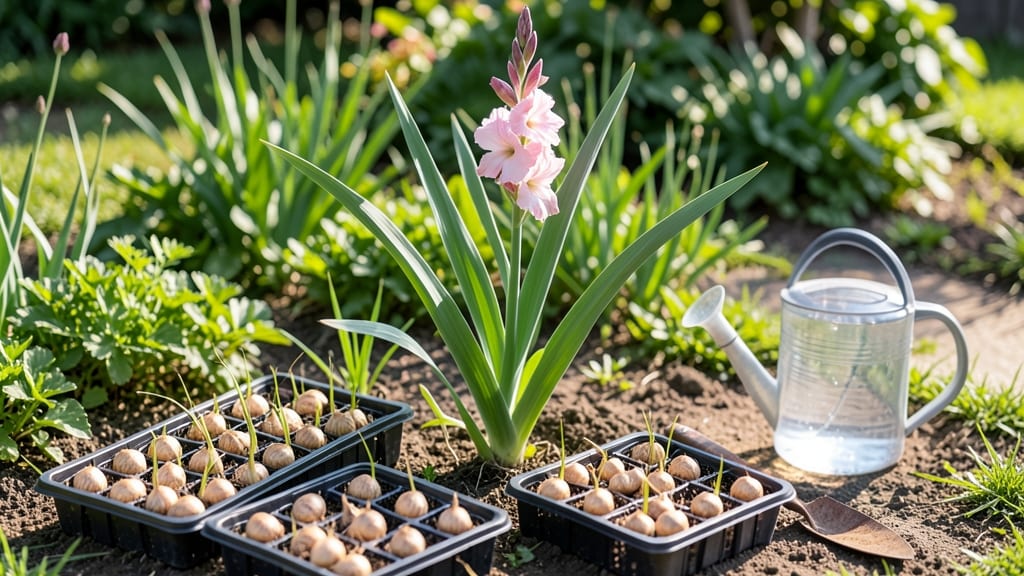
Planting gladiolus in late spring to early summer 🌸 is the secret to show-stopping blooms that last all season.
Want to grow gladiolus blooms that stand out in your garden? Timing your planting is everything—miss the window, and you’ll miss the show. Here’s the exact schedule you need based on your hardiness zone to ensure vibrant, long-lasting flowers every season.
In USDA Zone 6a, where I garden, the last frost usually passes by mid-April, but the real magic happens when soil warms to 60°F—that’s your cue to get those corms in the ground.
Below, I’ll break down the ideal months by zone, how to adjust for early or late blooms, and the three critical mistakes that kill your chances of success before you even plant.


Best gladiolus planting months by USDA hardiness Zone
Timing your gladiolus planting is the secret to show-stopping blooms. These frost-sensitive corms thrive when soil temperatures hit 60°F (15°C)—too early, and frost zaps them; too late, and you’ll miss summer’s peak flower season.
Your USDA hardiness zone dictates the perfect window, but regional microclimates can shift that by weeks.
Northern gardeners (zones 3-6) must wait until after last frost, often May-June, while Southern growers (zones 7-9) can plant as early as March-April. Soil warmth matters more than calendar dates—stick your finger 6 inches deep; if it’s cool to the touch, wait.
Let’s break down your zone’s ideal planting months and soil prep secrets.
⚠️ PRO TIP: Gladiolus corms are not winter-hardy—dig them up in fall in zones 3-6 to prevent rot. Southern zones (7+) can leave them in-ground if winters are mild.
In zones 3-4, where winters are brutal, plant gladiolus corms only after the soil warms to 60°F—typically late May to early June. Use a soil thermometer to avoid frost damage; these corms won’t survive freezing.
In my Zone 4 garden, I’ve learned to wait until Memorial Day weekend for foolproof results.
Gardeners in zones 5-6 have a 2-week window from mid-May to June. The key? Test soil temperature—if it’s below 58°F, delay planting. I once planted too early in Zone 5 and lost half my corms to a surprise frost. Now, I check soil warmth daily after April 15.
Southern zones (7-10) enjoy earlier planting, but heat can be the enemy. In Zone 8, I plant in March for summer blooms, but I mulch heavily to retain moisture.
For zones 9-10, January-February planting lets you extend the season—just water deeply to prevent corms from drying out in dry climates.
Regional tweaks matter: Coastal areas (like Zone 7b) can plant 2 weeks earlier than inland zones due to milder microclimates. Conversely, mountainous zones (e.g., Zone 6a) may need to delay until June. Always adjust for elevation—add 1 zone for every 1,500 feet above sea level.
Pro gladiolus growers swear by soil prep: amend with compost and sand for drainage, then plant corms 4-6 inches deep. In heavy clay soils, I add perlite to prevent rot. Full sun (6+ hours) is non-negotiable—these plants wilt without it.
For extended blooms, stagger planting by 2-3 weeks. In my Zone 6 garden, I plant half in May and the rest in early June to enjoy flowers from July to September. This trick works in any zone—just space corms 4-6 inches apart for airflow.
Remember: Gladiolus corms are not perennial in cold zones. In zones 3-6, dig them up after first frost, cure in the sun for 2 days, then store in a cool
How to adjust planting time for early vs. late blooms
Staggering your gladiolus planting creates a dazzling, extended bloom season instead of a single burst of color. By strategically adjusting timing for early bloomers and late varieties, you can enjoy flowers from early summer through fall.
The key lies in understanding each variety’s unique growth cycle and how to manipulate it through succession planting and bulb preparation.
Most gladiolus varieties fall into three bloom categories: early (60-70 days to flower), mid-season (70-80 days), and late (80-90 days). For example, 'White Prosperity' blooms early, while 'Black Star' thrives as a late-season variety. Mixing these creates a seamless transition of color in your garden beds.
- 1. Pre-Chill Early Varieties - Place early blooming corms in a cool (40-50°F) dark location for 4-6 weeks before planting to jumpstart growth and ensure earlier blooms.
- 2. Stagger Planting Dates - Plant early varieties 2-3 weeks before your standard planting window, then follow with mid-season and late varieties every 2-3 weeks thereafter.
- 3. Heat-Treat Late Varieties - For late bloomers, expose corms to 70-80°F temperatures for 2 weeks before planting to delay sprouting and extend the bloom season into fall.
- 4. Adjust Depth by Variety - Plant early bloomers 4 inches deep for quicker emergence, while late varieties get 6 inches deep to slow initial growth.
- 5. Override Zone Rules - In warmer zones (8-10), plant early varieties in February for spring blooms, and late varieties in August for fall color.
For succession planting, divide your garden into sections and plant new batches every 2-3 weeks after the initial planting. This creates a continuous display where one variety fades just as another reaches peak bloom.
For example, start with 'Pink Parfait' in early June, followed by 'Green Star' in July, and finish with 'Telemon' in August.
Don’t forget to rotate varieties each season to prevent soil-borne diseases. For instance, if you planted early bloomers in Zone 5 last year, swap them with late varieties this year in the same spot. This simple rotation keeps your garden thriving while extending your bloom timeline naturally.
Pro tip: Use shade cloth over newly planted late varieties to slow growth slightly. This delays blooming by 1-2 weeks, giving you even more control over your garden’s timeline. Pair this with drip irrigation to maintain consistent moisture without overwatering.
With these adjustments, your gladiolus garden will transform into a non-stop floral showcase, proving that timing is everything when it comes to these dramatic bloomers. 🌸