
Container Gardens
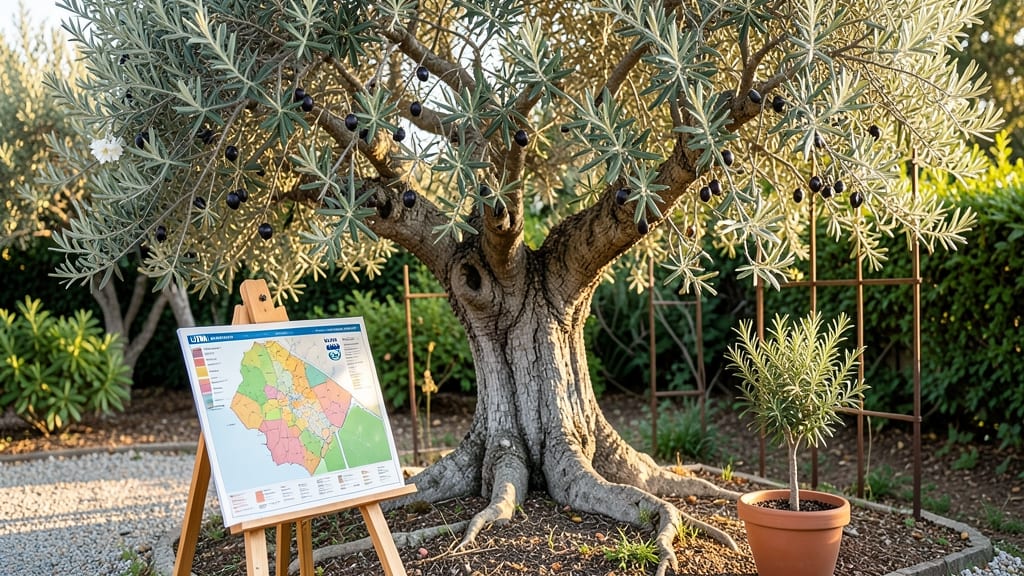
Olive trees grow best in USDA Hardiness Zones 8 through 10, where they enjoy hot summers, mild winters, and well-drained soil. Coastal areas and protected valleys can sometimes push these limits successfully.
These zones reflect olive trees' need for at least 200-300 chilling hours (below 45°F) annually, which most Zone 8+ regions naturally provide. 🌿 The Mediterranean climate—warm days, cool nights—is ideal, but modern cultivars like 'Arbequina' or 'Frantoio' can adapt to slightly cooler microclimates if protected from frost.
Many home growers in Zones 7 or 7b succeed by planting near south-facing walls or using frost cloths during winter.
Beyond official zones, coastal areas often work because ocean breezes moderate temperatures, while inland valleys trap heat. I've seen thriving olive trees in Zone 7b gardens tucked in sheltered microclimates—proof that local conditions matter more than the zone number alone.
💡 In This Article
- USDA Zones 8-10: Climate Requirements for Olive Trees
- Microclimates That Expand Olive Growing Possibilities
USDA zones 8-10: climate requirements for olive trees
The core reason olive trees thrive in USDA Zones 8-10 comes down to their Mediterranean heritage. These zones provide the 200-300 chilling hours (temperatures below 45°F) that trigger bud dormancy while avoiding prolonged cold snaps.
For example, Zone 8's average winter lows of 10-20°F are survivable, but extended exposure below 20°F risks damage to leaves and branches. The key mechanism is how olive trees balance heat tolerance with cold sensitivity—too much cold shuts down growth, while too little heat prevents fruit development.
Summer heat is equally critical, with olive trees requiring at least 100 days above 75°F annually. This heat period drives fruit maturation and oil production. In Zone 10, where summers routinely exceed 90°F, olives develop their signature rich flavors.
The science here involves photosynthesis efficiency: olive leaves contain high levels of chlorophyll that thrive in intense sunlight, converting 3-4% of sunlight into energy—far more efficient than many temperate trees. 🌞 However, extreme heat above 105°F can stress trees, which is why afternoon shade becomes important in the hottest zones.
Soil drainage emerges as the third critical factor in these zones. Olive roots demand well-aerated soil with pH 6.0-8.0, as waterlogged conditions trigger root rot.
In Zone 9's coastal areas, for instance, sandy loam soils naturally drain well, while inland Zone 10 regions often require raised beds or gravel amendments. The root system's depth—often 6-10 feet—means they seek moisture deep underground, making surface irrigation ineffective without proper soil structure.
What most gardeners overlook is how diurnal temperature swings (day-night differences) benefit olive trees. The Mediterranean climate's 15-25°F swings between day and night reduce pest pressure and concentrate sugars in olives. In Zone 8, this means daytime highs of 90°F paired with nighttime lows of 60°F create ideal conditions.
Without this variation, trees may produce smaller, less flavorful fruit. This is why container-grown olives in cooler zones often yield poorly—they lack natural temperature modulation.
Modern cultivars like 'Arbequina' or 'Frantoio' push these boundaries slightly by developing cold-hardier rootstocks (down to 15°F with protection). These varieties can survive Zone 7b winters if planted in south-facing slopes where reflected heat from walls adds 5-10°F of protection.
The trade-off? They may produce 20-30% fewer olives than Mediterranean natives due to reduced chilling hours. This illustrates why zone numbers are just starting points—local climate patterns matter far more.
For practical application, consider these zone-specific needs:
- Zone 8: Prioritize afternoon shade during 95°F+ heatwaves to prevent leaf scorch
- Zone 9: Use drip irrigation to maintain soil moisture without waterlogging
- Zone 10: Plant near windbreaks to reduce heat stress from dry winds
The bottom line? Olive trees in Zones 8-10 succeed because these regions replicate their evolutionary climate—hot, dry summers with mild winters. But with the right microclimate tweaks, you can grow them successfully in nearby zones too. 💫