
Planting
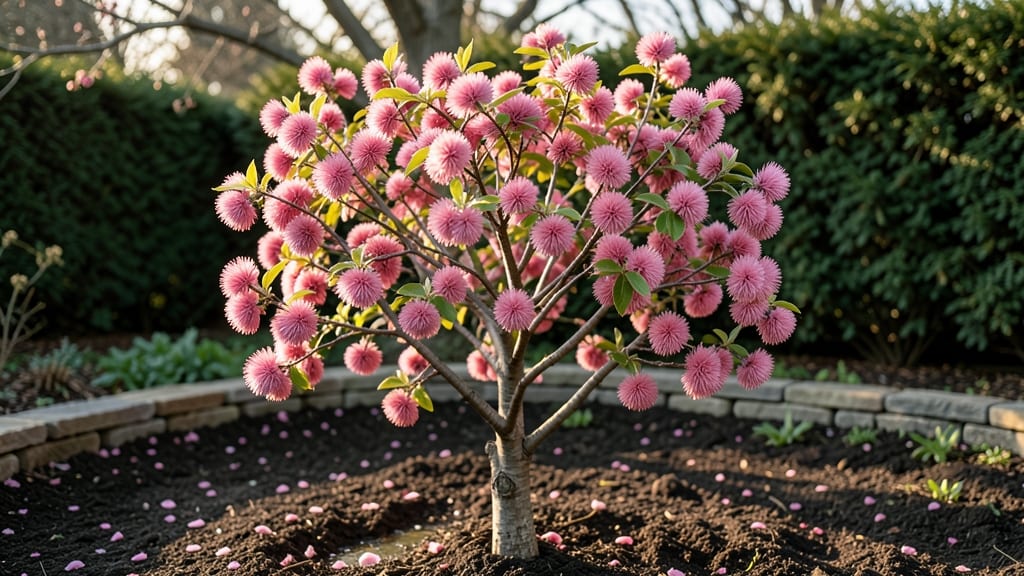
The pink pom pom redbud grows best in USDA hardiness zones 5-8, where it handles winter temperatures down to -20°F (-29°C) with the right care. Strategic mulching, consistent watering, and sheltered planting spots help it survive colder conditions.
This vibrant shrub's cold tolerance comes from its deciduous nature—it sheds leaves in winter, reducing moisture loss, while its root system remains protected by organic matter. 🌱 In zone 5, expect occasional dieback without protection, while zone 8 plants may need afternoon shade during heatwaves.
The key is mimicking natural forest-edge conditions: dappled sunlight and well-draining soil with 3-4 inches of mulch.
For gardeners pushing limits, zone 4 growers should plant near south-facing walls or use frost blankets in extreme winters, while zone 9 plants benefit from afternoon shade to prevent heat stress. The difference between thriving and struggling often comes down to these microclimate adjustments rather than just the zone number.
💡 In This Article
- Pink Pom Pom Redbud Cold Hardiness Explained
- Zone-Specific Planting and Care for Pink Pom Pom Redbud
Pink pom pom redbud cold hardiness explained
The pink pom pom redbud's cold resilience stems from its unique physiological adaptations. Unlike evergreens that lose moisture year-round, this deciduous shrub sheds its leaves in winter, drastically reducing water loss through transpiration.
Its root system remains active beneath the frost line, drawing moisture from deep soil layers while the above-ground growth enters dormancy when temperatures drop below 40°F (4°C). This dual strategy allows it to survive -20°F (-29°C) temperatures that would kill many ornamental shrubs.
The zone 5-8 range reflects both its natural dormancy triggers and the balance between cold tolerance and heat stress. In zone 5, where winters average 0-10°F (-18 to -12°C), the plant's bark and buds contain natural antifreeze compounds that prevent cellular damage.
However, prolonged exposure below -20°F (-29°C) can cause bud dieback, which is why mulching with 3-4 inches of organic matter (like wood chips or shredded leaves) insulates roots from extreme cold.
The southern boundary at zone 8 exists because temperatures above 90°F (32°C) can stress the plant, especially in low-lying areas.
What most gardeners overlook is the difference between top growth and root hardiness. While the roots can tolerate -20°F (-29°C), new shoots emerging in spring are far more vulnerable to late frosts (28-32°F (-2 to 0°C)).
This is why planting near south-facing walls or using frost blankets in marginal zones creates a 5-10°F (3-6°C) warmer microclimate—enough to protect emerging buds. The plant's natural habitat along forest edges also explains why it thrives with dappled sunlight rather than full sun exposure.
Dormancy isn't just about temperature—it's triggered by day length (photoperiod) and soil moisture levels. When daylight drops below 12 hours, the plant begins producing abscisic acid, a hormone that signals dormancy.
Proper fall watering (1 inch per week until ground freezes) ensures the roots store enough energy for spring regrowth. In contrast, drought-stressed plants enter dormancy prematurely, making them more susceptible to winter damage. This explains why consistent moisture—even in winter—boosts survival rates in marginal zones.
Consider these key factors when evaluating cold hardiness:
- Bark thickness: Mature stems develop 1/4-inch thick bark that acts as natural insulation, while young stems (1 year old) are more vulnerable to sunscald in winter
- Bud protection: Flower buds contain antifreeze proteins similar to those in winter wheat, preventing ice crystal formation in cells
- Soil insulation: Organic mulch maintains 5-10°F warmer soil temperatures than bare ground, extending the root growth season by 2-3 weeks in spring
The pink pom pom redbud's cold tolerance isn't absolute—it's a balance between preparation and environment. While the plant can handle -20°F (-29°C) in ideal conditions, gardeners in zone 4 or 9 must compensate with microclimate adjustments.
The difference between a thriving specimen and one that struggles often comes down to these seasonal care details rather than just the zone number. 🌿