
Planting
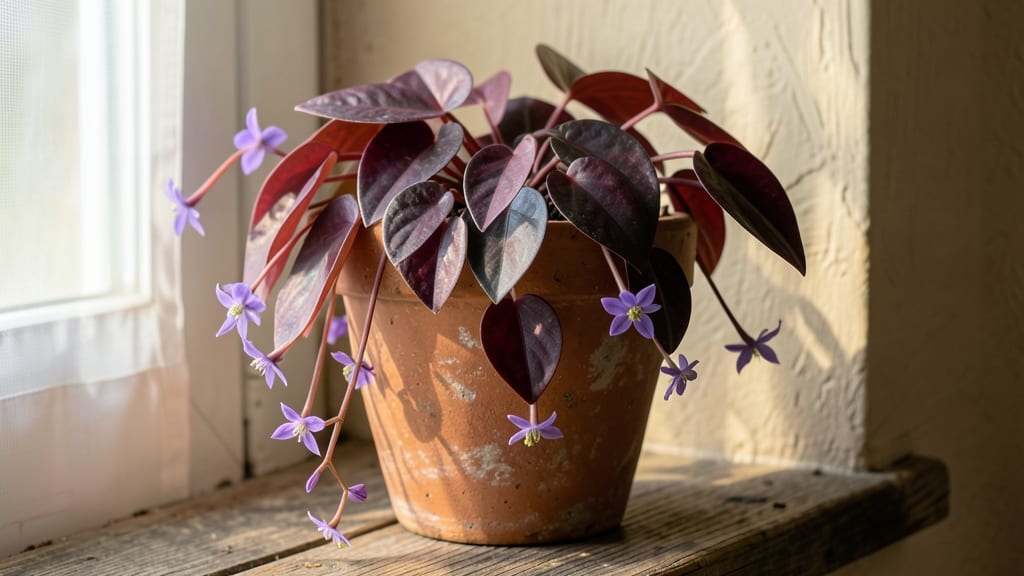
The purple heart plant thrives outdoors in USDA hardiness zones 9 through 11, where it naturally handles temperatures down to 25°F (-4°C) before frost damage occurs. Gardeners in colder regions must treat it as an annual or bring it indoors for winter survival.
The purple heart plant's native range explains why it struggles below zone 9.
This tropical beauty evolved in warm climates where frost is rare, making its foliage particularly vulnerable to cold snaps. 🌿 When temperatures dip below 25°F (-4°C), the leaves develop brown patches and crisp edges, though the roots often survive if protected.
I've seen gardeners in zone 8 successfully overwinter it by moving pots to unheated garages—just ensure it gets bright light to prevent leggy growth.
For those in zones 6-8, container gardening is your best bet. Use well-draining soil and bring pots inside before the first frost, placing them near a south-facing window. You'll need to supplement with grow lights during winter's short days to maintain its vibrant purple hues.
The key is consistency—purple heart plants hate temperature swings, so gradual acclimation when transitioning between indoor and outdoor environments makes all the difference.
💡 In This Article
- Understanding Purple Heart Plant’s Cold Tolerance Limits
- Growing Purple Heart in Cooler Climates: Practical Solutions
Understanding purple heart plant’s cold tolerance limits
The purple heart plant's cold sensitivity stems from its tropical origins in Central America, where temperatures rarely drop below 60°F (15°C). This succulent-stemmed beauty has evolved without cold-resistant adaptations like antifreeze proteins found in hardier plants.
Its thin, waxy leaves contain high moisture content (about 75-80% water), which freezes and ruptures cell walls when exposed to 25°F (-4°C) or colder. 🌡️ The damage appears as crispy brown edges within 24-48 hours of frost exposure, though the roots may linger if protected.
What makes purple heart particularly vulnerable is its growth habit. Unlike woody perennials, it grows as a soft-stemmed annual in cooler climates, meaning its entire structure lacks the protective bark or insulating layers of older plants.
The plant's vascular system also struggles with sudden temperature drops—cold air blocks water uptake, causing wilting even before visible frost damage occurs. In zone 9, where winter lows occasionally reach 20°F (-7°C), gardeners often see purple heart plants survive if sheltered from wind and given afternoon sun exposure.
Botanists classify purple heart as a "tender perennial," meaning it can't survive freezing ground temperatures. The roots may endure brief exposure to 28°F (-2°C) if mulched heavily, but prolonged cold causes root rot from poor drainage in frozen soil.
This is why container growing becomes essential in marginal zones—pots can be moved to protected areas before winter sets in. The plant's natural defense mechanism is rapid regrowth from the base, but this only works if the root crown remains unfrozen.
Here's what happens at different temperature thresholds:
- Above 40°F (4°C): Normal growth continues with vibrant purple foliage
- 32-40°F (0-4°C): Growth slows; leaves may show temporary wilting but recover
- 25-31°F (-4 to -1°C): Frost damage begins—brown leaf edges appear within 24 hours
- Below 25°F (-4°C): Cellular damage occurs; plant may die back completely
The plant's sensitivity to cold also affects its flowering. Purple heart produces delicate white flowers in summer, but cold snaps below 50°F (10°C) can shock the plant into premature dormancy. This is why gardeners in zone 10 (where winters rarely drop below 30°F (-1°C)) can grow purple heart outdoors year-round with minimal protection, while those in zone 11 might need shade cloth during summer heat to prevent leaf scorch—a different kind of stress.
What most gardeners don't realize is that purple heart's cold tolerance improves with age. Younger plants (under 6 months) are far more susceptible to frost damage than mature specimens with thicker stems.
This is why experienced growers recommend starting with established plants when trying to overwinter purple heart in cooler climates. The thicker stems act as natural insulation for the plant's core systems. 🌱