
Container Gardens
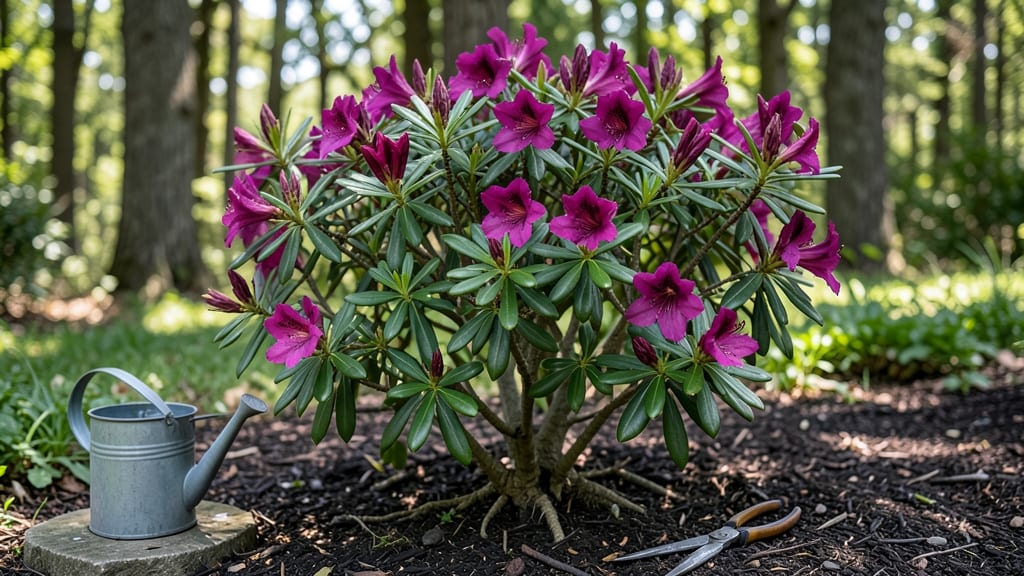
Rhododendrons grow best in USDA Hardiness Zones 4 through 8, where they can handle winter chills and summer warmth with proper care. Their ideal conditions include acidic soil and partial shade.
These hardy shrubs adapt well to temperate climates where winter temperatures rarely drop below -20°F and summers stay below 90°F. 🌿 The key to their survival lies in protecting their roots—mulching heavily in winter and ensuring excellent drainage prevents root rot during wet seasons.
Coastal areas often push their range slightly higher because ocean breezes moderate temperature extremes.
For gardeners in Zone 3 or 9, container growing with extra insulation becomes essential. I've seen rhododendrons thrive in Zone 9 gardens when planted in containers that can be moved to shaded spots during peak afternoon sun.
The secret is mimicking their natural forest-floor habitat—moist, acidic soil and dappled light.
💡 In This Article
- USDA Zones 4-8: Ideal Climate Conditions for Rhododendrons
- Microclimate Adjustments for Rhododendron Survival
USDA zones 4-8: ideal climate conditions for rhododendrons
The USDA Zones 4-8 represent the sweet spot for rhododendrons because these zones balance winter cold tolerance with summer heat resilience. Rhododendrons evolved in mountainous regions of Asia where temperatures fluctuate dramatically—surviving winters as cold as -25°F but struggling in prolonged heat above 90°F.
Their natural defense mechanism involves a thick, waxy cuticle on leaves that prevents water loss during dry spells, but this same adaptation makes them sensitive to extreme cold winds.
In Zone 4, where winters can drop below -30°F, rhododendrons rely on their deep root systems to insulate against freezing. The roots themselves contain antifreeze proteins that lower the freezing point of their cell fluids, similar to how some fish survive in Arctic waters.
However, the real vulnerability comes from late spring frosts—new growth emerging too early can get damaged when temperatures dip into the 20s°F range. This is why gardeners in colder zones often choose later-blooming varieties like 'Nova Zembla' that resist frost damage better.
Zones 5-7 offer the most stable conditions, with summer highs rarely exceeding 85°F and winters rarely dropping below -15°F. Here, rhododendrons thrive because the soil stays consistently moist without freezing solid.
The acid-loving nature of these plants (ideal soil pH 4.5-6.0) comes from their native habitats where leaf litter creates naturally acidic conditions. In Zone 8, where summers get warmer, afternoon shade becomes critical—direct sun can scorch leaves and cause wilting, especially during dry spells.
Elevation plays a surprising role in zone suitability. Plants at higher elevations experience cooler temperatures and more pronounced seasonal changes, which can actually extend their hardiness.
For example, a rhododendron in Zone 7 at 3,000 feet elevation might survive winters that would be too harsh for the same plant at sea level in Zone 8. This is why mountain gardens often support rhododendrons in zones slightly warmer than their official rating.
The cooler nights at higher elevations prevent heat stress that would occur in lowland areas.
What most gardeners don't realize is how humidity levels affect rhododendrons. These plants originate from regions with high atmospheric moisture, and dry air—common in continental climates—can cause leaf edges to brown, a condition called "scorch."
In Zone 5 gardens, I've seen rhododendrons struggle during hot, dry summers unless given consistent moisture through drip irrigation or mulch. The key is maintaining soil moisture without waterlogging, as their roots need oxygen to prevent rot.
For those pushing the limits in Zone 3 or 9, understanding these climate interactions becomes crucial. In colder zones, heavy mulching with 6-8 inches of organic matter (like pine needles or wood chips) creates an insulating blanket that can protect roots down to -25°F.
In warmer zones, afternoon shade cloth (30-50% shade) can reduce leaf temperatures by 10-15°F, preventing heat stress while still allowing light penetration for photosynthesis. 🌿