
Container Gardens
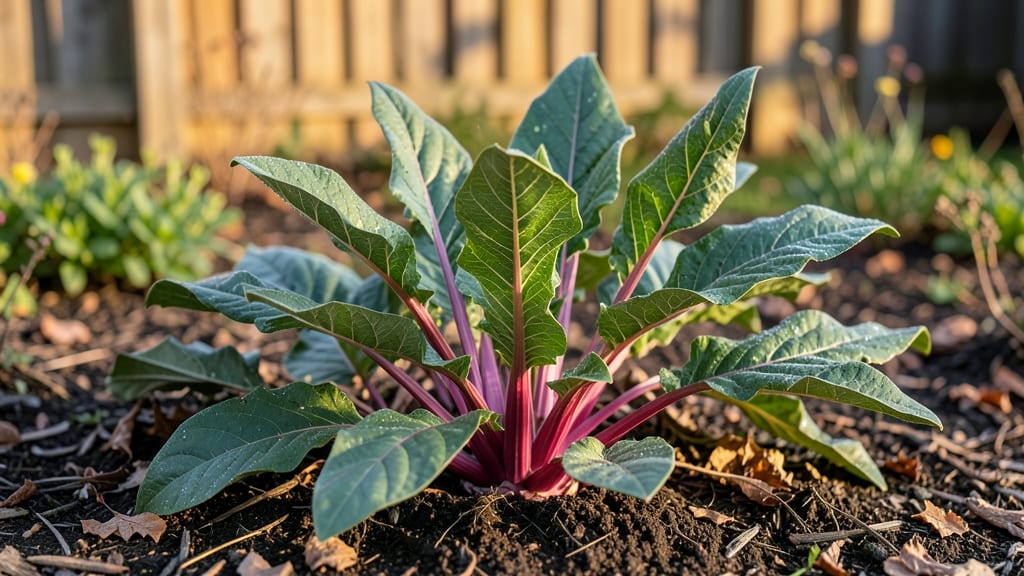
Rhubarb grows best in USDA Hardiness Zones 3 through 8, where it survives winters as cold as -30°F (-34°C) but struggles in hotter climates above Zone 9. For peak growth, plant in well-drained soil with partial shade.
Rhubarb's cold tolerance comes from its ability to enter dormancy, protecting its crown—the part that regenerates new stalks each spring. 🌱 In Zones 3-8, this hardiness means you can plant rhubarb once and enjoy harvests for decades, while Zones 9+ often require shade cloth or afternoon shade to prevent heat stress.
I've found that even in marginal zones, adding a thick layer of organic mulch (like straw) can push survival limits by insulating roots during temperature swings.
What sets rhubarb apart is its perennial nature—unlike annuals, it returns year after year, making zone selection critical for long-term success. For example, 'Victoria' thrives in Zone 4's harsh winters, while 'Strawberry' does better in Zone 7's milder climate.
The key is matching your variety to your local frost dates and soil drainage—both affect how well the plant stores energy for spring regrowth.
💡 In This Article
- USDA Zone Breakdown for Rhubarb Survival and Growth
- Cold-Hardy Rhubarb Varieties for Harsh Zones
USDA Zone breakdown for rhubarb survival and growth
Rhubarb's remarkable cold tolerance stems from its crown's ability to enter dormancy—a survival mechanism where metabolic activity slows dramatically to protect vital tissues. During winter, the plant's crown (the thick, fleshy base) stores carbohydrates like starches and sugars, which act as an energy reserve for spring regrowth.
This process allows rhubarb to survive temperatures as low as -30°F (-34°C), which is why it thrives in USDA Zones 3 through 8. 🌱 The crown's insulation comes from its thick, waxy outer layer and the surrounding soil, which buffers against extreme cold.
USDA zones map directly to frost dates and average minimum temperatures, which determine how well rhubarb can establish and maintain dormancy. For instance, Zone 3 (average minimum -40°F/-40°C) experiences 144-180 frost-free days, while Zone 8 (average minimum 10°F/-12°C) has 210-240 frost-free days.
In colder zones, rhubarb's growth period is shorter, but the plant compensates by focusing energy on crown development rather than leafy growth. This adaptation explains why rhubarb often produces fewer but larger stalks in Zone 4 compared to Zone 7.
Heat stress becomes the primary challenge in Zones 9 and above, where summer temperatures frequently exceed 90°F (32°C). Rhubarb struggles because its leaves transpire rapidly in heat, leading to water loss and stress.
The plant's natural dormancy cycle is disrupted in warmer climates, causing it to remain semi-active during periods it should be resting.
This is why rhubarb in Zone 9+ often requires afternoon shade or shade cloth (30-50% coverage) to prevent leaf scorch and maintain stalk quality. 🌡️ Without these adjustments, yields drop by 30-50% due to reduced photosynthesis.
The science behind rhubarb's zone limitations also involves soil temperature. Rhubarb roots prefer soil temps between 45-65°F (7-18°C)—any hotter, and root activity slows, while colder temps can cause dormancy too early.
In Zones 5-6, for example, early spring soil temps below 50°F (10°C) can delay stalk emergence by 2-3 weeks, while summer soil temps above 80°F (27°C) stress roots in Zone 8.
This is why well-drained soil is critical: it prevents waterlogging, which exacerbates heat stress by limiting oxygen to roots.
Consider this comparison: In Zone 4, rhubarb's crown survives winters with 120-150 days of dormancy, while in Zone 8, dormancy lasts only 60-90 days. The shorter rest period in warmer zones means the plant has less time to recharge, leading to weaker stalks and reduced vigor.
For gardeners in marginal zones (like Zone 9), extending dormancy artificially—through mulching or shade—can mimic colder conditions and improve survival rates. 🌿
What most gardeners overlook is how microclimates within zones affect rhubarb's performance. A north-facing slope in Zone 7 might create conditions similar to Zone 6, while a sheltered garden bed in Zone 4 could extend the growing season by 10-14 days.
This is why site selection matters as much as zone designation. For example, planting rhubarb near a building or dense shrubbery can lower soil temps by 5-10°F (3-5°C) during summer, creating a cooler microclimate that mimics Zone 6 conditions in a Zone 7 garden.
To maximize success, pair your zone knowledge with practical adjustments: in Zones 3-4, use 12-18 inches of straw mulch in winter; in Zones 5-6, apply a 4-inch layer of compost in fall to insulate roots; and in Zones 7-8, provide afternoon shade during peak summer months.
These tweaks can push rhubarb's limits by 1-2 zones, turning a marginal climate into an ideal growing environment. 💫