
Trees
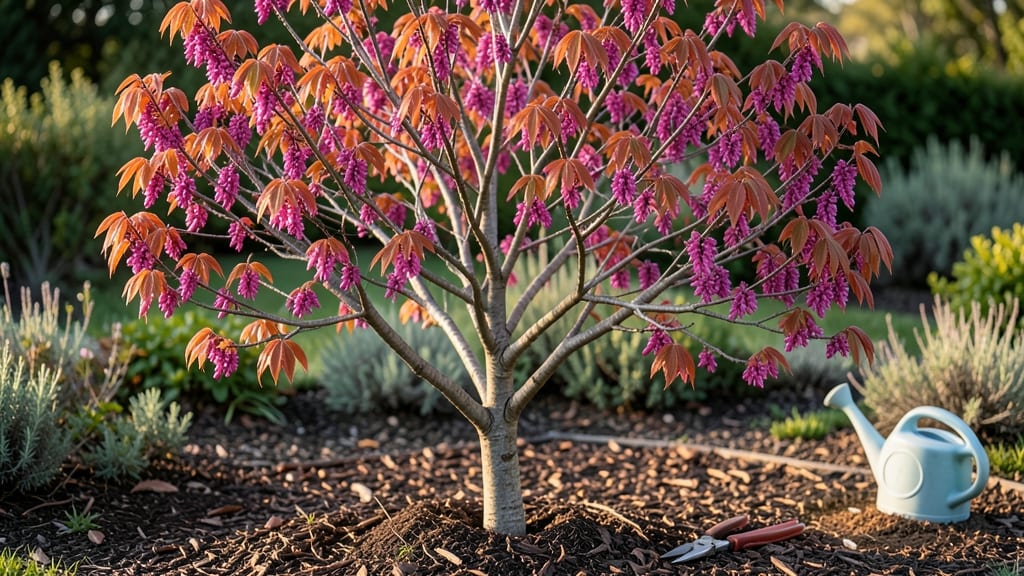
The Rising Sun Redbud tree thrives in USDA Hardiness Zones 4 through 8, tolerating winter temperatures as low as -30°F (-34°C) while flourishing in mild climates up to 20°F (-6°C). Its cold hardiness and adaptability make it ideal for northern gardens and urban landscapes.
The Rising Sun Redbud stands out because its cold tolerance surpasses most redbud varieties, letting it thrive where others might struggle. 🌳 Its thick bark and deep root system help it withstand harsh winters, while its ability to handle urban heat islands makes it perfect for city planting.
This resilience means gardeners in Zones 4-8 can confidently grow it without worrying about frost damage or heat stress.
What sets this variety apart is its adaptability—whether you're in a snowy Midwest region or a hotter Southern city, it performs well with minimal care. The key is planting in well-draining soil and providing some afternoon shade in extreme heat zones to maximize its survival and flowering potential.
💡 In This Article
- Understanding Rising Sun Redbud Cold Hardiness and Temperature Limits
- Best Planting Zones and Microclimate Strategies for Rising Sun Redbud
Understanding Rising Sun Redbud cold hardiness and temperature limits
The Rising Sun Redbud's remarkable cold tolerance comes from its physiological adaptations like thick, corky bark that insulates stems and branches. This bark can reach 1/4-inch thick on mature trees, acting as natural armor against freezing winds.
During dormancy, the tree's cells produce antifreeze proteins that prevent ice crystal formation in its vascular system, similar to how some evergreens survive winter. 🌟
Root depth plays a critical role too—this variety develops roots 3-4 feet deep, anchoring it securely and accessing moisture from lower soil layers where temperatures stay more stable.
Unlike other redbuds (like Eastern Redbud), which struggle below Zone 5, the Rising Sun variety thrives 5°F colder due to these adaptations. Its leaves also enter dormancy earlier, avoiding late-season frost damage that can blacken foliage in sensitive varieties.
Extreme cold below -30°F (-34°C) becomes problematic because ice encasement can physically damage branches, while prolonged exposure to 90°F+ temperatures stresses the tree by accelerating moisture loss. In Zone 8, afternoon shade becomes crucial to prevent heat stress, which can scorch leaves and reduce flowering.
The tree's native range in Appalachian forests explains why it handles both cold snaps and summer humidity better than Mediterranean redbuds.
Comparing to other redbuds reveals its superiority: Eastern Redbud dies back to ground level in Zone 4 winters, while Rising Sun maintains its structure. Its dwarf stature (10-15 feet tall) also helps—smaller canopies lose heat less rapidly than larger trees.
This makes it perfect for urban areas where microclimates create unpredictable temperature swings.
For gardeners pushing limits in Zone 3, consider planting near south-facing walls where reflected sunlight raises daytime temperatures by 5-10°F. In Zone 9, provide 50% afternoon shade during peak summer to prevent leaf burn.
The tree's ability to rebound from winter damage through vigorous spring regrowth makes it uniquely resilient among ornamental trees.