
Container Gardens
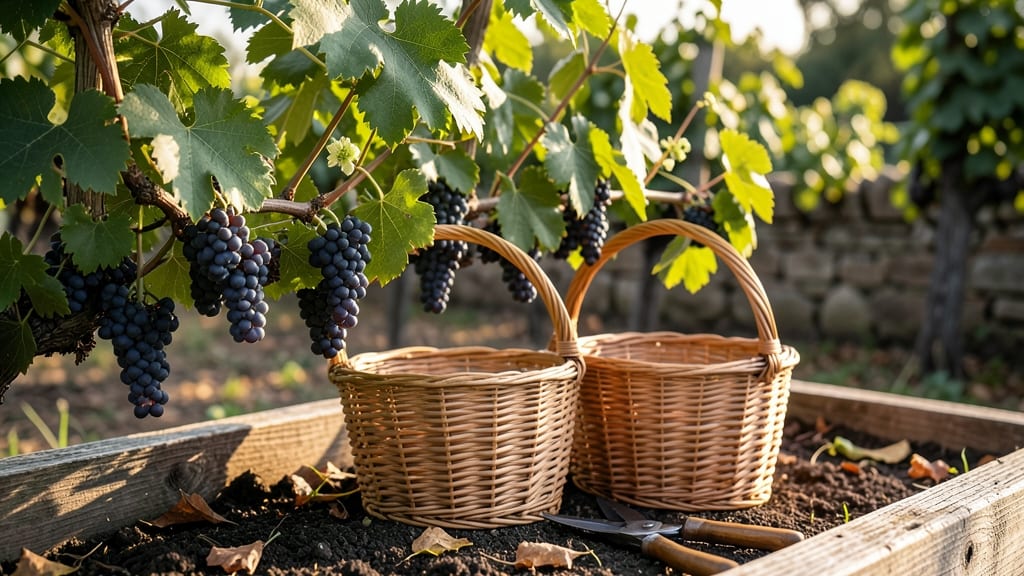
The season for concord grapes arrives in late summer to early fall, when they reach their peak flavor—usually depending on your zone. 🌿 I’ve learned that waiting for the perfect balance of sweetness and tartness makes all the difference, especially in zones 5-9 where these grapes thrive.
The secret lies in watching for deep purple-black skin and a slight give when gently squeezed, signaling they’re ready for picking.
Timing matters because Concord grapes ripen differently across regions. In cooler zones like 5-6, harvest often starts in late August, while warmer zones like 8-9 can stretch into October.
Pruning in late winter ensures strong growth, and keeping vines well-watered during fruit set prevents cracking—something I’ve battled in my own garden after skipping this step.
Once you harvest, the rewards are immediate: rich, jammy flavor perfect for fresh eating, juicing, or baking. My first year, I waited too long and ended up with overripe grapes that split open—now I mark the calendar and taste-test every few days.
The payoff? A harvest that tastes like summer all year long.
Whether you’re growing in containers or trellised rows, these grapes adapt well to different spaces. Just remember: patience and attention to ripeness turn good harvests into great ones. Here’s how to nail the timing every season.
📚 In This Guide
- What you need
- Instructions
- Tips and common mistakes
- Wrapping up and next steps
What you need
- ● Concord grape vines: 1–2 healthy, disease-resistant plants (bare-root or potted, Vitis labrusca variety).
- ● Containers: 5–15 gallon pots (minimum 18" deep) with drainage holes. Pro tip: 💡 Use fabric grow bags for better aeration!
- ● Potting mix: 3–5 bags of well-draining, organic-rich soil (e.g., 60% compost, 30% perlite, 10% sand).
- ● Fertilizer: Balanced 10-10-10 or organic options like composted manure (apply sparingly during growing season).
- ● Pruning tools: Sharp bypass pruners + loppers (sterilize with rubbing alcohol).
- ● Support system: 6–8 ft trellis or sturdy stakes (galvanized metal or wood).
- ● Mulch: 2–3 inches of straw or wood chips to retain moisture.
- ● Harvest tools: Clean knife or pruning shears + harvest baskets.
- ● Drip irrigation kit for consistent watering.
- ● Fungicide (copper-based) to prevent powdery mildew.
- ● Grafting tape (if grafting new varieties).
- ● Soil pH test kit (ideal range: 6.0–7.0).
- ● Harvest journal to track ripeness and yield.
How to determine the perfect time to harvest Concord grapes
Here's how I've learned to spot the ideal moment for harvesting—when flavor and sugar peak.
🌿 Step 1: Learn Your Hardiness Zone and Typical Timeline
Concord grapes thrive in USDA Zones 5-9, with harvest windows varying by region. In cooler northern zones (5-6), grapes typically ripen between late August and mid-September. Warmer southern zones (7-9) often see harvests as early as mid-July or as late as October.
I always check with local nurseries or extension offices for your specific zone's average frost date—this helps me plan when to start monitoring. The key is to watch for color change from green to deep purple-black as your primary indicator, not just calendar dates.
☀️ Step 2: Observe Color and Size Changes
Mature Concord grapes develop a rich, deep purple-black color when fully ripe. I look for clusters where at least 75% of the berries have reached this color—some may still be green, but the majority should be uniformly dark. Size matters too: ripe grapes should be 1-1.5 inches in diameter.
Here's the thing—don't rely solely on color. I also check for skin that's firm but not hard—it should yield slightly when gently pressed with your thumbnail. If they're mushy or wrinkled, they've overripe and may be past their prime.
🍇 Step 3: Perform the Sugar Test
Concord grapes should have a sugar content of 16-20 Brix when fully ripe. I use a simple refractometer (available at garden centers) to test juice from a few crushed berries. If the reading falls below 16 Brix, they need more time on the vine. Above 22 Brix means they're overripe and may be too sweet or seedy.
For those without a refractometer, I do a taste test: fully ripe grapes should taste sweet but still tart with a pronounced grape flavor. If they taste bland or overly sweet, they're not at peak ripeness. I also check for seeds that darken and become firm—this is another sign of proper ripening.
⏰ Step 4: Check for Natural Detachment
The best time to harvest is when grapes begin to naturally separate from the cluster when gently twisted. I pick a small sample of berries and twist them—if they come off easily with just a slight tug, that's your cue. If they resist and require force, they're not ready yet.
I also look for a slight softening of the stems where they attach to the cluster. This indicates the plant is signaling it's time to release the fruit. Harvesting at this stage ensures maximum flavor and quality for jams, juices, or fresh eating.
✂️ Step 5: Harvest and Handle Gently
Use clean, sharp pruning shears to cut the stem 1-2 inches below the cluster to avoid damaging the vine. I always harvest on a cool, cloudy morning when grapes are at their firmest. Place harvested clusters in a shaded, well-ventilated area immediately to prevent overheating.
Here's where many gardeners go wrong: don't wash grapes until you're ready to use them. The natural bloom (protective coating) helps preserve freshness. Store in the refrigerator for up to 2 weeks or process within 3-5 days for best quality. If you're making jam or juice, I recommend processing within 24 hours for peak flavor.
Tips & tricks for perfect Concord grape harvesting
Timing is everything when it comes to harvesting Concord grapes—here’s how to nail it every season.
Zone-Specific Monitoring: Don’t just rely on calendar dates! In cooler zones (5-6), start checking grapes in late August for ripeness, while southern zones (7-9) may need monitoring as early as mid-July. I keep a garden journal to track color changes and sugar development—this helps me adjust my expectations each year based on weather patterns.
Visual Ripeness Check: In Step 2, when you’re assessing color, look for at least 75% of berries showing that deep purple-black hue. But here’s the trick: hold a grape between your thumb and forefinger—it should feel firm but slightly yielding, like a ripe plum. If it’s mushy, it’s past its prime; if it’s hard, it needs more time on the vine.
Sugar Test Shortcuts: No refractometer? No problem! Crush a grape between your fingers and taste the juice. Fully ripe grapes should taste sweet but still tart—think of it like a perfect balance between candy and fresh fruit. If the flavor is bland or overly sweet, they’re not ready yet. I also check the seeds: they should be dark and firm, not pale and soft.
Handling After Harvest: The 24-hour window for processing is critical for peak flavor. If you can’t process immediately, store grapes in the fridge for up to 2 weeks, but don’t wash them until you’re ready to use them—the natural bloom protects freshness. I’ve learned this the hard way: washing too soon leads to faster spoilage.
Pro Tips for Season For Concord Grapes
- Timing is everything when it comes to harvesting Concord grapes—here’s how to nail it every season.
- Zone-Specific Monitoring: Don’t just rely on calendar dates!
- Visual Ripeness Check: In Step 2, when you’re assessing color, look for at least 75% of berries showing that deep purple-black hue.
Frequently asked questions
Got questions about harvesting Concord grapes at peak flavor? Here are answers to the most common ones—from timing to troubleshooting!
When is the best time to harvest Concord grapes?
Concord grapes typically reach peak ripeness late summer to early fall, usually between August and September, depending on your USDA hardiness zone (Zones 3–9). Look for deep purple-black skin, a sweet-tart aroma, and grapes that easily pull away from the stem when gently tugged. Check our ripeness guide for zone-specific tips!
How do I know if my Concord grapes are overripe?
Overripe grapes shrivel, turn mushy, or fall off the vine on their own. They may also develop a fermented smell or attract pests like birds or wasps. If you miss the window, harvest them anyway—just expect softer texture and less sweetness. Overripe grapes are great for jams, jellies, or wine!
What’s the ideal temperature for harvesting Concord grapes?
Aim to harvest on cool, cloudy mornings (ideal temps: 55–75°F). Avoid picking in peak sun (after 10 AM), as grapes can overheat and spoil quickly. If you must harvest in heat, store them immediately in the fridge to preserve freshness.
Can I substitute Concord grapes in recipes if they’re unavailable?
Yes! For fresh eating or salads, try Thompson Seedless or Crimson Seedless grapes (milder flavor). For jams, jellies, or wine, blackberries, elderberries, or muscadines work well—though Concord’s tartness is unique. Need a backup? Check our recipe swaps!
Why are my Concord grapes splitting or cracking?
Grapes split due to rapid moisture changes—like heavy rain after a dry spell or inconsistent watering. To prevent it:
Split grapes are still edible—just use them for cooking ASAP!
Wrapping up and next steps
The season for Concord grapes is a rewarding time for gardeners—whether you're harvesting from vines in your backyard or containers! By knowing your USDA hardiness zone, monitoring ripeness cues like color and sugar content, and timing your harvest just right, you’ll enjoy sweet, flavorful grapes all season long. 🍇
Now that you’re armed with the know-how, roll up your sleeves and get ready to harvest! Grab a pair of pruners, check your vines, and savor the fruits of your labor—literally.
Want to go further? Experiment with homemade jams, wines, or fresh recipes to make the most of your harvest. Happy gardening!