
Planting
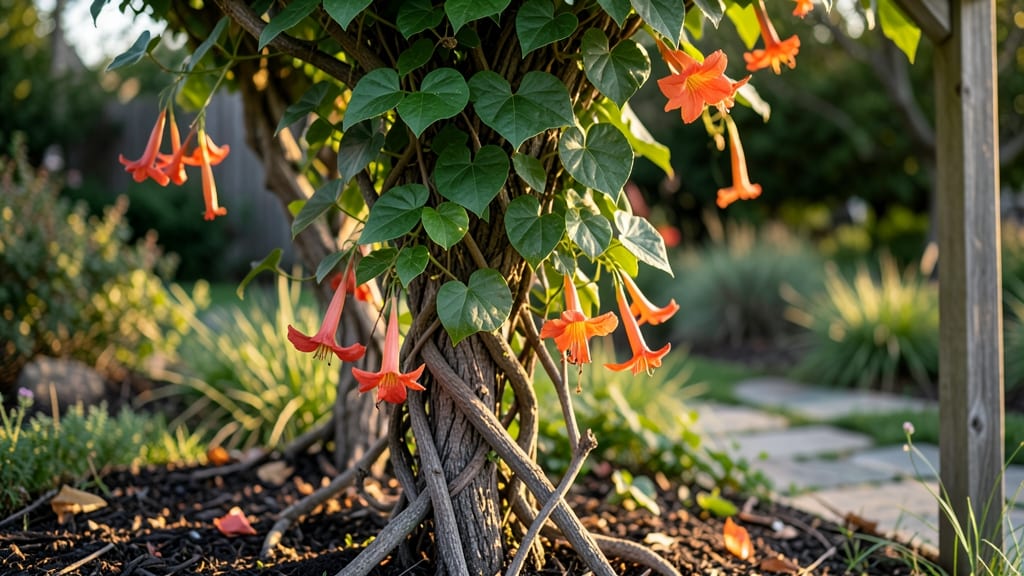
Trumpet vine thrives in USDA hardiness zones 7 through 11, where it naturally survives winter temperatures down to 0°F (-18°C) with proper care, though young plants in zones 6 or cooler may need extra winter protection.
This fast-growing vine's cold tolerance comes from its woody stems and deep roots, which store energy for regrowth. 🔥 In zones 6-7, gardeners can extend its lifespan by wrapping stems in burlap or using thick mulch to insulate roots—this mimics the vine's natural ability to survive mild freezes.
The key is acting before the first hard frost, as even mature vines struggle below -10°F (-23°C). For marginal climates, I recommend planting near south-facing walls or using frost blankets during unexpected cold snaps.
What sets trumpet vine apart is its aggressive regrowth—even if above-ground parts die back, the roots often survive to sprout fresh foliage in spring. This makes it a resilient choice for warm climates but requires strategic planning in cooler regions.
The trade-off? Its rapid growth can become invasive if not contained, especially in zones where it thrives year-round.
💡 In This Article
- How Trumpet Vine Handles Cold Temperatures
- Winterizing Trumpet Vine in Marginal Hardiness Zones
How trumpet vine handles cold temperatures
The trumpet vine's cold resilience stems from its semi-woody stems and deep root system, which act like a natural storage unit for energy. Unlike tender annuals, its roots can survive temperatures down to 0°F (-18°C) by converting stored starches into sugars that protect cellular structures.
This process is similar to how deciduous trees survive winter—except trumpet vine doesn't fully lose its leaves in mild freezes, which helps it recover faster in spring.
Here's how frost damage progresses: At 28-32°F (-2 to 0°C), leaves turn brown and crisp but stems often remain intact. Below -10°F (-23°C), even mature stems may suffer damage, though the roots typically survive to regrow.
Young plants in zones 6-7 are most vulnerable—their stems lack the woody thickness of mature vines, making them more prone to freeze damage. 🌱 The vine's natural dormancy period kicks in when nighttime temperatures stay below 50°F (10°C) for extended periods, triggering a slowdown in growth and increased cold tolerance.
What makes trumpet vine unique is its ability to regenerate from roots even after complete above-ground dieback. In my zone 7 garden, I've seen vines completely blackened by winter only to sprout fresh shoots by early May.
This resilience comes at a cost—each freeze weakens the plant's energy reserves, which is why aggressive growth in warm zones can make cold winters particularly damaging. The trade-off is clear: robust winter survival requires sacrificing some summer vigor.
For gardeners in marginal zones, understanding these patterns helps with timing. Pruning back dead growth in early spring (before new shoots emerge) prevents fungal issues that often follow winter dieback. The vine's ability to regrow from roots means even severely damaged plants can recover—though recovery takes longer in colder microclimates.
This biological flexibility explains why trumpet vine thrives in zones 7-11 but requires careful management in cooler areas.
Consider this comparison: A mature trumpet vine in zone 8 might lose all leaves at 20°F (-7°C) but recover fully, while a young plant in zone 6 could suffer stem damage at the same temperature.
The difference comes down to root development—mature roots have built up more energy reserves to weather cold snaps. 💫 This is why gardeners in cooler zones often recommend planting trumpet vine near south-facing walls or using protective covers during the first few winters.