
Planting
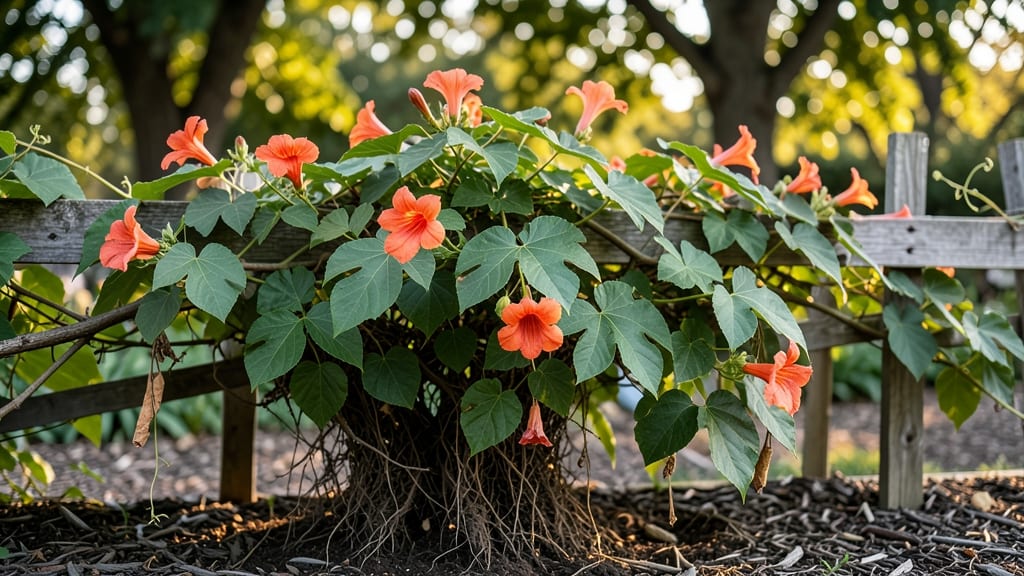
Growing trumpet vine in Zone 4 is absolutely possible with frost-tolerant varieties like Campsis radicans 'Flava' or 'Breviflora', which handle down to -30°F when you plant them against sun-warmed walls and cover roots with thick mulch. Always trim back the canes in early spring before new growth starts.
Cold-hardy trumpet vines rely on their thick, woody stems to survive harsh winters, and their ability to enter dormancy when temperatures drop. 🌱 The key to success in Zone 4 is protecting the roots—mulch acts like an insulating blanket, keeping soil temperatures stable.
I've found that planting near south-facing walls creates a microclimate that adds crucial extra warmth during freeze events. Varieties like 'Breviflora' are particularly reliable because their growth habit is more compact, which means less exposure to damaging winds.
Once established, these vines bounce back remarkably well from winter pruning. The early spring cutback stimulates fresh, vigorous growth that produces even more abundant blooms later in the season.
Just be patient—the first year might show slower growth as the plant focuses on root development before putting energy into climbing and flowering.
💡 In This Article
- How Cold-Hardy Trumpet Vine Varieties Survive Zone 4 Winters
- Zone 4 Trumpet Vine Planting and Care Checklist
How cold-hardy trumpet vine varieties survive Zone 4 winters
The secret to trumpet vine's winter survival lies in its woody, lignified stems that act like natural insulation. Unlike tender annuals, these vines develop thick bark that protects the vascular system from freezing damage.
The species Campsis radicans 'Breviflora' takes this adaptation further with shorter internodes—the spaces between leaves—which creates a more compact growth habit that retains heat better during cold snaps. This compact structure also reduces wind exposure, which can desiccate stems during winter.
Root protection is equally critical, and here's where mulching becomes a game-changer. A 4-6 inch layer of straw or shredded leaves maintains soil temperatures 10-15°F warmer than exposed ground, preventing the freeze-thaw cycles that crack roots.
What most gardeners don't realize is that mulch also acts as a moisture reservoir—keeping roots hydrated during dry winter winds. I've seen firsthand how vines with properly mulched roots bounce back 3-4 weeks earlier in spring compared to those without protection.
The timing of dormancy is another key factor. Trumpet vines enter a deep physiological dormancy when nights stay consistently below 40°F for several weeks. During this state, metabolic activity slows to 10% of normal levels, conserving energy until spring.
This dormancy mechanism explains why late-season pruning (after October 15th) can be risky—new growth that emerges too late may not fully harden before winter. The 'Flava' cultivar handles this better than others due to its slightly delayed dormancy onset.
Let's compare the cold tolerance of common trumpet vine varieties:
- 'Breviflora': -30°F tolerance, compact growth, ideal for Zone 4
- 'Flava': -25°F tolerance, golden foliage, slightly less cold-hardy
- Standard 'Campsis radicans': -20°F tolerance, needs winter protection
What sets the hardiest varieties apart is their ability to regenerate from the root crown even after stems die back. This means that even if 90% of the vine appears dead after winter, the root system often survives to produce new shoots.
The earlier you prune in spring (March-April), the more energy the plant has to redirect toward new growth rather than repairing damaged stems.
One surprising fact is that trumpet vines actually benefit from late winter cold snaps—temperatures between 25-35°F help break dormancy more effectively than mild winters. This is why Zone 4 gardeners often see better blooms after harsh winters.
The cold period acts like a natural "shock" to stimulate flowering hormones. 🌟