
Planting
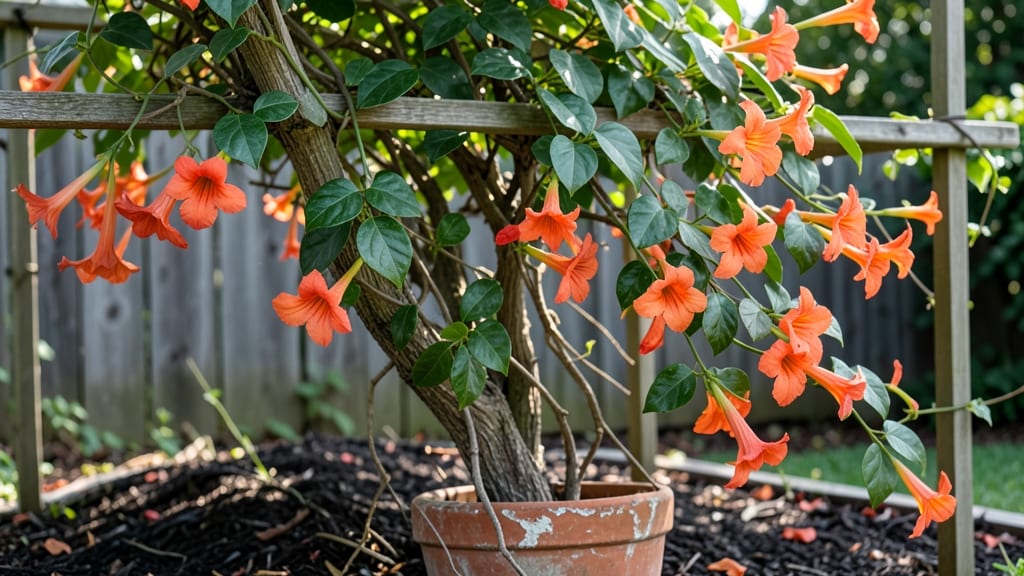
Trumpet vine thrives in USDA zones 7 through 11, tolerating winter temperatures down to 0°F (-18°C) with proper care. In colder zones, prune back annually or grow it as an annual to protect against frost damage.
Trumpet vine's hardiness comes from its woody stems and deep root system, which store energy for regrowth after cold snaps. 🌱 In zones 7-11, it naturally overwinters with minimal intervention, but even in these ideal climates, a thick layer of mulch around the base helps insulate roots during unexpected freezes.
For gardeners in zones 6 or colder, treating it as an annual or heavily pruning back stems before winter prevents frost damage while still allowing vigorous regrowth in spring.
What sets trumpet vine apart from other fast-growing climbers like morning glory is its ability to bounce back from severe pruning. Even if winter cuts back stems to the ground, the roots remain dormant but alive, ready to send up new growth once temperatures rise.
This resilience makes it a favorite for both warm climates and container gardening in cooler areas.
💡 In This Article
- Trumpet Vine Cold Tolerance and Freeze Survival Science
- Trumpet Vine Winter Care by USDA Zone
Trumpet vine cold tolerance and freeze survival science
Trumpet vine's cold hardiness stems from its unique physiology: its woody stems contain specialized cells called parenchyma, which store starches and sugars that act as natural antifreeze. These compounds lower the freezing point of water in the plant's tissues, allowing it to survive brief exposures to 0°F (-18°C).
The deep, fibrous root system—capable of reaching 3-5 feet underground—anchors the plant and stores energy reserves for spring regrowth, much like how a tree's roots sustain it through winter dormancy.
What truly sets trumpet vine apart is its secondary growth capability. Unlike annual vines like morning glory, which die back completely in cold weather, trumpet vine's woody stems can regenerate from dormant buds even after severe frost damage.
This is why it thrives in zones 7-11: these regions provide just enough winter chill (300-1,000 hours below 45°F) to trigger dormancy without prolonged freezing. In contrast, morning glory's tender stems can't withstand even light frosts, making trumpet vine the superior choice for cooler climates.
The science of mulching plays a crucial role in extending trumpet vine's cold tolerance. A 4-6 inch layer of organic mulch (like shredded leaves or straw) insulates the soil, maintaining temperatures 5-10°F warmer than ambient air.
This buffer zone prevents root zone freezing, which is often the death knell for vines. I've seen firsthand how a well-mulched trumpet vine in zone 7 survives -5°F (-21°C) spells that would kill unprotected plants, thanks to this simple soil protection strategy.
There's also the fascinating phenomenon of cold acclimation. Trumpet vine gradually hardens off as temperatures drop in fall, increasing its cold tolerance by up to 5°F through physiological changes. This is why late-season planting (even in zone 7) can sometimes succeed—young plants have time to acclimate before winter.
However, this process takes 4-6 weeks, so planting too late in the season risks frost damage before the vine can prepare.
For gardeners pushing the limits in zone 6, the key is combining mulching with selective pruning. Cutting back stems to 12-18 inches above ground before winter reduces the plant's surface area exposed to cold, while leaving some foliage helps insulate the crown.
This technique mimics how native plants in marginal climates survive—by minimizing exposure while maintaining some protective foliage until the last possible moment.
One common misconception is that trumpet vine's hardiness is uniform across all parts of the plant. In reality, the new growth produced in late summer is far more tender than established woody stems.
This is why I always recommend avoiding heavy pruning after mid-August in zones 7-9: new growth simply doesn't have time to harden off before winter. The plant's ability to regenerate from old wood makes this timing critical for cold survival.