
Size
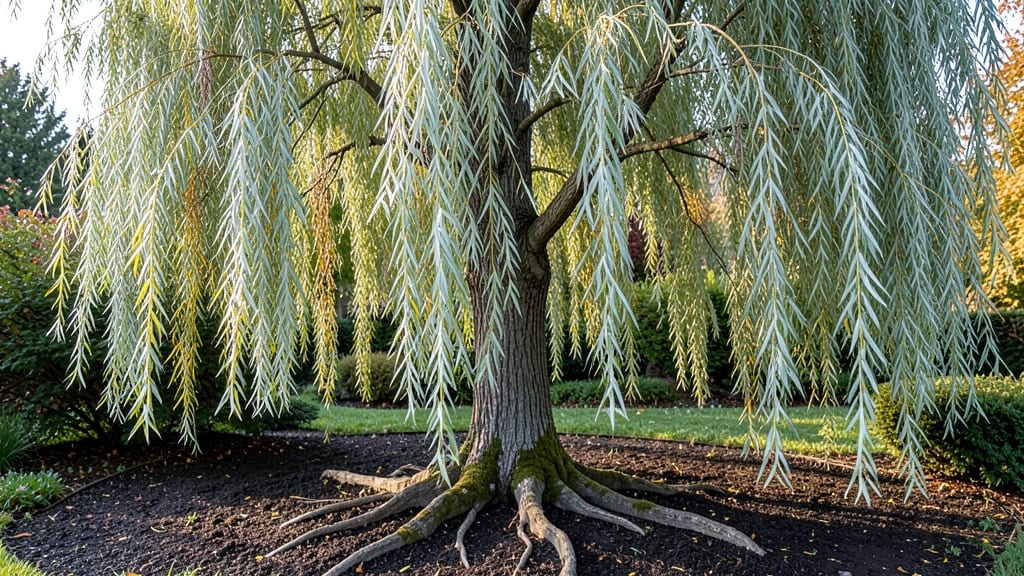
Weeping willows grow best in USDA hardiness zones 4 through 9, where they can withstand winter temperatures down to -30°F (-34°C) but require well-drained soil and full sunlight for healthy development.
These trees handle cold snaps surprisingly well, thanks to their deep root systems that insulate against frost. 🌳 However, their delicate branches can snap under heavy ice loads, so I always prune them in late winter to reduce weight.
The key to thriving willows lies in balancing moisture—too much water causes root rot, while dry spells stress the tree. In zones 4-9, they reward you with lush growth and iconic drooping branches when planted in sunny spots with slightly acidic soil.
For northern gardeners in zone 4, mulching around the base helps protect roots during harsh winters, while southern growers in zone 9 should watch for heat stress. The right location makes all the difference—willows need space to spread their roots widely, so avoid planting near foundations or sidewalks.
💡 In This Article
- Understanding Weeping Willow Cold Hardiness and Temperature Limits
- Best Planting Zones and Soil Conditions for Weeping Willows
Understanding weeping willow cold hardiness and temperature limits
The weeping willow's remarkable cold tolerance stems from its deep root system, which can extend 15-20 feet wide and 6-10 feet deep.
This extensive network acts as a natural insulator, protecting the tree's vascular system from rapid temperature fluctuations that would otherwise cause sap to freeze and rupture cell walls. 🌟 The tree enters dormancy in fall, reducing metabolic activity and allowing it to survive -30°F (-34°C) temperatures without permanent damage.
However, the tree's branches are far more vulnerable than its roots. When ice accumulates on the delicate, drooping limbs—often weighing 5-10 pounds per foot—the branches can snap under the strain. This is why pruning in late winter (after the worst cold snaps) is critical.
The tree's bark also develops a protective layer of cork cells during winter, which helps prevent moisture loss and frost cracks that could invite disease.
What makes zones 4-9 ideal is the balance between cold hardiness and growing season length. In zone 4, willows have 120-150 frost-free days, while zone 9 offers 240-300 days.
This range allows the tree to complete its growth cycle while avoiding the extreme cold of zone 3 (below -40°F/-40°C) or the heat stress of zone 10 (above 40°F/4°C average minimum).
Sap flow dynamics also play a key role. During early spring thaw, willows can experience rapid sap movement as temperatures rise above 40°F/4°C. This is when frost cracks most commonly occur—water expands as it freezes in the tree's vascular system, splitting the bark.
To mitigate this, I recommend applying a 3-inch layer of mulch around the base in late fall to moderate soil temperature fluctuations.
In northern climates (zones 4-5), willows benefit from windbreaks to reduce desiccating winter winds, while southern varieties (zones 8-9) need afternoon shade to prevent heat stress.
The tree's ability to handle both cold and heat makes it versatile, but the root zone temperature must stay above 28°F/-2°C for extended periods to prevent root damage.
One often-overlooked factor is the tree's juvenile hardiness. Young willows (under 5 years old) are more susceptible to cold damage because their root systems are still developing.
For this reason, I always recommend planting 2-year-old nursery stock in zones 4-5, as their roots are more established and better insulated.