
Planting
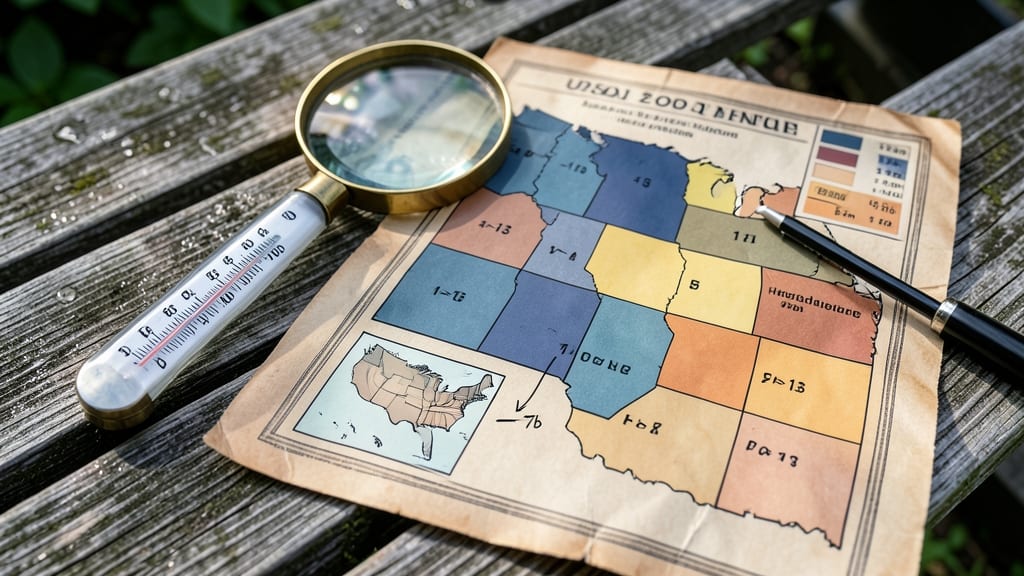
To find your soil zone, check the USDA Plant Hardiness Zone Map for your location, which divides North America into 13 temperature-based zones. Simply enter your ZIP code or city to identify your exact zone number and subregion for precise gardening planning.
Your soil zone determines which plants will thrive in your area based on average winter temperatures. 🌱 The USDA map uses data from weather stations across North America to create these zones, helping gardeners select plants that can survive the coldest temperatures in their region.
For example, Zone 5 experiences average minimum temperatures of -15°F to -10°F, while Zone 9 stays above 20°F. Knowing your zone ensures you choose plants with the right cold hardiness rating.
Many gardeners make the mistake of relying on general zone numbers without checking subregions (like 5a vs. 5b), which can lead to plant failures.
The interactive USDA map makes this easy—just type in your location for an instant result. 🌿 For even faster lookups, mobile apps like Gardenate can provide zone information on the go, while some seed packets even include zone recommendations.
💡 In This Article
- How USDA Plant Hardiness Zones Impact Gardening Success
- Quick Ways to Find Your Soil Zone by City or ZIP Code
How USDA plant hardiness zones impact gardening success
The USDA Plant Hardiness Zone Map divides North America into 13 zones based on the average annual minimum temperature—the coldest winter temperatures a region typically experiences. Each zone represents a 10°F difference in cold tolerance, with subzones (a/b) adding another 5°F precision.
For example, Zone 6a ranges from -10°F to -5°F, while Zone 6b sits between -5°F and 0°F. This classification helps gardeners match plants to their climate's coldest conditions, ensuring survival during winter dormancy.
Plants have specific cold hardiness ratings, often labeled on seed packets or plant tags. If you plant a Zone 5 perennial in a Zone 7 garden, it will thrive because it can handle colder winters.
However, planting a Zone 9 citrus tree in Zone 4 will likely result in frost damage or death. The map accounts for frost-free days and microclimates, like urban heat islands or slopes, which can create localized variations of 1-3 zones within a few miles.
Transition zones—areas where two zones meet—require extra care. For instance, a gardener in Zone 6b/7a might experience winters that hover near the boundary. In these areas, mulching, cold frames, or windbreaks can help protect tender plants.
Some gardeners also use microclimate strategies, like planting frost-sensitive species near south-facing walls or in containers that can be moved indoors during cold snaps.
Why does this matter? Plants go through dormancy in winter, slowing metabolism to survive freezing temperatures. If the cold exceeds their tolerance, cellular damage occurs, leading to death.
The USDA zones provide a baseline, but local factors like elevation, wind exposure, and soil moisture can shift actual hardiness by 1-2 zones. For example, Denver (Zone 5) has colder winters than nearby Boulder (Zone 6) due to its lower elevation and urban heat effects.
For gardeners in transition zones, the key is flexibility. Try plants rated for both adjacent zones and monitor their performance year-to-year. For instance, a Zone 6 perennial might survive in Zone 7 but struggle in Zone 7a during harsh winters.
Observing your garden’s microclimates—like the shelter provided by a fence or the extra warmth of a sunny patio—can help you fine-tune plant selection beyond the general zone map.
Advanced gardeners also consider heat zones
Together, these tools create a fuller picture of your garden’s growing potential.