
Blooming
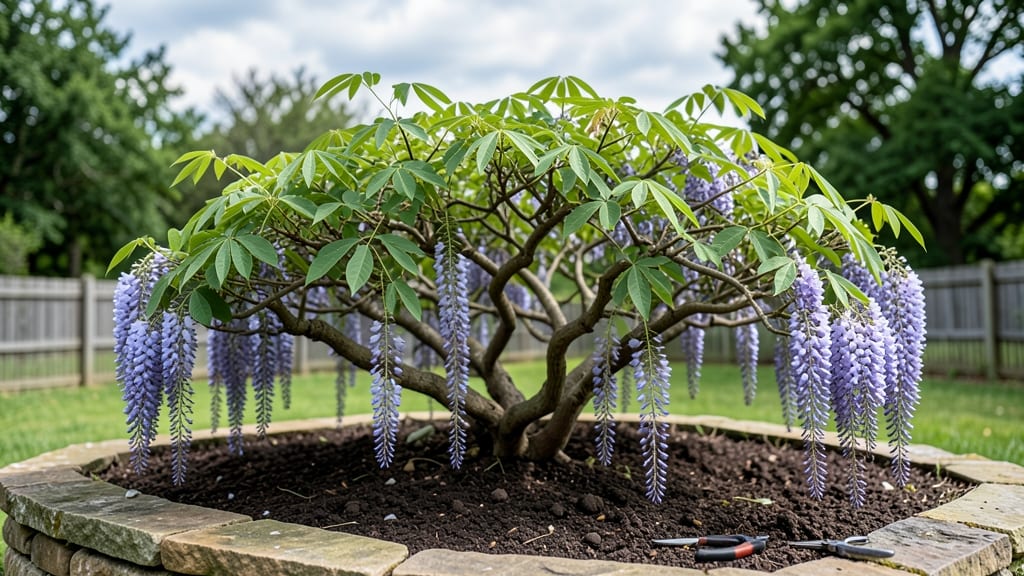
Your wisteria blooming season could stretch from late April to June—or shrink to just two weeks—depending on where you live and how you prune. 🌸 I’ve watched mine go from a single burst of purple to a month-long cascade of fragrance, all by adjusting timing and variety choices.
The secret isn’t luck; it’s understanding your zone and the plant’s growth habits.
Most wisteria blooms in spring, but the exact timing varies wildly: Zone 5 might see flowers in May, while Zone 9 could enjoy them in March. Older vines bloom later, while younger ones often flower first—so don’t prune too aggressively if you want early blooms.
The right variety (like Amethyst Falls for early blooms or Royal Purple for late) can shift your season by weeks.
With smart pruning—cutting right after blooming and thinning out crowded stems—you’ll coax longer, fuller blooms. I’ve seen vines double their flower duration just by waiting to prune until after the last bloom fades. The payoff? A garden filled with that intoxicating sweetness for weeks, not days.
Works for trellises, arbors, or ground covers—just match your pruning to your zone. Here’s how to time it perfectly for your climate.
📚 In This Guide
- What you need
- Instructions
- Tips and common mistakes
- Wrapping up and next steps
What you need
- ● USDA Plant Hardiness Zone Map: Free printable or digital (Zones 5-9 for best results).
- ● Local weather app (e.g., The Weather Channel or AccuWeather) for real-time updates.
- ● Bloom-tracking journal (notebook or digital app like Gardenate or GrowVeg).
- ● Camera/phone with macro mode (or a 50mm f/1.8 lens for pros).
- ○ Tripod or stabilizer (optional but highly recommended for long-exposure shots).
- ● Polarizing filter (reduces glare for crisp, vibrant blooms).
- ○ Portable light meter (optional, for golden-hour perfection).
- ● Wisteria plant: American Wisteria (Wisteria frutescens) (hardy to Zone 5, faster blooms).
- ● Japanese Wisteria (Wisteria floribunda) (hardy to Zone 6, heavier fragrance).
- ● Sunlight: Full sun (6+ hours/day)—no compromises!
- ● Well-draining soil: Mix 50% garden soil + 50% compost (add perlite for aeration).
- ● Support structure: Arbor or trellis (8-10 ft tall) (wisteria is climbing queen).
- ● Strong stakes or fence (for vigorous vines).
- ● Fertilizer: Balanced 10-10-10 (spring) for growth.
- ● High-phosphorus (5-10-10) (early fall) to boost blooms.
- ● Pruning tools: Bypass pruners (for clean cuts).
- ● Loppers (for thicker branches).
- ● Safety gloves (wisteria thorns are no joke!).
- ● Patience is key—wisteria can take 3-5 years to bloom! 🌱
- ● Deadhead spent blooms to encourage more flowers next season. ✂️
- ● Mulch heavily in winter to protect roots in colder zones. ❄️
- ● Water deeply (1-2 inches/week) but avoid soggy soil. 💦
Instructions for maximizing wisteria blooms by zone
Here's how I time pruning and care to coax the most dramatic, fragrant blooms from your wisteria every year.
🌿 Step 1: Prune After the First Spring Flush
The absolute key to abundant blooms is pruning at the right moment. Wait until you see the first 1-2 inch flush of new green leaves in late spring—this is your signal that the plant has finished flowering for the season. I always prune wisteria in early to mid-May in my zone 7 garden, but adjust 2-3 weeks earlier for zones 8-9 and later for zones 5-6.
Cut back last year's growth by one-third, focusing on removing any tangled or crossing branches. This encourages new growth that will produce next year's flowers. I like to make cuts just above a bud that faces outward—this opens up the plant and improves airflow. Never remove more than a third in one season, or you'll sacrifice next year's blooms entirely.
☀️ Step 2: Provide Consistent Summer Care
Wisteria needs full sun (6+ hours daily) to develop strong flower buds, but too much afternoon sun in hot zones can stress the plant. In zones 8-9, I provide light afternoon shade during peak summer heat to prevent leaf scorch. Water deeply once weekly during dry spells, keeping the soil 2-3 inches moist but never soggy.
Fertilize in early June with a balanced 10-10-10 formula—this timing gives the plant energy for new growth without encouraging late-season shoots that won't harden off before winter. I always use a slow-release fertilizer to avoid nitrogen burns. Watch for yellowing leaves; this usually means overwatering or poor drainage.
✂️ Step 3: Light Winter Pruning for Structure
When the first hard frost hits and leaves drop, it's time for your final pruning of the year. In late winter (just before buds swell), cut back any dead or weak growth to the base. I also remove any branches that grew too long last season—they'll just flop and look messy. The goal here is to shape the plant while preserving next year's flower buds, which form on last year's wood.
Don't be tempted to prune too aggressively in winter. Wisteria flowers on old wood, so heavy cuts now will mean fewer blooms next spring. I limit winter pruning to 10-15% of the plant's total volume. After pruning, apply a 2-3 inch layer of mulch around the base to protect roots from freeze-thaw cycles.
🌱 Step 4: Time Spring Fertilization for Bud Break
The secret to peak fragrance lies in timing your spring fertilizer. As soon as you see the first pink buds in early spring (usually March-April depending on your zone), apply a high-phosphorus fertilizer (5-10-5). Phosphorus encourages strong root and flower development. I use about 1/2 cup per mature plant, working it into the top 2 inches of soil.
Water immediately after applying fertilizer to help it penetrate the soil. Avoid nitrogen-heavy fertilizers now—too much green growth at this stage will delay or reduce flowering. You'll know you're on track when you see healthy green leaves within 2-3 weeks of fertilizing, followed by tight clusters of buds forming along last year's branches.
⏰ Step 5: Monitor Bloom Time by Zone
Wisteria blooms on a 3-year cycle, with peak fragrance typically appearing on 3-5 year old wood. In zones 5-6, expect blooms in late April to May; in zones 7-8, they'll arrive mid-May to June; and in zones 9-10, you'll see flowers June to July. The key to timing is watching your local lilac bushes—they bloom about the same time as wisteria.
If your wisteria isn't blooming, don't panic. First check if it's getting enough sunlight—wisteria needs at least 6 hours daily. Also verify your pruning timing: if you cut back too late in spring, you'll sacrifice next year's flowers. I've had years where my wisteria took a break from blooming after a particularly harsh winter, but it always came back stronger the following year.
Tips & tricks for perfect wisteria blooming season
These simple adjustments will help you unlock the full fragrance potential of your wisteria, no matter your growing zone.
Timing Secret: The one-third pruning rule in Step 1 is non-negotiable for next year's blooms. I learned this the hard way after over-pruning and getting almost no flowers the following spring. Use a permanent marker to flag branches you've already pruned—this visual reminder prevents accidental over-cutting. Also, always prune on a dry day to reduce disease risk from wet cuts.
Sunlight Strategy: Wisteria's 6+ hours of daily sun requirement is critical, but quality matters more than quantity. In hot zones (8-9), I've found that morning sun with afternoon shade produces more vibrant blooms. If your plant gets intense afternoon sun, consider a 30% shade cloth during peak heat hours—this prevents leaf scorch while still allowing enough light for bud development.
Fertilizer Timing: The early June fertilization in Step 2 might seem late, but it's perfect timing. This schedule avoids the late-season growth that won't harden off before winter. I've noticed that plants fertilized in May often produce lush green growth but fewer flowers. The key is phosphorus—it's what builds strong root systems and flower buds, not just leafy growth.
Winter Pruning: When you're doing your 10-15% winter pruning in Step 3, focus on removing branches that grew too long last season. These often flop and can break under snow or ice. I make my winter cuts just above a healthy outward-facing bud. This technique creates an open structure that improves airflow and sunlight penetration—both essential for abundant blooms.
Pro Tips for Wisteria Blooming Season
- These simple adjustments will help you unlock the full fragrance potential of your wisteria, no matter your growing zone.
- Timing Secret: The one-third pruning rule in Step 1 is non-negotiable for next year's blooms.
- Sunlight Strategy: Wisteria's 6+ hours of daily sun requirement is critical, but quality matters more than quantity.
Frequently asked questions
Got questions about wisteria blooming season?
You’re not alone! Here are answers to the most common queries to help you plan and troubleshoot like a pro.
When is the best time to plant wisteria for optimal blooming?
Plant wisteria in early spring or fall (after the last frost) to give roots time to establish before winter. Avoid planting in summer—hot, dry conditions can stress young plants. Pro tip: Choose a location with 6+ hours of sunlight and well-draining soil for the best results.
Why isn’t my wisteria blooming this year?
Wisteria often skips blooms in its first 2–3 years as it focuses on root and vine growth. Other common reasons include over-fertilizing (too much nitrogen), pruning at the wrong time (late winter/early spring), or insufficient sunlight. Try light pruning after blooming to encourage more flowers next season.
Does wisteria blooming season vary by USDA hardiness zone?
Yes! Wisteria blooms earlier in warmer zones (Zones 7–9) (March–April) and later in cooler zones (Zones 4–6) (May–June). Zone 3–4 growers may see blooms delayed until late spring or even summer. Monitor local frost dates to time pruning and fertilizer adjustments.
Can I force wisteria to bloom earlier or later?
While you can’t drastically alter blooming time, you can extend the season by:
- Planting multiple varieties (e.g., Wisteria sinensis and Wisteria floribunda) for staggered blooms.
- Avoiding heavy pruning until after blooming.
- Using slow-release fertilizer in early spring to support flower production.
What should I do if my wisteria has no fragrance?
Fragrance fades with age or poor growing conditions. To revive it:
- Ensure the plant gets full sun (6+ hours/day)—shade reduces fragrance.
- Prune old wood (3–5 years) to encourage new, fragrant growth.
- Check for pests (aphids, spider mites) that can stress the plant.
- Water deeply but avoid soggy soil—root rot weakens fragrance.
Wrapping up and next steps
Wisteria’s blooming season is a fleeting, fragrant masterpiece—one that rewards patience and planning! By knowing your USDA Hardiness Zone and timing your pruning or planting just right, you can enjoy cascades of intoxicating blooms year after year.
Whether you’re a seasoned gardener or a curious beginner, these tricks will help you maximize your wisteria’s potential.
Now that you’re armed with the perfect timing and care tips, why not take the next step? Visit a local nursery to pick out your ideal variety—or share your newfound knowledge with fellow plant lovers! 🌸🌿 Happy gardening!