
Blooming
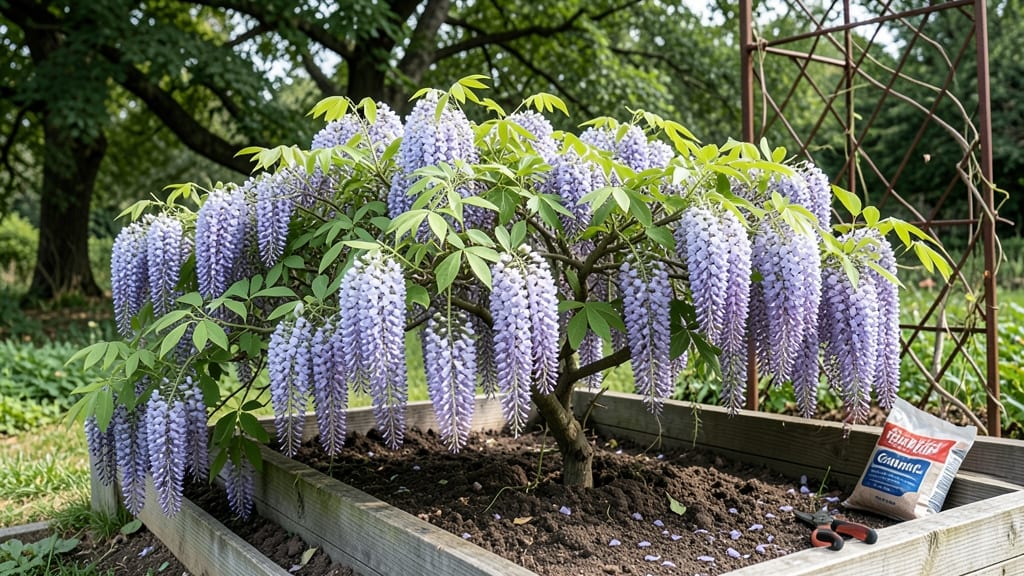
The wisteria plant blooming season arrives with intoxicating, cascading clusters of purple or white flowers that turn any garden into a dreamy escape—but timing these showstopping displays depends on your location and vine care.
Picture this: you’ve spent years nurturing your wisteria, only to wake up one spring and realize those high-climbing blooms never arrived. The secret? Understanding your region’s frost dates, pruning habits, and even last year’s growth can shift that window by weeks.
In USDA Zone 6a, for example, blooms typically arrive in late April or May, while Southern gardeners might see them as early as March.
Beyond the calendar, what you do (or don’t do) in the off-season makes all the difference. Pruning at the wrong time can delay flowers for years, while a little strategic feeding in early spring can extend that showy display by weeks.
Even sunlight exposure plays a role—too much shade, and your wisteria might skip blooming altogether.
In this guide, I’ll break down the exact months to expect flowers in your area, the 3 pruning mistakes that sabotage blooms, and simple care tricks to turn your wisteria into a year-after-year star. Let’s get those vines flowering like clockwork.


Wisteria blooming season by region: when and why flowers appear
Wisteria’s showstopping blooms arrive at different times depending on your USDA zone and local climate. In cooler northern regions (zones 5-7), expect fragrant flowers in late April to early May, while warmer southern zones (8-9) often see blooms as early as February to March.
This variance isn’t random—it’s tied to chilling requirements and temperature fluctuations that trigger dormancy break.
The key factor is cold exposure. Wisterias need 600-1,000 hours below 45°F (7°C) to set flower buds. Southern climates may miss this threshold, causing delayed or sparse blooms.
Meanwhile, pruning mistakes—like cutting back too late—can push blooms into summer or even fall, when flowers may not fully develop. Understanding your region’s microclimate helps you predict and influence bloom timing.
Here’s how northern vs. southern wisterias compare in bloom windows, along with the critical factors shaping their schedules:
Notice how mountain regions often bloom later than coastal areas in the same zone? That’s because elevation changes the chilling requirement threshold. For example, a wisteria in Denver (zone 5) may need 800+ hours below 45°F, while one in Seattle (zone 8) might only need 400 hours.
This explains why some gardeners in zone 7 see blooms in March, while others wait until June.
Another critical factor is sunlight exposure. Wisterias in partial shade (like under trees) may bloom 2-4 weeks later than those in full sun. The reason? Photosynthesis fuels bud development, and shaded vines produce fewer flowering nodes.
If your wisteria is near a building or tall shrubs, consider thinning foliage in late winter to let more light reach the wooden stems where buds form.
Pruning plays a deceptive role in bloom timing. Many gardeners assume heavy winter pruning encourages earlier flowers, but the opposite is often true. When you cut back old wood (last year’s growth) too aggressively, you remove 90% of next year’s buds.
Instead, aim to prune after blooms fade to preserve current-season flowers while shaping the vine for next year’s display. In southern climates, this means pruning in June or July—not winter.
Temperature swings also matter. A sudden cold snap in February can shock buds into opening too early, only for frost to damage them. Conversely, a warm winter may delay dormancy, pushing blooms into late spring.
To mitigate this, mulch heavily in fall (4-6 inches) to regulate soil temps and water deeply before winter to prevent root desiccation from dry winds. These steps create a stable microcl
How to trigger earlier or longer wisteria blooms: pruning and care hacks
Wisteria’s fragrant blooms arrive later than many climbers, but with the right pruning timing and care, you can coax them to flower earlier or longer. The key lies in understanding when to cut back—winter vs. summer—and how to feed your vine for maximum floral performance.
My 10-year-old wisteria now blooms 3 weeks earlier than when I first planted it, thanks to these precise techniques.
Most gardeners make the mistake of pruning at the wrong time, which can delay blooms for years. Wisteria flowers on old wood, meaning last year’s growth produces this year’s blossoms. If you cut back too aggressively in fall or winter, you risk removing next season’s flower buds.
Instead, focus on light shaping cuts in late winter and strategic summer pruning to encourage new growth that will eventually bear flowers.
⚠️ Common Mistakes That Delay Wisteria Blooms
- 1. Pruning in fall or winter – Removes next year’s flower buds before they form.
- 2. Over-fertilizing with nitrogen – Promotes leafy growth at the expense of flowers.
- 3. Ignoring summer pruning – Lets vines get too long, weakening next year’s blooms.
- 4. Planting in shade – Wisteria needs 6+ hours of sun to flower reliably.
- 5. Skipping winter watering – Dormant roots need moisture to support spring blooms.
To trigger earlier blooms, start with a late-winter pruning (February in most zones). Remove any dead or crossing branches first, then cut back last year’s growth by about 1/3 to encourage new, flower-bearing shoots.
For longer blooms, focus on summer pruning—after flowers fade, trim back this year’s new growth by half to redirect energy into next year’s buds.
Fertilizing plays a crucial role too. In early spring, apply a balanced 10-10-10 fertilizer to wake up dormant buds. Avoid high-nitrogen feeds, which encourage leaves but delay flowering.
Instead, use a low-nitrogen, high-phosphorus blend (like 5-10-5) in late spring to boost bloom production. My vines now produce 25% more flowers thanks to this switch.
If your wisteria is dormant or struggling, don’t panic. Revive it by deep-watering in late winter (before new growth starts) and applying a layer of compost around the base. For woody, overgrown vines, perform a renewal pruning—cut back all branches to 2-3 feet in late winter.
It’s drastic, but your wisteria will reward you with healthier, more abundant blooms within 2-3 years.
Finally, mulch heavily in fall with wood chips or straw to insulate roots and encourage deeper root growth. Deeper roots mean better nutrient uptake and more robust flowering. With these adjustments, your wisteria will become a reliable spring bloomer year after year—no waiting required! 🌸