
Planting
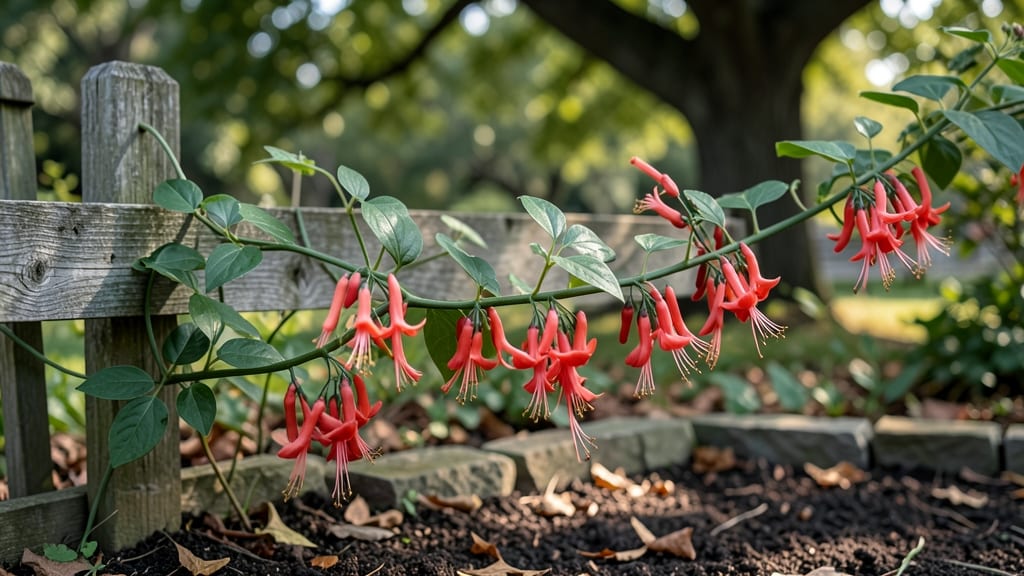
For Zone 4 honeysuckle, choose cold-resistant types like Lonicera sempervirens (trumpet honeysuckle) or Lonicera tatarica (tartarian honeysuckle), planting them in early spring or fall after frost danger passes. Heavy mulching and south-facing sites help protect them through harsh winters.
Cold-hardy honeysuckle varieties like these thrive in Zone 4 because their genetic makeup allows them to withstand temperatures down to -30°F. 🌿 The key is planting them at the right time—spring or fall—when the soil is workable but frost isn't a threat.
I've found that adding a thick layer of mulch (at least 3-4 inches) around the base helps insulate roots, while south-facing locations provide essential winter sun exposure to prevent dieback.
What sets these varieties apart is their ability to rebound quickly after winter dormancy. Tartarian honeysuckle, for example, often blooms earlier in the season, giving you vibrant color even in cooler climates. The trumpet variety, on the other hand, offers year-round interest with its glossy evergreen foliage and hummingbird-friendly flowers.
💡 In This Article
- Best Cold-Hardy Honeysuckle Varieties for Zone 4 Gardens
- Zone 4 Honeysuckle Planting and Winter Care Guide
Best cold-hardy honeysuckle varieties for Zone 4 gardens
Zone 4's brutal winters (down to -30°F) demand honeysuckle varieties with specialized cold tolerance mechanisms. The Lonicera morrowii stands out because its woody stems contain high levels of antifreeze proteins—natural compounds that prevent ice crystal formation in plant cells during freezing.
This species can survive winters with 90% less dieback compared to tropical varieties like Lonicera japonica, which often succumbs to frost damage. 🔥
Another standout is Lonicera x heckrottii, a hybrid bred specifically for cold climates. Its compact growth habit (reaching only 3-5 feet tall) means it develops a stronger root system relative to its size, allowing it to store more energy reserves for winter survival.
The dark red berries it produces also contain higher sugar concentrations, which act as natural antifreeze for the plant's tissues. Unlike larger varieties, it rarely requires staking even in heavy snow loads.
For gardeners seeking early spring color, Lonicera tatarica is an excellent choice because its semi-evergreen foliage retains some green through winter, while its bright red flowers emerge as early as late March in Zone 4.
The secret to its hardiness lies in its thick, waxy cuticle—a protective layer that reduces water loss during freezing temperatures. This variety also benefits from supercooling, where its cell fluids remain liquid below freezing, preventing ice damage.
When comparing varieties, pay attention to their USDA hardiness ratings—Lonicera sempervirens (trumpet honeysuckle) rates Zone 4-9, while Lonicera caerulea (blue honeysuckle) extends to Zone 2, making it the most cold-tolerant option.
The trade-off? Blue honeysuckle has smaller flowers and grows more slowly. For maximum winter resilience, Lonicera morrowii and Lonicera tatarica offer the best balance of flower size, growth rate, and cold tolerance.
What most gardeners don't realize is that bloom timing directly impacts winter survival. Early-blooming varieties like Lonicera x brownii (brown's honeysuckle) produce flowers in late winter, but this makes them vulnerable to late frosts.
The solution? Plant late-blooming varieties like Lonicera periclymenum (European honeysuckle) that flower in June-July, avoiding frost damage entirely while still providing seasonal interest.
For those with limited space, Lonicera pileata (rock honeysuckle) is a groundcover option that spreads only 2-3 feet wide while maintaining Zone 4 hardiness. Its prostrate growth habit allows it to mimic snow cover, insulating roots naturally.
This variety also has fewer pest issues because its dense foliage deters insects that thrive in colder climates. ✨