
Plants
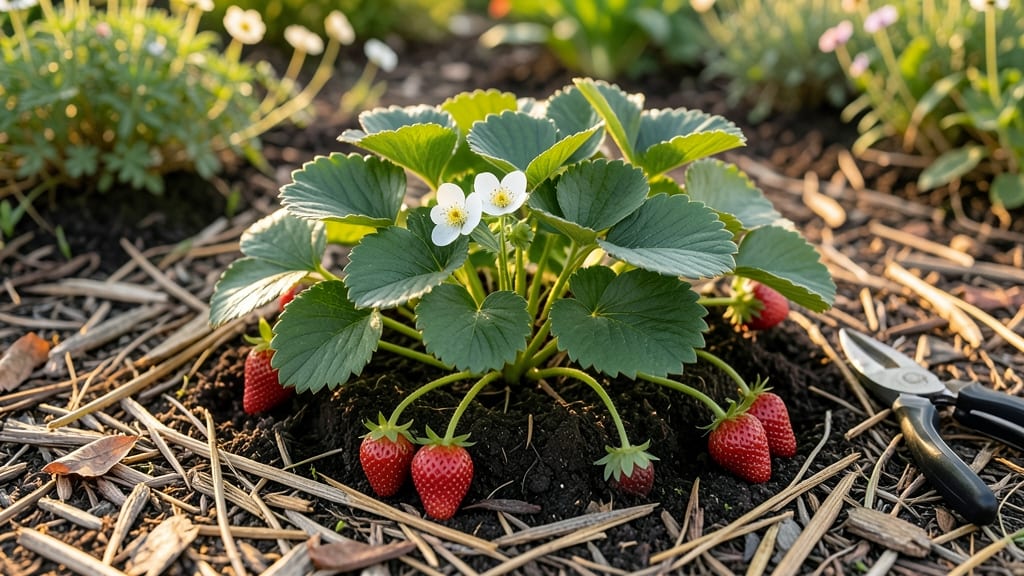
Strawberries in Zone 7 are perennial plants, but their productivity typically declines after the first growing season because of aging crowns and accumulated soil-borne diseases. To maintain strong harvests, replace plants every 2-3 years—June-bearing varieties handle Zone 7 winters best due to their cold hardiness.
While strawberries are classified as perennials in Zone 7, their lifespan as productive plants is often limited to 1-2 seasons without intervention. 🌱 The problem stems from crown deterioration and disease buildup in the soil, which weakens the plant's ability to produce fruit.
June-bearing types (like 'Chandler' or 'Jewel') tend to outperform everbearing varieties in Zone 7 winters because they enter deeper dormancy, protecting their crowns from temperature fluctuations. The key to long-term success isn't just replacing plants—it's also rotating planting locations to prevent disease cycles from worsening.
What many gardeners don't realize is that strawberries actually reproduce themselves through runners, but these offspring inherit the same aging issues as their parents. That's why I recommend treating strawberries more like annuals in Zone 7—pulling up old plants and starting fresh with bare-root stock or certified disease-free runners.
This simple practice can transform a struggling patch into a consistently productive berry garden.
💡 In This Article
- How Zone 7 Winters Affect Strawberry Perennial Growth
- Renewing Strawberry Plants in Zone 7 for Long-Term Harvests
How Zone 7 winters affect strawberry perennial growth
Strawberries enter dormancy in Zone 7 when temperatures drop below 40°F, but the real challenge isn't just surviving winter—it's the crown aging that occurs during these cold snaps. The crown, where roots meet stems, acts like a biological battery, storing energy for regrowth.
However, each winter cycle depletes these reserves, and the temperature fluctuations common in Zone 7 (from -10°F to 50°F within weeks) accelerate this wear. 🌡️ The roots also suffer from freeze-thaw cycles, which can rupture cell walls and reduce nutrient uptake.
June-bearing varieties handle Zone 7 winters best because they've evolved to endure deeper dormancy, with crowns that can tolerate -20°F when properly hardened off. Everbearing and day-neutral types, while productive, often struggle because their growth cycles don't fully sync with Zone 7's seasonal shifts.
For example, 'Chandler' (June-bearing) produces 80% of its fruit in June, while 'Seascape' (everbearing) spreads production thin, making it more vulnerable to winter stress. The trade-off? June-bearing plants require 6-8 weeks of chilling hours (32-45°F) to break dormancy, which Zone 7 typically delivers.
What most gardeners miss is how soil moisture plays a critical role. Wet winters in Zone 7 can lead to root rot from fungal pathogens like Phytophthora, while dry spells cause crown desiccation. The ideal winter soil moisture should stay at 40-50% field capacity—neither soggy nor bone-dry.
Mulching with 4-6 inches of straw helps regulate temperature swings at the crown level, protecting the plant's most vulnerable part. 🌿 Without this protection, even cold-hardy varieties may produce 20-30% fewer runners in spring, signaling declining vigor.
Here's the science behind the decline: Strawberry crowns contain meristematic tissue (growth cells) that divide rapidly in spring. After 2-3 years, these cells become less efficient due to telomere shortening (a natural aging process), and the plant's ability to regenerate weakens.
This is why June-bearing plants often stop fruiting entirely by their third year unless replaced. The good news? Replanting with certified disease-free bare-root stock can restore yields to 90% of original levels within a single season.
Temperature isn't the only factor—day length also matters. Zone 7's 10-12 hour daylight in winter triggers hormonal changes that prepare strawberries for dormancy.
However, if winters are unusually warm (like the 2020-2021 season where temps rarely dropped below 35°F), the plant may break dormancy prematurely, leading to crown dieback when unexpected cold snaps return. This explains why some gardeners see patchy regrowth in spring—only certain crown sections survived the inconsistent winter conditions.
To visualize the impact, consider this: A healthy June-bearing strawberry crown in its first year might produce 50-60 runners, while a 3-year-old crown of the same variety may only yield 10-15. The difference? The older plant's energy is diverted to maintaining existing structures rather than new growth.
This is why rotating planting locations every 2-3 years isn't just about disease prevention—it's about giving the soil time to replenish nutrients like potassium and phosphorus, which strawberries deplete rapidly during fruiting.