
Plants
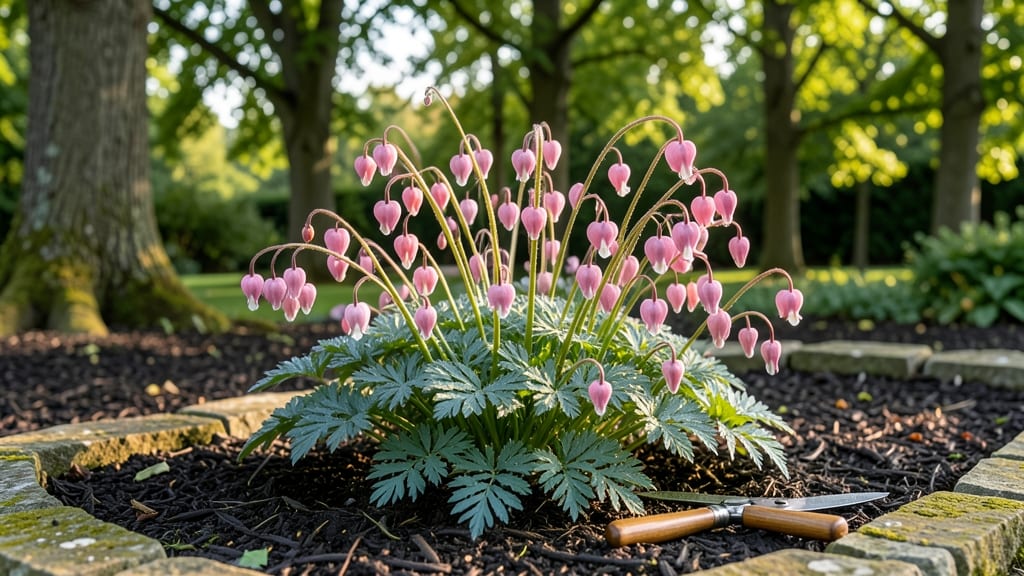
Bleeding heart plants grow best in USDA hardiness zones 3 through 9, where they flourish with partial to full shade and consistently moist, well-draining soil. These zones encompass most temperate U.S. regions like the Pacific Northwest and Northeast.
These zones work so well because bleeding hearts naturally tolerate cold winters and prefer cooler summers, avoiding the stress of extreme heat. 🌿 The plant’s delicate foliage thrives in areas with moderate rainfall or supplemental irrigation, while the hardy roots handle frost down to -30°F in zone 3.
In warmer zones like 8 or 9, providing afternoon shade and consistent moisture keeps the plant lush and flowering prolifically. Many gardeners in marginal zones (like 2 or 10) successfully grow bleeding hearts in containers, where they can be moved to sheltered spots during harsh winters or intense sun.
What sets bleeding hearts apart is their adaptability to humidity variations—they perform well in both the damp Pacific Northwest and the more arid Northeast, as long as soil never dries out completely.
The key is mimicking their native woodland understory conditions, whether in a garden bed or a large pot with proper drainage. For zones outside 3-9, winter mulching and seasonal pruning can extend the plant’s lifespan significantly.
💡 In This Article
- USDA Zones 3-9: Ideal Climate Conditions for Bleeding Heart
- Extending Bleeding Heart Growth Beyond Native Zones
USDA zones 3-9: ideal climate conditions for bleeding heart
Bleeding heart plants (Dicentra spectabilis) evolved in temperate forests of East Asia, where they experience distinct seasonal patterns that zones 3-9 closely mimic. The critical factor is winter hardiness—these zones provide the 10-30°F average winter lows that bleeding hearts need to trigger dormancy.
In zone 3 (-40°F to -30°F), the plant's deep roots (reaching 12-18 inches) insulate against extreme cold, while zone 9 (20°F to 30°F) winters are mild enough to avoid winter burn.
The plant's natural frost tolerance comes from its ability to enter a semi-dormant state, where metabolic activity slows dramatically, conserving energy until spring.
Summer conditions in these zones create the perfect balance: daytime highs typically stay below 85°F, preventing heat stress that can scorch delicate foliage. The plant's preference for partial shade (3-6 hours of morning sun) aligns with forest understory conditions, where it receives dappled light.
In zone 5 (-20°F to -10°F), for example, the plant thrives with 50-70% shade cloth during peak afternoon sun (1-4 PM), while zones 7-9 benefit from afternoon shade to prevent leaf scorch.
The key mechanism is maintaining soil temperatures between 60°F and 75°F—any hotter, and the plant's roots struggle to absorb moisture efficiently.
Humidity plays a surprising role in bleeding heart success. These plants originate from regions with 50-70% relative humidity, which zones 3-9 typically provide through natural precipitation patterns.
In drier zone 7 areas (like parts of Virginia), supplemental mulching with 2-3 inches of shredded bark maintains soil moisture levels, while in humid zone 8 (like coastal Georgia), proper drainage becomes critical to prevent root rot.
The plant's heart-shaped leaves have a waxy cuticle that helps retain moisture, but they still transpire 15-20% more water in dry conditions, making consistent moisture essential for vibrant foliage and prolific flowering.
Seasonal growth patterns vary significantly across zones. In colder zones (3-5), bleeding hearts typically emerge from dormancy in late April to early May, with flowers appearing 6-8 weeks later when soil temperatures reach 55°F.
In warmer zones (7-9), growth begins 2-3 weeks earlier, but flowering may be less prolific without proper summer shade. The plant's 2-3 foot height allows it to outcompete weeds for resources, while its fleshy roots store starches during dormancy—critical for spring regrowth.
What's fascinating is how the plant's flowering cycle synchronizes with local climate patterns: in zone 4, blooms peak in late May to June, while in zone 8, they may extend into July due to milder winters.
For gardeners in zone 6 (-10°F to 0°F), the transition between seasons is particularly critical. The plant enters dormancy when night temperatures consistently drop below 40°F for 3-4 weeks, but premature dormancy can occur if stressed by drought or heat.
In zone 9, where winters are mild, the plant may produce second flushes of flowers if given consistent moisture and afternoon shade. The plant's natural lifespan of 3-5 years in optimal zones can be extended with proper care, making zone selection a key factor in long-term success.
What most gardeners don't realize is how microclimates within these zones create ideal growing conditions. A north-facing slope in zone 5, for example, can be 5-10°F cooler than the surrounding area, extending the growing season by 2-3 weeks.
Similarly, urban areas in zone 7 may experience heat island effects, requiring additional shade protection. The plant's ability to adapt to these variations makes it one of the most versatile perennials in zones 3-9, provided gardeners understand its specific climate requirements. 🌿