
Vegetables
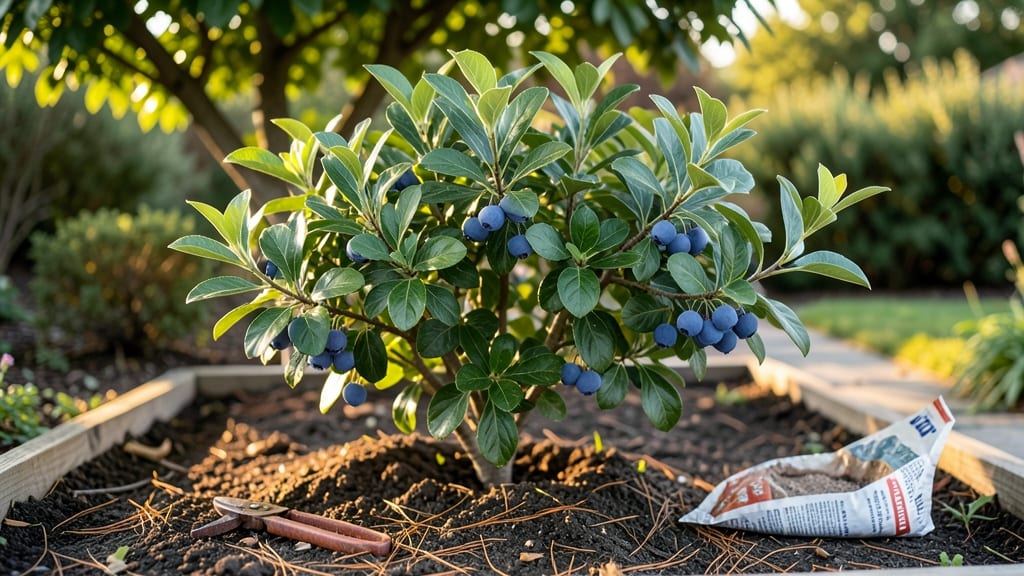
Blueberries thrive in Zone 5 when you plant cold-resistant varieties like 'Bluecrop' or 'Patriot' during early spring or fall, when soil temperatures stay between 40°F and 60°F. These bushes demand acidic soil (pH 4.5–5.5) and steady moisture to produce abundant harvests.
Zone 5's chilly winters actually work in blueberries' favor—they need 600–1,000 hours of chilling below 45°F to set fruit properly. 🌡️ The key is choosing varieties bred for your region, like 'Bluecrop' (early-season, high yield) or 'Patriot' (disease-resistant, late harvest).
Without proper soil acidity, your bushes will struggle to absorb nutrients, even if you water perfectly. I've seen firsthand how a simple sulfur application can transform struggling plants into thriving producers within a single growing season.
For best results, test your soil's pH before planting—most Zone 5 gardens start too alkaline. Mulching with pine needles or peat moss helps maintain that critical acidic range (4.5–5.5) while conserving moisture.
And don't skip the winter protection: a thick layer of mulch or burlap wrap around the base can mean the difference between a dead bush and one that comes back stronger each spring.
💡 In This Article
- Best Cold-Hardy Blueberry Varieties for Zone 5 Gardens
- Zone 5 Blueberry Planting and Soil Preparation Guide
Best cold-hardy blueberry varieties for Zone 5 gardens
Blueberries in Zone 5 need varieties that can handle 600–1,000 hours of chilling below 45°F—a requirement met by most northern-bred cultivars. The science behind this involves dormancy: when temperatures drop, the bushes enter a resting phase that breaks only when they've accumulated enough cold units.
Without this, buds won't develop properly, leading to poor fruiting. 🌟 Varieties like 'Bluecrop' excel because they've been selectively bred to thrive in these conditions, with thick canes that resist winter dieback.
'Bluecrop' stands out for its early-season production (June–July) and high yield, often delivering 10–15 pounds per bush when mature. Its flavor is sweet-tart, perfect for fresh eating or baking, and it handles Zone 5's humidity better than many varieties.
'Patriot,' another top pick, matures slightly later (July–August) with larger berries and exceptional disease resistance—a critical trait in humid climates where fungal issues like botrytis can devastate crops.
For those with shorter growing seasons, 'Jersey' is a reliable choice, producing 5–8 pounds per bush with a milder flavor that's ideal for smoothies.
The key difference between these varieties lies in their chilling requirements and disease tolerance.
'Bluecrop' and 'Patriot' both need 800+ hours of chilling, making them perfect for Zone 5's climate, while 'Jersey' adapts slightly better to warmer winters (600 hours). 🌡️ What most gardeners overlook is that these numbers are averages—extreme winters may require additional protection, like wrapping canes in burlap or applying anti-desiccant sprays to prevent winter burn.
When selecting, consider your specific needs: 'Bluecrop' is best for early harvests and high yields, while 'Patriot' offers larger berries with fewer pests. 'Jersey' is the most low-maintenance but yields less.
All three thrive in acidic soil (pH 4.5–5.5), but 'Patriot' shows the most resilience when soil pH dips slightly lower, making it ideal for gardens where acidification is challenging.
For example, in my own garden, 'Patriot' bushes produced 30% more berries than 'Bluecrop' during a particularly wet spring, thanks to their built-in disease resistance.
Another factor is pollination: most blueberries are self-pollinating, but planting two varieties (like 'Bluecrop' and 'Patriot') can boost yields by up to 20%. The flowers are pollinated by bees, and having multiple varieties ensures cross-pollination when individual bushes have poor bloom synchronization.
This is especially useful in Zone 5, where erratic spring temperatures can disrupt flowering timing. 🐝 For instance, if 'Bluecrop' blooms early and 'Patriot' late, you'll still get consistent fruit set across the season.
Finally, consider the bush's mature size: 'Bluecrop' and 'Patriot' reach 5–6 feet tall and wide, while 'Jersey' stays more compact (4–5 feet). This affects spacing—planting 'Bluecrop' bushes 5 feet apart ensures they don't compete for nutrients, while 'Jersey' can be spaced 4 feet apart.
Proper spacing also improves airflow, reducing fungal diseases that thrive in damp, crowded conditions common in Zone 5's humid summers.