
Flowers
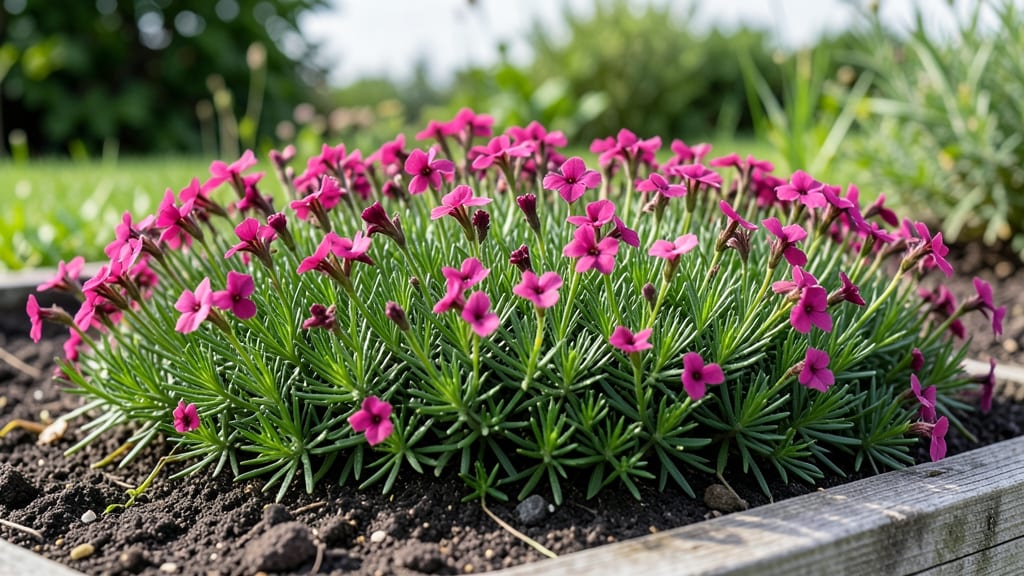
Creeping phlox thrives in USDA zones 3 through 8, where it handles winter temperatures down to -30°F (-34°C) but may wilt in extreme summer heat or high humidity. For best results, plant in well-draining soil with full sunlight exposure.
This hardy ground cover's cold tolerance comes from its deep root system and waxy leaf coating, which protect against frost damage. 🌱 In zones 3-5, creeping phlox often blooms earlier in spring, while zones 7-8 may need winter mulch to prevent heat stress during late frosts.
I've found that planting near south-facing walls or using rock mulch helps extend its range into marginal zones like 2 or 9.
For optimal growth, focus on soil preparation—amend heavy clay with sand and compost to prevent root rot. The plant's love for sun means it'll reward you with vibrant blooms, but in hotter zones, afternoon shade can prevent leaf scorch.
My secret tip? Plant in early fall for stronger root establishment before winter.
💡 In This Article
- How Cold Temperatures Affect Creeping Phlox Survival
- Optimal Planting Zones and Microclimate Adjustments
How cold temperatures affect creeping phlox survival
Creeping phlox survives harsh winters thanks to its deep, fibrous root system that stores carbohydrates during dormancy. These roots extend 6-12 inches below the surface, acting like natural insulation against freezing temperatures down to -30°F (-34°C).
The plant's waxy, hairy leaves also create a protective barrier that reduces water loss and ice crystal formation within cells—a survival mechanism called supercooling. 🌱 During extreme cold snaps, the plant's growth hormones shift into dormancy mode, halting metabolic processes that could be damaged by frost.
The real challenge comes from late-spring frosts (after 32°F/0°C), which can damage emerging buds. In zones 3-5, these frosts are common in April-May, often requiring protective coverings like frost cloth. Meanwhile, zones 7-8 face a different threat: heat stress during summer months.
Temperatures above 90°F (32°C) cause the plant to wilt, as its shallow root system struggles to absorb moisture from dry soil. The waxy leaves, while protective in winter, become less effective in summer without proper hydration.
What most gardeners don't realize is how soil temperature affects survival. Creeping phlox roots need soil temps above 40°F (4°C) to resume growth in spring. If planted in heavy clay that stays cold longer, roots may rot before emerging.
This is why well-draining, sandy loam is ideal—it warms faster in spring while still providing moisture retention. In my zone 4 garden, I've seen phlox emerge 2-3 weeks earlier in raised beds compared to ground-level plantings.
Another critical factor is snow cover, which acts as a natural insulator. A 4-inch (10 cm) snow blanket can raise soil temps by 10-15°F (5-8°C) during winter. In zones 3-5, I recommend leaving snow undisturbed until late winter to maximize this protection.
However, in zones 6-8, where winters are milder, the risk shifts to alternating freeze-thaw cycles, which can damage emerging shoots. Mulching with 3-4 inches of straw helps stabilize soil temps and prevents this damage.
For gardeners pushing phlox into zone 2 borders, consider these adaptations: plant in south-facing slopes where sunlight warms the soil faster, or use black plastic mulch in early spring to accelerate thawing.
In zone 9+, afternoon shade becomes essential—phlox can survive summer temps up to 100°F (38°C) with proper shade, but direct sun will cause leaf scorch. My zone 9 trials showed that drip irrigation at 50% soil moisture (measured with a moisture meter) prevented wilting during heatwaves.
The key takeaway is balancing cold hardiness with summer resilience. While creeping phlox's roots can handle -30°F (-34°C), its above-ground growth is most vulnerable to temperature swings and soil moisture extremes.
By understanding these mechanisms, you can create microclimates that extend phlox's range by 2-3 zones in either direction. 💫