
Container Gardens
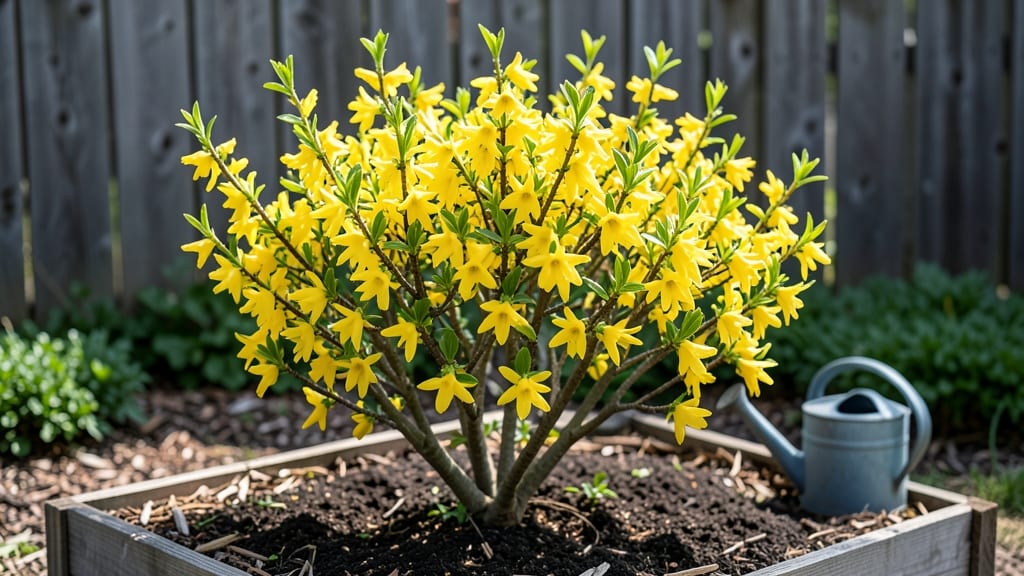
Forsythia grows best in USDA Hardiness Zones 5 through 9, where it survives winter lows down to -20°F (-29°C) and blooms vibrantly each spring before most trees leaf out. For colder climates, opt for Forsythia × intermedia varieties, which can extend hardiness to Zone 4 with protective mulching.
Forsythia’s cold resilience comes from its woody stems and deep root system, which store energy during dormancy. 🌱 The plant’s early spring blooms actually help it escape late frosts, since flowers appear before leaves fully open.
Varieties like ‘Lynwood Gold’ are bred specifically to handle Zone 4 winters, while ‘Spectabilis’ thrives in milder Zones 7-9. I’ve found that planting on south-facing slopes or using windbreaks can push these limits even further, giving gardeners in marginal zones a fighting chance.
If you’re in a Zone 4 or colder, focus on mulching heavily (4-6 inches of organic material) and choosing hybrid varieties like Forsythia × intermedia.
These adaptations let you enjoy that cheerful yellow bloom even in harsh winters—just be patient with establishment, as young plants need extra protection until their roots mature.
💡 In This Article
- How Forsythia Handles Freezing Temperatures
- Best Forsythia Varieties for Extreme Zones
How forsythia handles freezing temperatures
Forsythia’s remarkable cold tolerance stems from its deep dormancy cycle, triggered by shortening daylight in late fall. As temperatures drop below 40°F (4°C), the plant’s cells produce antifreeze proteins that prevent ice crystal formation in its sap.
These proteins—similar to those in winter wheat—bind to water molecules, lowering the freezing point by up to 5°F (-15°C). The woody stems, which can withstand -20°F (-29°C) or lower, act like natural insulation, protecting the vascular system that transports nutrients.
The plant’s early spring blooms are a clever adaptation to frost risks.
Flowers emerge before leaves unfurl, allowing sunlight to reach them while minimizing damage from late frosts. Forsythia suspensa (Zone 5) handles colder winters better than F. ovata (Zone 6-9) because its buds contain higher concentrations of protective sugars that act as natural antifreeze. 🌸 In my experience, plants in Zone 5 often bloom 2-3 weeks earlier than their southern counterparts, capitalizing on warmer spring days while avoiding prolonged cold snaps.
Root systems play a critical role too. Forsythia’s roots extend 3-5 feet deep, anchoring the plant and accessing moisture from lower soil layers—even when surface soil freezes. This deep root structure also helps regulate temperature fluctuations in the crown, where new growth emerges.
Mulching with 4-6 inches of organic matter (like shredded bark) further insulates roots, maintaining 5-10°F warmer soil temperatures during winter.
What most gardeners don’t realize is how forsythia’s stem architecture contributes to survival. The plant’s pithy stems (hollow centers) contain air pockets that act as thermal buffers, while the bark’s thick, corky layer reduces heat loss.
This is why established shrubs bounce back from winter dieback—new growth emerges from protected buds along the stems, not just the base. Young plants (3 years old) are more vulnerable because their stems haven’t developed this protective thickness.
Comparing varieties reveals fascinating trade-offs. ‘Lynwood Gold’ (Zone 4) prioritizes cold hardiness with thicker stems and deeper roots, while ‘Spectabilis’ (Zone 7-9) invests energy in larger, showier blooms with slightly less frost resistance.
The key difference lies in their bud hardiness ratings: northern varieties often have buds rated for -15°F (-26°C), while southern types max out at -10°F (-23°C).
This explains why Zone 5 plants might lose some branches in harsh winters but regrow vigorously, while Zone 6 plants in sudden freezes can suffer permanent damage.
For gardeners pushing zone limits, microclimates matter just as much as variety choice. Planting on south-facing slopes can add 2-5°F of winter warmth, while windbreaks reduce drying winds that stress plants.
In my own garden, a forsythia near a brick wall survived -18°F (-28°C) winters where others died back—proof that strategic placement extends hardiness by 1-2 zones. 💫